
Article
29 min read
Employee Development at Microsoft: Nurturing Talent in the AI Era
Global HR

Author
Lorelei Trisca
Last Update
November 21, 2025

Table of Contents
How does Microsoft empower employees: Top learning programs
5 Reasons behind Microsoft’s Current L&D strategy
The key to Microsoft’s L&D success
How can you run a development process like Microsoft?
Future-proof your people and business with Deel Engage
Key takeaways
- Microsoft promotes and invests heavily in its learning culture. It helped them achieve business success and become a dream employer.
- Microsoft provides a huge variety of learning options in one centralized learning portal to employees, so they can choose according to their learning style.
- A significant portion of L&D at Microsoft involves coaching conversations between employees and managers. During these conversations, employees share their expectations and managers help them choose the right projects or training to further their growth.
- Deel helps you create an L&D strategy like Microsoft, where employees can meet regularly with managers and define their learning and career growth paths.
We believe deeply in the importance of a growth mindset. A growth mindset is all about continuously learning and being aware. We’re evolving our culture of learning from being know-it-alls to being learn-it-alls.
—Joe Whittinghill,
former Chief Talent and Learning Officer at Microsoft
Learning is the core of Microsoft culture—the culture that was rated one of the best globally in 2024. The culture that transformed Microsoft into a three trillion dollar powerhouse and a dream company for employees.
Microsoft keeps employees at the forefront and regularly invests in their growth. In this case study, we will break down Microsoft’s employee training and development strategy, why it works, and how you can replicate it.
Disclaimer: The data outlined in this content is accurate at the time of publishing and is subject to change or updating. Deel does not make any representations as to the completeness or accuracy of the information on this page.
How does Microsoft empower employees: Top learning programs
“Microsoft has been hands-down the best place to work. It’s hard to find a company that has a great brand, bright future, world-class employees, a generous compensation package, and a positive culture.”—Anonymous review via Comparably.
Microsoft employs a 70-20-10 learning philosophy, where 70% of learning occurs on the job, 20% through peer-to-peer interactions or mentorship, and 10% via online courses. The company offers multiple customizable learning opportunities to support employees’ growth.
We’ve documented the key employee training programs run by Microsoft below:
1. Stretch opportunities
Microsoft highly believes in learning on the job and suggests employees find “stretch” projects—the ones where they push boundaries beyond their current responsibilities. Maor Daniel, Senior Director of Global SMB Sales at Microsoft, shares that employees can have one-on-one discussions with their managers to find stretch projects of interest.
Another employee, Ritvika Nagula, credits her promotion to her proactive nature and stretch work. She started taking responsibilities for her next role even before she got it, and that made the promotion decision easy for her manager.
“On the job is the best way to learn anything. And we know that. And so we want to make sure that employees understand – as you are getting better at doing something, if you’re experimenting with Copilot or actually using Copilot with your customers to get some task completed or an achievement completed, that in and of itself is learning.”—Joe Whittinghill, former Chief Talent and Learning Officer at Microsoft, in a podcast with Microsoft’s Public Sector Center of Expertise.
2. Microsoft’s Viva Learning platform
Microsoft uses its product, Viva Learning, as a learning management system (LMS). This LMS centralizes all the courses for Microsoft employees in one place and brings a structured system to learning. Viva Learning contains both courses prepared internally (by the L&D team or employees) and sourced externally (from learning platforms such as Coursera, LinkedIn Learning, etc).
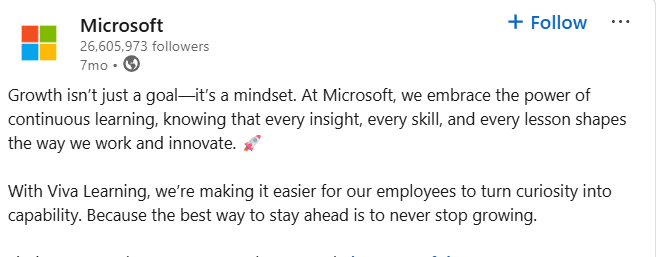
Aim of Viva learning | Source: LinkedIn
How do employees make use of Microsoft Viva Learning?
1. Self-enrolment: Employees can look for courses and enroll based on their interests. It gives employees control over their learning journey, as they can opt for any course without approval.
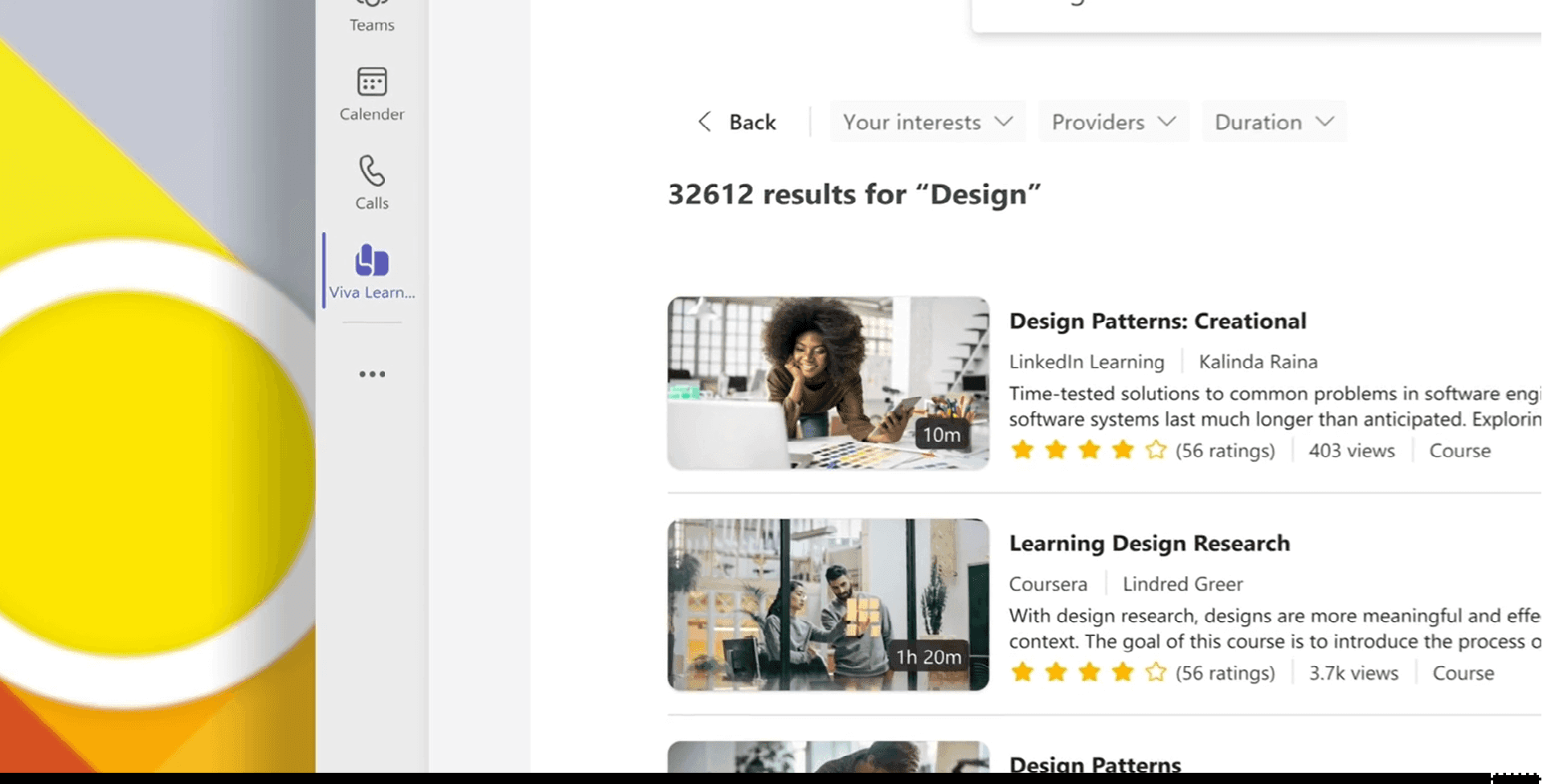
Employees can search for courses on Viva learning | Source: Microsoft
2. Learning paths: Viva learning also allows the creation of personalized learning paths. Employees receive a set of courses specifically recommended for their role. For example, the sales team can have custom learning paths based on the role.
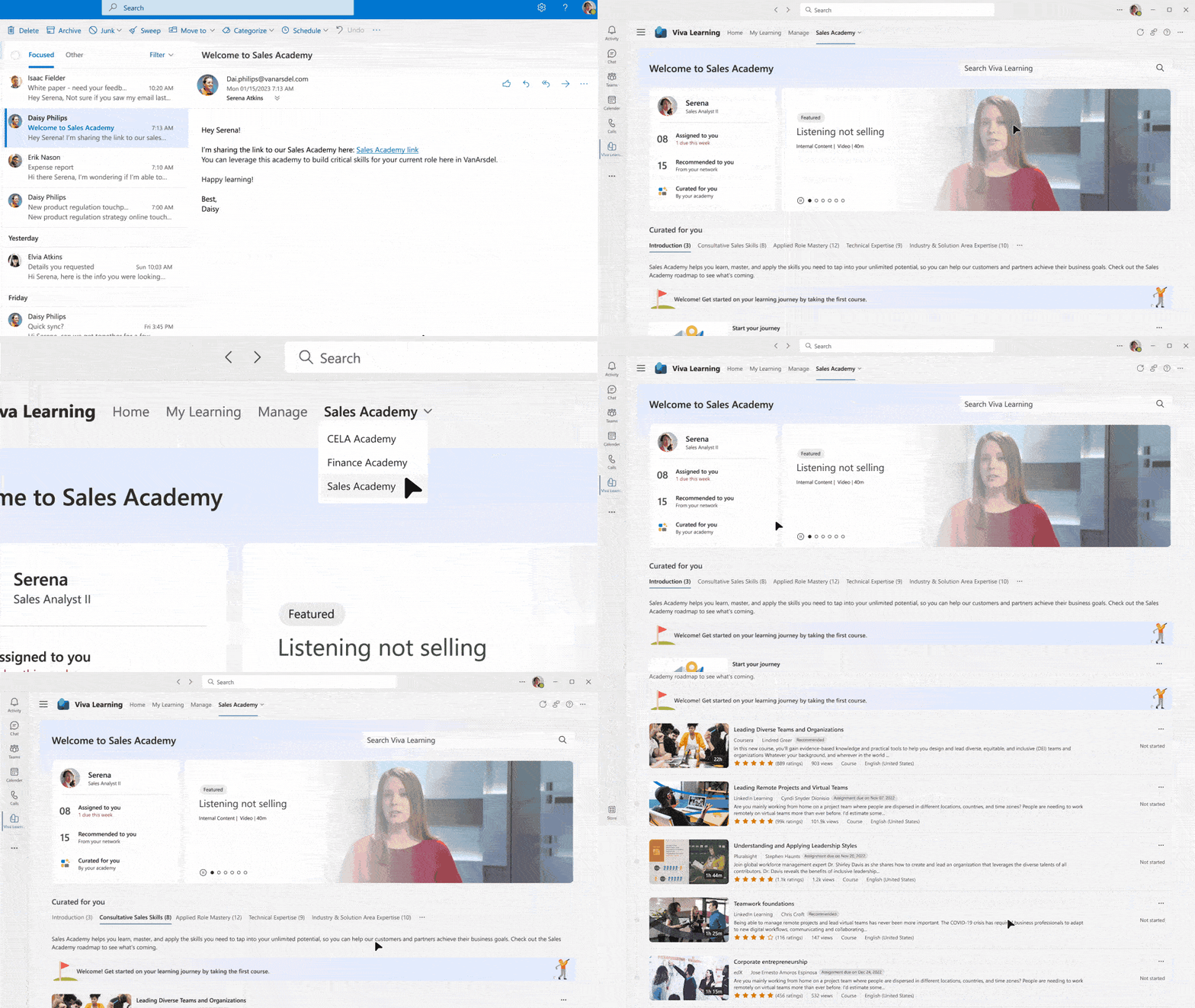
Sample learning path curated for sales team | Source: LinkedIn
3. Recommendations: Inside Viva Learning, employees can get:
- Recommendations from peers and managers
- AI-powered suggestions for relevant courses
- List of content trending in the organization.
Employees can choose courses from this curated list.
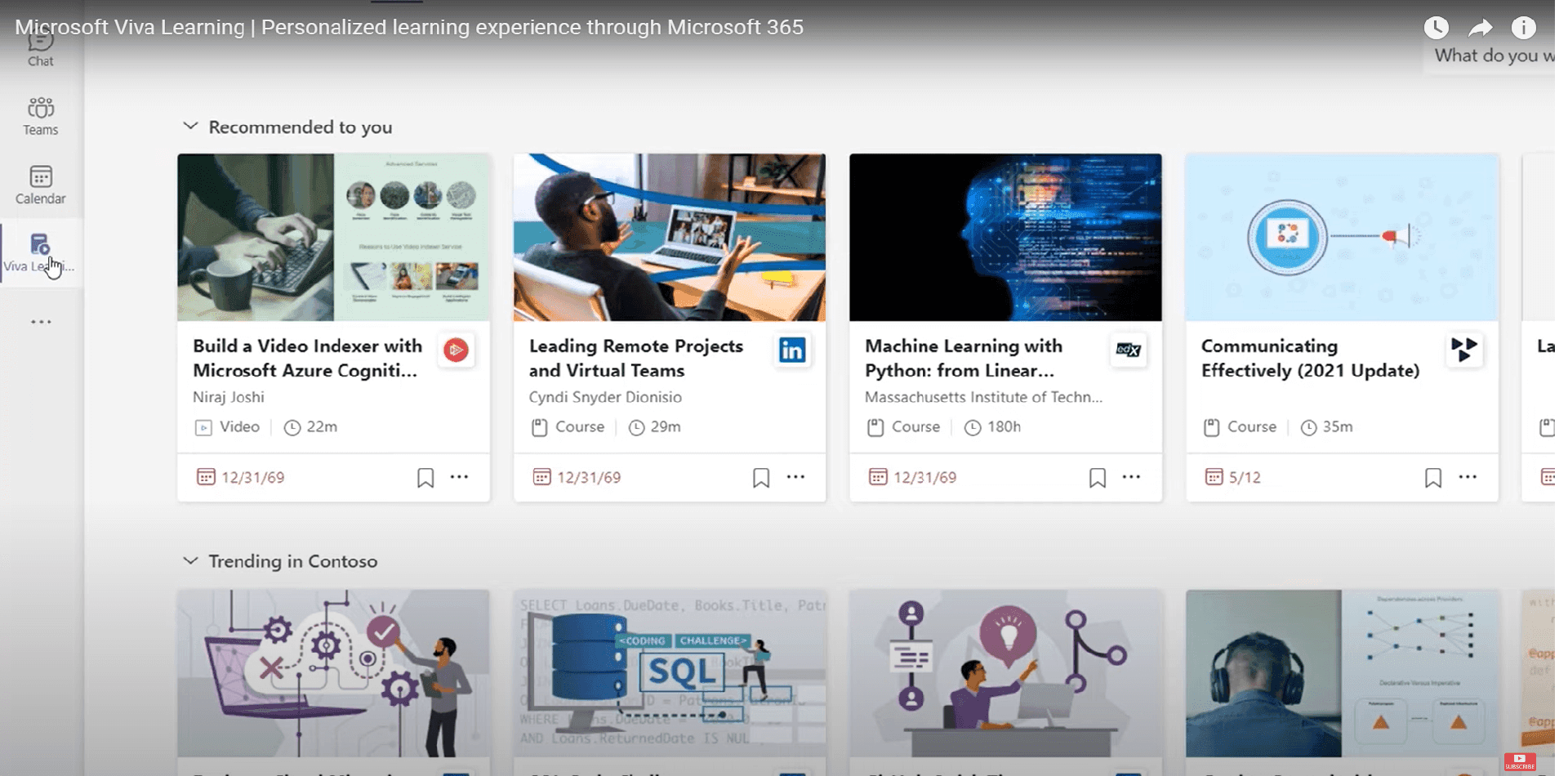
Recommendations on Viva learning | Source: YouTube
3. Coaching and mentoring
Microsoft facilitates learning from managers, peers, and seasoned experts.
Manager: Employees have regular one-on-one meetings with their managers for coaching conversations.
“My first manager at Microsoft was very invested in personal growth. At least a portion of our one-on-one meetings would focus on how I could grow as a person and professional. Her guidance gave me the opportunity to become more invested in my own skillset and find the technologies I need to focus, and based on my learning path, how can I can branch out to support specific demands of the business or personal interest.”—Allan Richmond Morales, a Premier Field Engineer for Microsoft.
Peers: Microsoft set up Learning circles for like-minded people to connect and share their knowledge. Each circle has a theme, either on a soft or hard skill. These circles are open to internal employees and external experts.
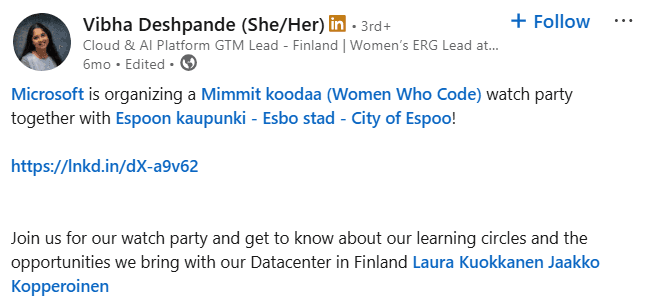
Microsoft learning circle for coders | Source: LinkedIn
Seasoned experts (internal or external): Microsoft supports learning from seniors and external experts via coaching programs.
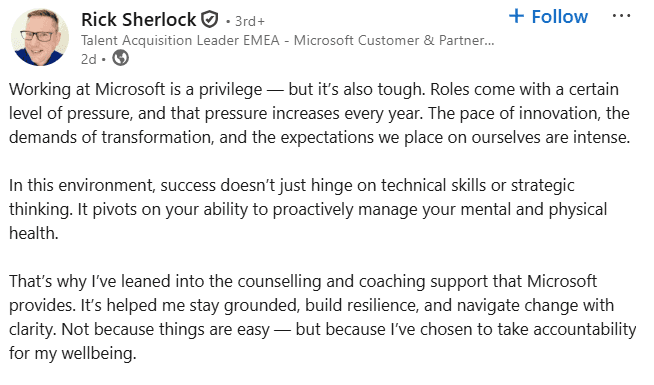
Benefits of coaching at Microsoft | Source: LinkedIn
4. Hackathon and events
Microsoft runs hackathons and events. Some are internal, but many are also accessible to tech enthusiasts outside the company. These events promote social learning, where employees meet talented professionals, share knowledge, and stay motivated.
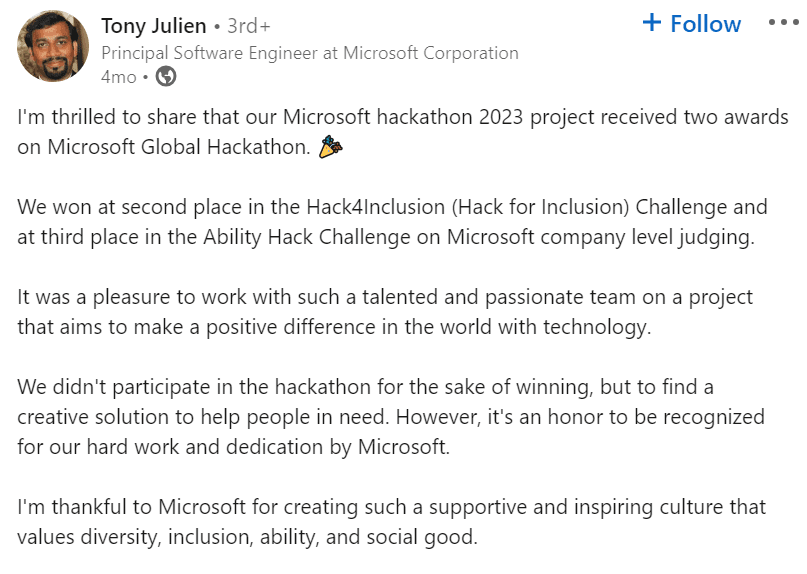 A Microsoft employee announced a hackathon win on LinkedIn and praised the company culture
5. Tuition assistance
Microsoft employees can also take external courses or professional development programs beyond Viva Learning. The tech giant provides tuition assistance to employees to complete these programs and stay up to date in their field.
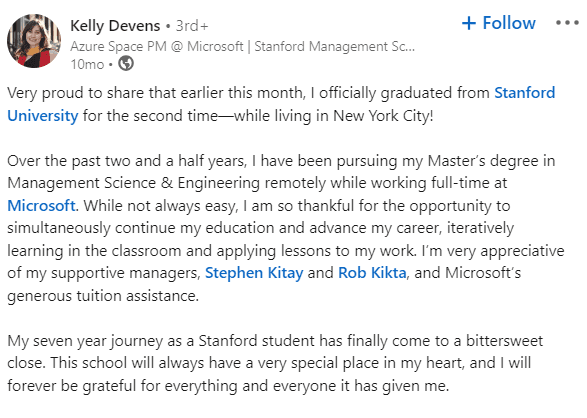
Microsoft employee doing master’s degree from Stanford University using tuition assistance | Source: LinkedIn
6. Aspire program
Microsoft has a detailed onboarding plan called the Aspire program to onboard new hires. It’s a two-year program where there are sessions at regular intervals that help new hires in:
- Meeting fellow new joiners/existing employees and establishing a robust network
- Gaining knowledge from senior leaders
- Getting familiar with all the growth opportunities at Microsoft.
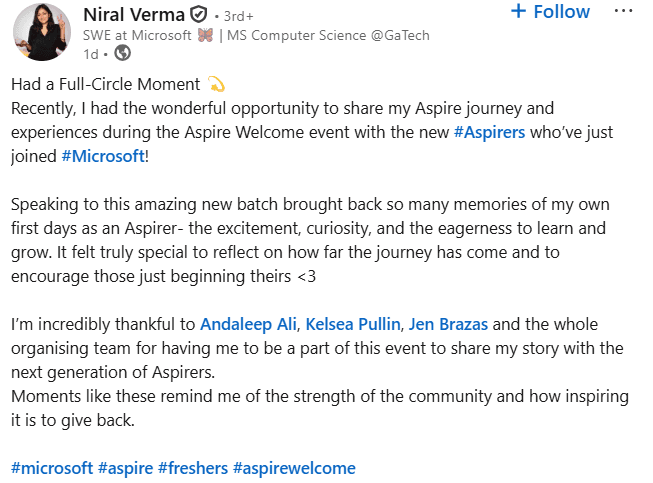
Aspire beneficiary employee comes back as mentor in the program | Source: LinkedIn
7. Leap program
Microsoft launched an apprentice program called Leap to help talent from diverse backgrounds (stay-at-home moms, anyone looking for a career pivot, and non-technical workers) get into the tech side. Some apprentices have held jobs like baristas, medical assistants, high school teachers, musicians, filmmakers, etc. The 16-week immersive apprenticeship combines in-classroom learning with hands-on engineering projects (designed by Microsoft engineers).
While not all Leap participants secure full-time employment at Microsoft, many are given the opportunity to interview for positions. In doing so, Microsoft not only brings a bigger change but also gets highly trained entry-level talent.
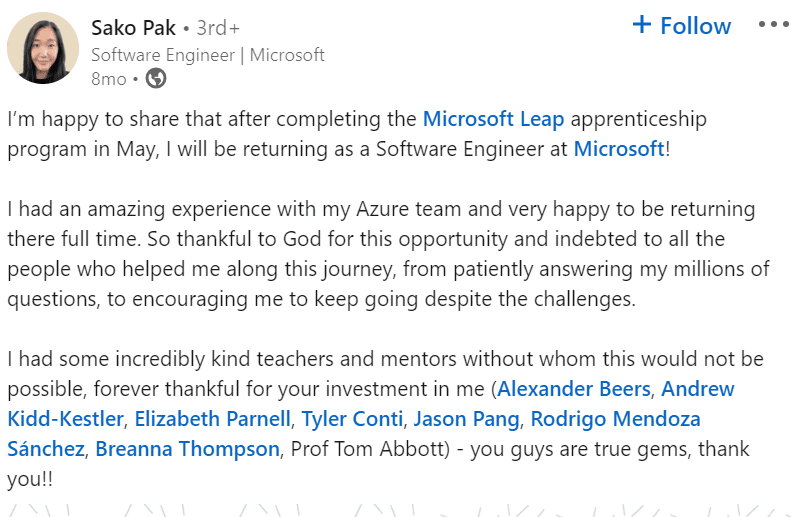
Leap apprentice joined Microsoft as a full-time engineer | Source: LinkedIn
5 Reasons behind Microsoft’s Current L&D strategy
We dug deeper into Microsoft’s people development strategy and how they build themselves as a learning organization:
1. Growth mindset
“We want a growth mindset, we want people to be able to take risks, we want to reduce the fear, we want to believe that potential isn’t pre-determined, that everybody can grow and develop.”—Kathleen Hogan, former Chief People Officer, now EVP, Office of Strategy and Transformation, Microsoft.
Microsoft’s culture is deeply rooted in a growth mindset. The company believes anyone can change, learn, and grow. So, the tech giant continuously provides opportunities to nurture and upskill talent.
There are ample learning possibilities in their L&D strategy. Employees can self-enroll in any course or ask for stretch projects. Employees can engage with one another, the tech community, or customers through various events. Microsoft encourages employees to keep trying new things that help them develop solutions that solve business problems worldwide.
“The concept of continued learning at Microsoft has become synonymous with having a growth mindset.”—Alex Payne, retired Microsoft employee.
2. Knowledge sharing culture
Microsoft creates opportunities for social learning through hackathons, events, and learning circles where employees can share their knowledge.
The company also encourages employees to contribute to internal courses and document their knowledge. Employees can also recommend courses to each other. Overall, Microsoft ensures that there is sufficient knowledge transfer to prevent information from being held by a restricted group of employees.
“Our learning culture celebrates creativity and ingenuity; our employees learn not only from successes, but also from experiments, mistakes, failures, and especially each other.”—Microsoft blog.
3. Employee empowerment
Microsoft encourages employees to own their learning journey. Viva Learning and events at Microsoft programs allow self-enrolment. Employees can also discuss their growth plans with managers and customize their learning.
“We want to empower learners who are invested in and motivated to take control of their learning journey—with personalized recommendations, consistent experiences, and relevant, easily discoverable resources. For Microsoft employees, learning is a career-long endeavor, with learners continuously building and sharpening skills and capabilities.”—Microsoft blog.
4. Coaching mindset
Microsoft’s manager training is considered one of the best leadership development programs in the world. As part of their leadership development program, teaching coaching skills to leaders is a priority for Microsoft. Managers create a safe space for employees in regular interactions to discuss their growth plans, mistakes, and opportunities to grow and develop.
5. Diverse and inclusive environment
“Diverse and inclusive” is one of Microsoft’s culture codes. Microsoft encourages diversity by bringing new hires from different walks of life through their Leap program. Additionally, all top learning programs at Microsoft offer self-enrollment, providing employees with an equal and inclusive platform to enhance their learning.
The key to Microsoft’s L&D success
Microsoft has carefully laid out its learning and development (L&D) strategy to support employees and their learning needs. Here are some key decisions they took that made their program such a big hit:
1. Keeping training up to date with the latest technologies and AI
Microsoft keeps training programs up to date with the skills required in the market. For example, they recently invested heavily in training employees with AI skills and built an AI learning hub.
“Innovations in AI are happening at a staggering pace. As we navigate AI’s impact on the workplace, organizational leaders must start cultivating the right environment now to make sure no one is left behind. Simply putting AI tools in the hands of employees is not enough. When we foster an agility-based culture, reimagine the ways we work, and build the human skills needed to get the best out of AI, we can help our organizations and employees thrive in this new era.”—Kathleen Hogan, former Chief People Officer, now EVP, Office of Strategy and Transformation, Microsoft, in a Fast Company article.
The 2025 LinkedIn Workplace Learning Report shows how organizations that prioritize career development outpace others on key indicators of business success, especially when it comes to AI adoption.
2. Making learning simple and accessible
Microsoft makes learning simple and accessible for employees. Their LMS (Viva Learning) is integrated with Teams, the communication portal employees use daily.
The integration of Viva Learning with Microsoft Teams is considered the best part because it embeds learning directly into employees’ daily workflows, making it more accessible and less disruptive. This integration allows users to find, share, and complete learning content without leaving their Teams environment, which encourages a culture of continuous learning by making it a natural part of the workday. It kills one of the key obstacles of upskilling programs, work-learn balance.
“When you have a true learning culture, there is personalized learning, so the ability of the individual to find the learning that they need to complete their day job, and make sure that they are skilled in doing that, but also looking at developing skills for their next role or as their role advances. And a component of that, the learning assets have to be very discoverable, so it’s easy for people to find them. And then if you really, truly have a learning culture, the organization is constantly adapting and making sure that what is being provided is relevant.”—Joe Whittinghill, former Chief Talent and Learning Officer at Microsoft, in a podcast with Microsoft’s Public Sector Center of Expertise.
3. Giving employees control over their learning journey
80% of employees want learning tailored to their individual needs. Microsoft empowers employees to own their learning journey. Employees can choose the courses or training they participate in, as most training options allow self-enrolment.
Microsoft also uses AI in their LMS to provide personalized recommendations to employees based on their interests, skills, and learning objectives. Employees can select the training they believe is best suited for them. Using AI to personalize learning is an excellent strategy and is one of the top L&D trends today.
Employees also regularly connect with managers via one-on-one meetings for coaching. In these calls, employees can discuss their aspirations, get guidance, and request courses/stretch projects from managers. Overall, the entire L&D strategy is well-balanced between company needs and employee aspirations.
“It [Microsoft] is a place where you can develop a career, you know, not just a specific job. It’s such a personalized experience.”—Microsoft Aspire Program Trainee
4. Incorporating multiple varieties of training to suit all learning styles
Not only does Microsoft let employees choose their own learning path, but it also provides ample types of learning options for them as well. If employees prefer learning on the go, they can ask for stretch projects. In case mentorship is what they need, they can seek coaching/mentorship options. There is an option for social learning via events, hackathons, and learning circles. So whatever might be one’s learning style, Microsoft has something in store for them.
5. Promoting learning and development initiatives
Satya Nadella, CEO of Microsoft, consistently communicates about their culture and vision in all town halls. The importance of learning and a growth mindset is reinstated regularly.
For example, Microsoft doesn’t limit itself to launching training programs as a token initiative. Their L&D and leadership team also continuously promotes programs to increase participation. For example, as part of an awareness campaign for Microsoft Viva Insights, the launch team created overview features that employees and managers would find helpful.
How can you run a development process like Microsoft?
Deel Engage enables you to run a people development process similar to Microsoft’s. The process is simple. Here is a step-by-step breakdown.
Schedule regular one-on-one meetings
Deel Engage enables managers to maintain regular check-ins with team members through its Slack plug-in 1:1 feature. The plug-in helps you to set recurring meetings, define agendas in advance, and note discussion points.
Employees can discuss their aspirations with managers in this meeting, request stretch assignments/courses, and seek any guidance.

Deel's 1:1 meeting Slack plug-in
Curate learning resources in a single learning portal
With our learning management system, you can bring all your learning content in one place (even content created in the past with SCORM files).
Deel Engage helps you create engaging courses using AI, filled with interesting content, visuals, surveys, quizzes, tasks, and periodic surveys. You can also group multiple training courses in a training program and award training certificates upon completion.
Once all resources are available, you can enable employee access and also enable self-enrollment in courses, allowing employees to choose which courses they want to take.
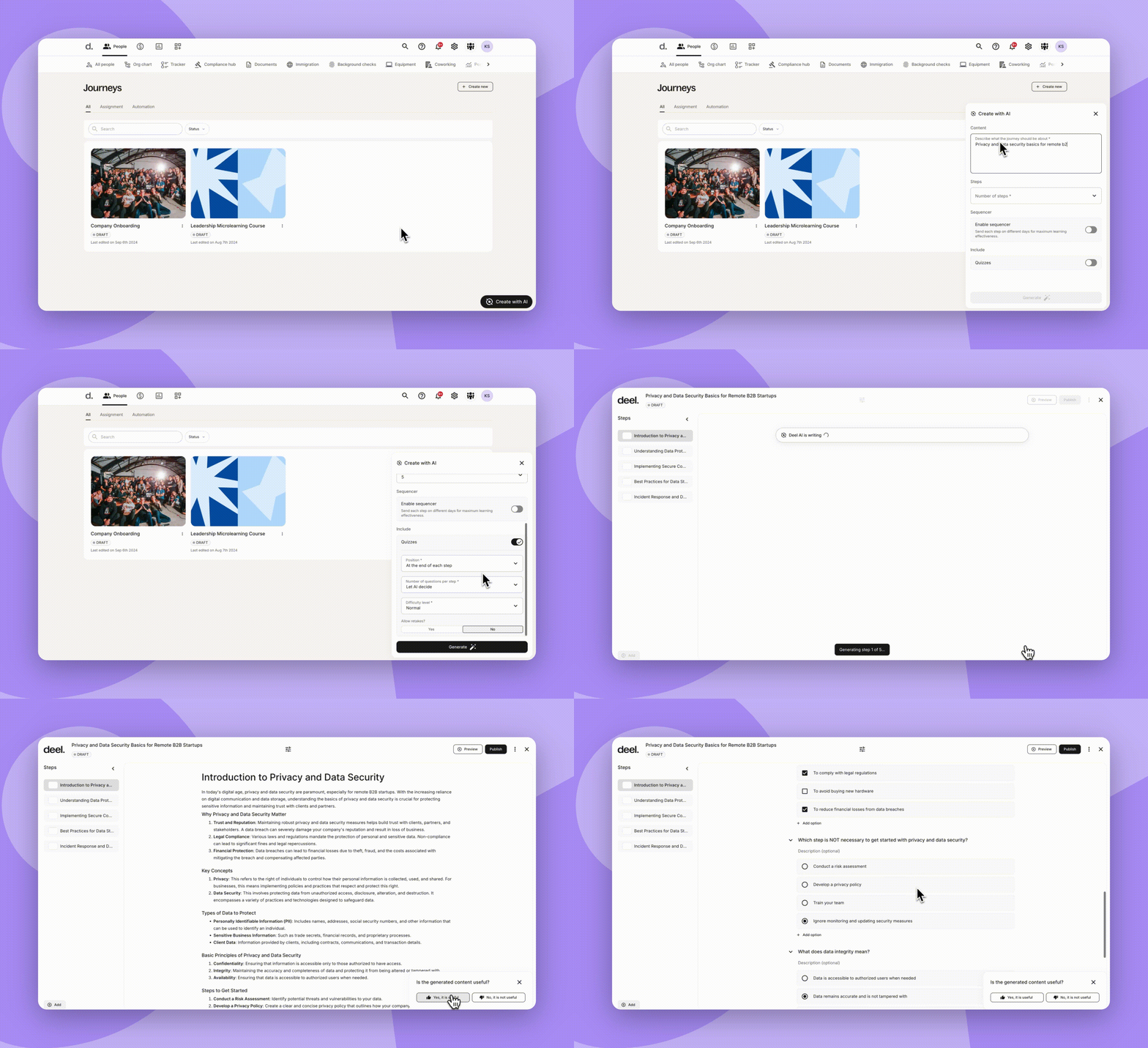
Accelerate learning course creation with Deel Engage’s AI assistant
Assign development plans
Microsoft empowers its talent pool to define personalized growth plans according to employee career aspirations and manager coaching.
With Deel Engage, you can enable employees to drive their development plan. Managers and employees can discuss and define 70-20-10 development plans tailored to individual interests and growth potential. They can come together with personalized goals and action items (such as courses, certifications, shadowing activities, etc.) and timelines to achieve them.
Future-proof your people and business with Deel Engage
Deel Engage helps you create the right type of L&D strategy, where you can provide some handholding while still giving employees control over their learning process.
Start by defining career progression frameworks to illustrate the skills required for growth within a department. Employees can review the framework and design their own learning journey.
The best part is that Deel Engage doesn’t run in isolation as a training software. You can bring new hires onto the platform for onboarding, conduct regular training, and also automate the feedback loop to support their continuous growth.
Deel Engage has everything. We went from cobbling forms together to running reviews, learning, and surveys in one click.
—Lucía Rodriguez,
Head of HR, Ladonware
Book a demo to create a continuous learning culture at your workplace.
More resources
Found this case study interesting? Check out our other detailed guides on HR practices at some of the top-performing organizations.
- How Google’s Innovative Training and Development Programs Empower Employees
- How Does Amazon Enable Training and Development? Pledging Upskilling and Career Growth
- How Does Adobe Train Its Workforce: A Blueprint to Replicate Adobe’s Top Programs
- Employee Development at Cisco: The Power of Innovative, Transformative Learning
- How Microsoft’s Performance Reviews Empower Employees and Drive Business Performance
Lorelei Trisca is a content marketing manager passionate about everything AI and the future of work. She is always on the hunt for the latest HR trends, fresh statistics, and academic and real-life best practices. She aims to spread the word about creating better employee experiences and helping others grow in their careers.


