Article
5 min read
Stablecoin Regulations: What Employers Need to Know (2026 Guide)
Global payroll
Legal & compliance

Author
Joanne Lee
Last Update
September 17, 2026

Key takeaways
Stablecoins are gaining traction as a payment method because of speed and lower cross-border costs, primarily for independent contractor payouts. However, strict local fiat wage mandates and tax obligations apply when considering full employee payroll across different jurisdictions.
Key regulations employers should understand include the US GENIUS Act, EU MiCA, and country-specific wage and tax rules that apply regardless of the payment rail used.
Deel Payroll provides one platform and one accountable partner for global payroll with built-in compliance, support for both fiat and cryptocurrency payments, and AI-assisted workflows that reduce manual work, delivering 67% ROI.
More workers are requesting payment in stablecoins, cross-border payment corridors are increasingly viable in digital assets, and a wave of new legislation, led by the US GENIUS Act and the EU's Markets in Crypto-Assets Regulation (MiCA), has made the regulatory picture both clearer and more complex at the same time.
Stablecoins are becoming more regulated, but the payment rail does not change core employer obligations around withholding, wage law, and worker classification. This guide covers the key regulatory frameworks, what they actually require of employers, and the operational controls finance teams should establish before implementation.
Why stablecoins are growing as a worker payment option
Stablecoins, digital tokens designed to maintain a stable value by being tied (or "pegged") to a fiat currency (most commonly the US dollar), have moved well beyond speculative trading into mainstream payment infrastructure. For global businesses and the contractors they work with, the appeal is practical. Settlement can happen faster than traditional wire transfers, and network fees on many rails are lower than international bank transfer costs, depending on the provider and corridor.
For distributed teams with workers across Latin America, Southeast Asia, and Africa, that speed-and-cost combination matters. Workers in high-inflation markets may prefer dollar-denominated payment options for predictability, subject to local law and individual circumstances. Finance leaders are responding, though many find the compliance layer more demanding than the technology layer.
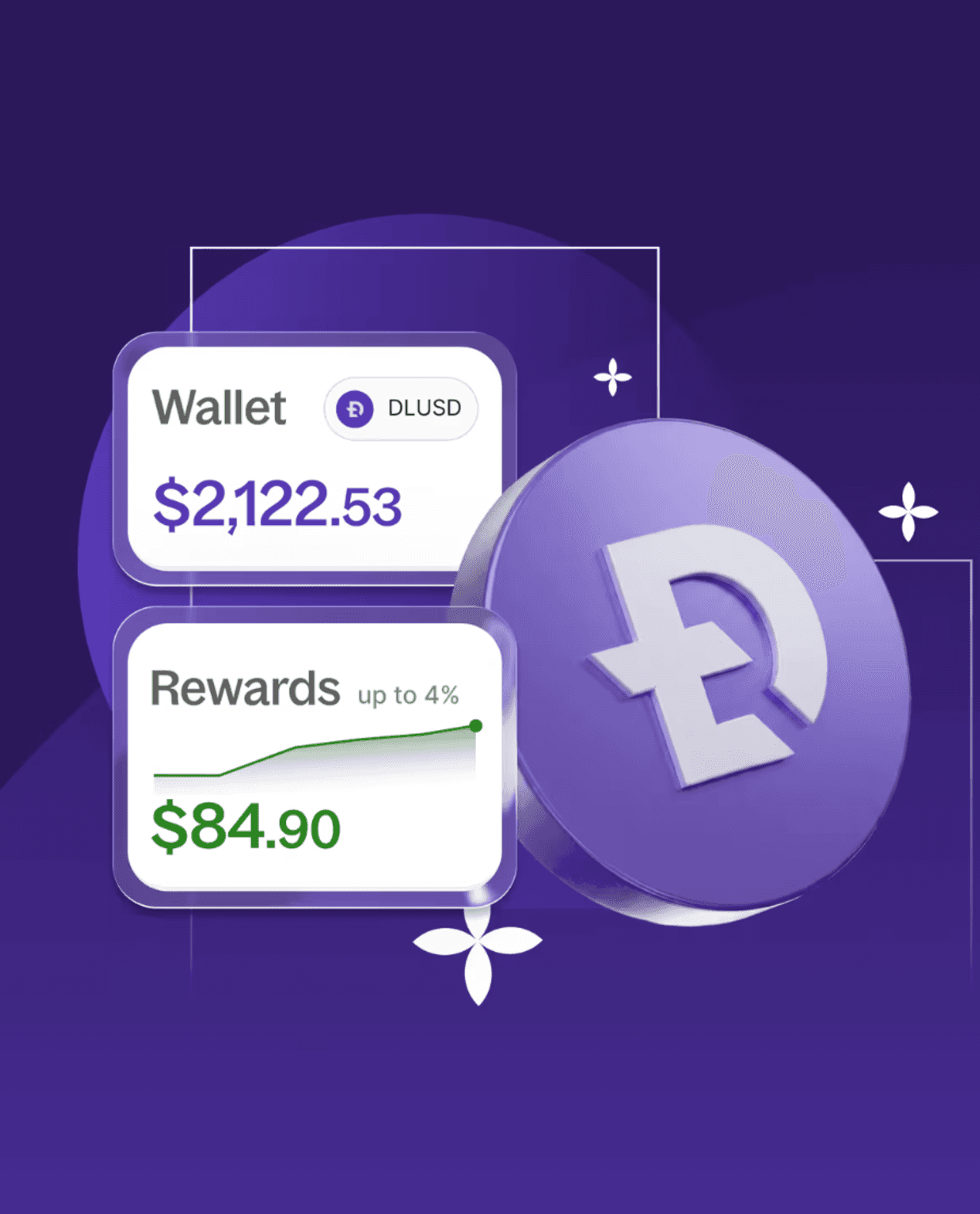
Deel Stablecoin Wallet
Pay contractors with Stablecoin
What makes stablecoin payments legally complex for employers
In most jurisdictions, a stablecoin is not legal tender. It is property. In the US, the IRS treats digital assets, including stablecoins, as property for federal tax purposes. Other jurisdictions apply their own regulatory and tax classifications, but the treatment has significant downstream consequences for employers.
Federal and state wage payment laws still apply regardless of payment method. Under the Fair Labor Standards Act, wages must be paid in a form that meets applicable cash-or-instrument standards. Whether stablecoin may supplement fiat wages depends on the jurisdiction, worker type, and payment structure, so employers should obtain legal advice before implementation. Minimum wage obligations must still be met in dollar terms, with any stablecoin component treated as a supplement or conversion. Employer withholding obligations remain unchanged. The payment method does not change what is reportable, what is withheld, or who bears the filing responsibility.
What this means practically is that paying a worker in stablecoin requires employers to do the following:
Calculate the fair market value of the stablecoin at the time of transfer
Apply all applicable withholding (income tax, payroll taxes, social contributions depending on jurisdiction)
Maintain automated, audit-ready records of both the fiat-equivalent value and the token amount on each payment date
Report using standard forms (W-2 for employees, 1099-NEC for US contractors), denominated in fiat
Key stablecoin regulations employers should know
The regulatory environment is now mature enough to have named frameworks, not just guidance memos. Here are the ones most relevant to employers with cross-border workforces.
The US GENIUS Act (2025)
The Guiding and Establishing National Innovation for U.S. Stablecoins Act (GENIUS Act) was signed into law on July 18, 2025, as Public Law 119-27. It is the first federal framework governing stablecoin issuers in the United States.
The GENIUS Act focuses on issuers, not employers directly. Its key requirements for permitted payment stablecoin issuers include:
100% reserve backing with liquid assets such as US dollars or short-term Treasuries
Monthly public disclosures of reserve composition
Compliance with the Bank Secrecy Act, including anti-money laundering (AML) and sanctions programs
Prohibition on issuing payment stablecoins by any entity that is not a permitted issuer
The critical point for employers is this. The GENIUS Act establishes which stablecoins are legally issuable in the US, but it does not change IRS property classification, W-2 or 1099 filing obligations, or employer withholding rules. Those remain governed by existing tax law. Implementation regulations are still being developed through federal rulemaking.
The employer-facing implication is due diligence. Employers considering stablecoin arrangements should confirm with counsel and their payment provider that the issuer and token satisfy applicable federal requirements once the relevant regime is effective.
IRS tax treatment for crypto wages
The IRS treats all digital assets, including stablecoins, as property rather than currency. This classification, established in Notice 2014-21 governs how employer wage payments in stablecoin are treated.
For employees:
The fair market value of the stablecoin on the date of transfer is includable in gross income as wages
Employers must withhold federal income tax, Social Security (FICA), and Medicare taxes based on that dollar value
Wages must be reported on Form W-2
For contractors:
The fair market value on the date of receipt constitutes self-employment income
Employers must issue Form 1099-NEC if cumulative payments reach $2,000 in a calendar year (Note: The $2,000 threshold is a recent change as a result of the One Big Beautiful Bill Act)
The contractor is responsible for self-employment tax on the full fair market value received

Guide
Global Payroll Compliance Checklist
EU MiCA (Markets in Crypto-Assets Regulation)
MiCA (Regulation (EU) 2023/1114) is the EU's crypto-asset regulation and the world's first framework of its kind at that scale. Its stablecoin provisions (Titles III and IV) applied from June 30, 2024. The full framework for crypto-asset service providers applied from December 30, 2024, with a transitional period for existing providers running until July 1, 2026 in most member states.
MiCA creates two categories of stablecoins relevant to employers.
| Category | Description | Issuer requirement |
|---|---|---|
| E-Money Tokens (EMTs) | Pegged to a single fiat currency (e.g., USD, EUR) | Must be a licensed bank or authorized e-money institution |
| Asset-Referenced Tokens (ARTs) | Pegged to a basket of assets, commodities, or currencies | Must be authorized by a national competent authority. Additional reserve and governance requirements apply |
The practical employer implication is straightforward. If you are paying workers in the EU using a stablecoin, verify that relevant issuers and crypto-asset service providers comply with applicable MiCA requirements. The precise obligations depend on the token, provider, and member state. Using non-compliant tokens risks platform delisting and operational disruption. Some major crypto platforms restricted or delisted certain non-compliant stablecoins for EEA users in early 2025, several months after MiCA's crypto-asset service provider rules took effect.
MiCA does not harmonize wage tax law. Each EU member state's national tax and labor law still governs withholding, wage floors, and reporting. MiCA addresses the token issuance layer, not the employer obligation layer. The EU legal gazette summary of MiCA is the authoritative source for issuer-level obligations.
UK HMRC rules
HMRC (His Majesty's Revenue and Customs) in the UK treats cryptoassets received as employment income as "money's worth," a classification with clear tax consequences. According to HMRC guidance on cryptoassets, stablecoins and other exchange tokens are considered readily convertible assets (RCAs) because trading arrangements exist for converting them to cash.
For UK employers:
Income Tax and Class 1 National Insurance Contributions (NICs) apply on the GBP-equivalent value of the stablecoin at the time of payment
Employers with a UK tax presence must operate PAYE and submit a Full Payment Submission (FPS) on or before each payment date
If the employer cannot deduct the full tax from other wages, the employee must reimburse within 90 days of the tax year end. Failure triggers an additional tax and NIC charge on the employee
For contractors, HMRC treats crypto received outside of employment as miscellaneous income that the individual reports on self-assessment. The employer does not operate PAYE in that case, but the contractor's tax liability still arises on the sterling-equivalent value at receipt.
Singapore MAS framework
The Monetary Authority of Singapore (MAS) finalized its stablecoin regulatory framework in August 2023, building on the Payment Services Act 2019. The framework applies to single-currency stablecoins (SCS) pegged to the Singapore Dollar or any G10 currency and issued in Singapore.
Key requirements for issuers seeking the "MAS-regulated stablecoin" designation:
Reserve assets must equal 100% of coins in circulation at all times
Holders must be able to redeem at par within five business days
Mandatory disclosure of reserve composition, stabilization mechanism, and audit reports
MAS is working to enshrine this framework in law through proposed amendments to the Payment Services Act currently in public consultation. For businesses using stablecoins to pay Singapore-based workers, the practical implication is similar to MiCA. Use tokens issued by licensed providers. Stablecoins that do not qualify under the SCS framework remain regulated as digital payment tokens (DPTs) under the existing Payment Services Act.
Singapore does not have a separate crypto payroll tax regime. Obligations under the Income Tax Act and CPF contributions apply to the SGD-equivalent value of compensation, regardless of the payment instrument.
Other jurisdictions to watch
| Jurisdiction | Framework | Employer note |
|---|---|---|
| Hong Kong | Stablecoins Ordinance (August 2025) | Introduces a licensing regime for stablecoin issuers. Hong Kong employment and tax requirements are unchanged |
| Japan | FSA-licensed stablecoins permitted since 2023 | NTA crypto wage tax guidance still evolving. Employers should use only licensed token issuers |
| UAE | Central Bank Payment Token Services Regulation | Covers regulated stablecoin issuance. Employer payroll obligations are governed by applicable UAE law |
| Brazil | Banco Central do Brasil (BCB) Resolution 561 restricts licensed foreign-exchange providers from settling cross-border payments in stablecoins or other crypto assets | Using stablecoin rails for cross-border payroll in Brazil now faces significant regulatory restriction, not just reporting obligations. Employers should confirm current requirements directly with BCB before relying on stablecoin payment corridors |
Compliance
Unlock Continuous Compliance™ with Deel
Common compliance mistakes employers make
Even well-intentioned teams run into the same set of errors when implementing stablecoin payroll. Here are some common compliance mistakes to be aware of if you're considering incorporating stablecoins into your payment infrastructure.
Misclassifying employees as contractors to avoid withholding: Paying a worker in stablecoin does not change the classification analysis. The economic reality of the working relationship governs, and reclassifying an employee as a contractor to sidestep withholding creates substantial legal exposure.
Using unlicensed or non-compliant stablecoins: Not all tokens marketed as stablecoins meet GENIUS Act, MiCA, or MAS requirements. Using a non-permitted or non-authorized token creates legal exposure and, in some jurisdictions, may expose the employer to regulatory action.
Failing to record fair market value at the time of transfer: This is the most common record-keeping error. If the stablecoin is worth $1.00 at payment and $0.97 a week later, the taxable wage is based on the $1.00 value at the moment of payment, not the value when the worker chooses to convert.
Ignoring state-level US wage-payment laws: Several US states require wages to be paid in cash or a negotiable instrument, a definition cryptocurrency and stablecoins do not meet under current interpretations in states such as California (Labor Code Section 212). Employers need to check state-level requirements before deploying stablecoin payroll in any US jurisdiction.
Treating stablecoin payroll as an off-payroll process: Some teams route stablecoin payments outside their existing HR and payroll infrastructure. This approach creates gaps in withholding documentation, reporting, and worker records that can be difficult to reconstruct at tax time.
Build compliant payroll controls when evaluating stablecoin payments
Managing fiat and stablecoin payroll is now possible in one platform. Deel Payroll gives companies one platform and one accountable partner for running payroll globally. Built-in compliance, automation, and AI-assisted workflows reduce manual work and surface potential issues earlier. Integrated time, payments, and HR and finance systems help teams run payroll accurately and scale without adding fragmented vendors or processes.
Forrester's Total Economic Impact study found that Deel Payroll customers saved 80% of the time they previously spent on payroll vendor management and 60% of the time they spent on payroll processing.
For finance teams evaluating stablecoin payment options, centralizing verified payroll calculations, withholding, and reporting can reduce fragmented compliance work. Finance and legal teams should still assess token, provider, and jurisdiction-specific requirements separately for any stablecoin arrangement.
Deel Payroll
Run payroll on one platform, globally

This content is for informational purposes only and does not constitute legal, tax, or financial advice. Regulations vary by jurisdiction and change frequently. Consult a qualified legal or tax professional for advice specific to your situation.
FAQs
Is it legal to pay employees in stablecoin in the US?
It depends on federal and state law and the payment structure. Some jurisdictions restrict the form in which wages may be paid, so employers should obtain state-specific legal advice before offering stablecoin compensation. Where permitted, stablecoin payments should supplement fiat wages rather than replace them.
Does paying in stablecoin change my employees' tax obligations?
Not fundamentally. Employees receiving compensation in stablecoin owe income tax, Social Security, and Medicare on the fair market value at the time of payment. If the employee later sells or exchanges the token, any increase in value since receipt may create a separate capital gain event.
What does it mean for an employer that a stablecoin is 'GENIUS Act compliant'?
The phrase generally refers to a stablecoin issued by a permitted payment stablecoin issuer. This is an entity approved by a state or federal regulator, holding 100% reserves in liquid assets, and compliant with AML and disclosure requirements. Implementing regulations are still under development, so employers should confirm with counsel once the relevant regime is effective.
Are contractors and employees treated differently when paid in stablecoin?
Yes. For employees, the employer must withhold income tax, Social Security, and Medicare and report on Form W-2. For independent contractors, no withholding is required, but the employer must issue Form 1099-NEC if cumulative payments reach $2,000, and the contractor is responsible for self-employment tax on the fair market value received.
Does MiCA apply to employers, or only to crypto companies?
MiCA primarily regulates stablecoin issuers and crypto-asset service providers. Employers are indirectly affected because they must use MiCA-authorized tokens when paying workers in the EU. The underlying wage tax and labor law obligations remain governed by each member state's national law.
Joanne Lee is a content marketing professional with 7+ years of experience creating effective social, search, email, and blog content for companies ranging from start-ups to large corporations. She's passionate about finding creative ways to tell a purpose-driven story, staying active at the gym, and diversity and inclusion. At Deel, she specializes in writing about topics related to global payroll and enterprise businesses.