
Article
11 min read
How to Do Payroll in Canada: The Ultimate Guide
Global payroll

Author
Shannon Ongaro
Last Update
February 13, 2026


Explore this topic with AI
Key takeaways
- Employers must manage a complex baseline of federal laws layered with specific provincial variations for wages, overtime, and health taxes.
- Running compliant Canadian payroll requires gathering specific tax forms like the TD1 and maintaining detailed employment records for at least six years to meet CRA audit standards.
- Deel Payroll simplifies these complexities by consolidating multi-province tax filings, statutory contributions, and local payments into a single, automated compliance platform.
New to running payroll in Canada? Whether you’re hiring in British Columbia, Newfoundland, or anywhere in between, you’ll need a handle on both federal and provincial payroll regulations.
This guide provides a straightforward overview to help employers manage payroll for Canadian employees, from gathering the necessary information, to making the correct deductions, to compliant record-keeping.
Disclaimer: This content is for informational purposes only and does not constitute tax or legal advice. Rates and requirements are accurate at the time of publishing but may vary or change in the future.
Before you begin: Understanding payroll compliance in Canada
Canada's federal government establishes a baseline for employment and payroll laws, but provinces have the authority to enact their own legislation, leading to considerable variations across the country. Key areas of variation include:
- Minimum wage: Though a federal minimum wage is set, each province can set its own minimum wage.
- Overtime pay: The standard workweek and overtime rules differ by province. Some provinces mandate overtime after 40 hours, while others allow for longer standard workweeks. Overtime rates and calculation methods also vary.
- Example: Often considered business-friendly, Alberta generally has fewer employment regulations compared to other provinces, which can impact factors like overtime pay and termination rules.
- Vacation pay: The amount of vacation time and how it's accrued or paid out differs between provinces. In 2026, provinces like Prince Edward Island have reduced the threshold for 3 weeks of vacation (6%) to 5 years of service.
- Statutory holidays: While there's a common set of statutory holidays across Canada, the rules around pay and entitlements for these days can vary by province.
- Termination of employment: Notice periods or severance pay requirements can differ based on provincial laws, employee tenure, and other factors.
- Example: As a civil law jurisdiction, Quebec's employment law differs significantly from the common law provinces. It has its unique labor code and termination rules.
- Parental and other leaves: While federal law provides a baseline, provinces may offer additional benefits or extended leave periods. In 2026, there is a broad trend toward 27-week unpaid, job-protected medical leaves in provinces like Ontario, BC, Alberta, and Saskatchewan.
- Example: British Columbia (BC) is known for its progressive labor laws and offers additional paid sick leave benefits and has specific regulations around temporary foreign workers.
- Payroll taxes: Provinces have their own payroll taxes, such as health premiums, which can add complexity to payroll processing.
Deel Payroll

How to run payroll in Canada
This eight-step framework covers the standard payroll processing steps for Canadian companies. Follow this framework while applying local employment and labor laws to ensure compliance.
1. Gather the required employer information
To set up payroll in Canada, an employer needs to gather and manage several key pieces of business information to ensure compliance with local tax and employment regulations. This includes:
Business information:
- Legal business name, address, and contact information
- Payroll program account number
- Industry type
- Province or territory of operation (Determination of "Province of Employment" is vital for remote workers)
Tax information:
- Business number (BN)
- Remittance schedules for federal and provincial taxes
- Tax rates and deduction tables (including the 2026 federal 14% bottom-bracket rate)
Banking information:
- Bank account details for payroll deposits and tax remittances
2. Gather the required employee information
Canadian companies need specific employee information to accurately calculate wages, manage payments, withhold taxes, and ensure legal compliance. Requirements will vary depending on the province or territory, but here is a general breakdown of what is required:
Personal information:
- Full name, address, date of birth, and SIN (Social Insurance Number)
- Emergency contact information
Employment information:
- Hire date, job title, and department
- Regular hours of work, overtime rate, and pay frequency
- Bank account information for direct deposit
- TD1 form information (tax deductions)
- Benefits enrollment information (if applicable)
- Garnishment orders (if any)
Earnings and deductions:
- Hourly rate, salary, or commission
- Bonuses, overtime pay, and other earnings
- Income tax, CPP (Canada Pension Plan), EI (Employment Insurance), and provincial deductions
- Benefits deductions (health insurance, dental, etc.)
- Other deductions (union dues, charitable donations, etc.)
See also: Guide to Hiring Employees in Canada
Immigration and hiring support
For businesses bringing in global talent, you may need to navigate the Canadian work permit application process, secure a positive LMIA, or explore options like the TN Visa for North American professionals. Additionally, employee background checks in Canada are a standard part of the compliant onboarding process.
See also: Canada's Digital Nomad Visa and H-1B Open Work Permit Program or our guide for expats moving to Canada.
Setting payroll schedules
In Canada, pay frequency laws can vary by province and territory. However, there are some general guidelines and common practices that apply across the country:
General pay frequency
- Allowed pay frequencies: Monthly, bi-weekly, and semi-monthly
- Typical pay frequency: Bi-weekly is the most common pay frequency in Canada
Specific pay schedules
- Monthly: Employees are paid once a month
- Bi-weekly: Employees are paid every two weeks
- Semi-monthly: Employees are paid twice a month, typically on the 15th and the last day of the month (30th or 31st)
Provincial variations
While the aforementioned guidelines provide a general framework, specific provinces may have additional regulations or variations. For example:
- Ontario: Employers must pay employees at least semi-monthly
- British Columbia: Employers must pay employees at least semi-monthly and within eight days after the end of the pay period
- Quebec: Employers must pay employees at least every 16 days
4. Calculating pay
How salary is calculated
- Gross salary includes the regular salary and any additional payments like bonuses or allowances.
- The net salary (net pay) is the gross salary minus the total deductions for the pay period, including any taxes.
- The net salary may change from one pay period to the next if the employee has received any taxable allowances or bonuses or if they reach the annual contribution limit for Employment Insurance, Canada Pension Plan / Quebec Pension Plan, or the Quebec Parental Insurance Program.
How taxes are calculated
- Federal and provincial income taxes are based on the employee's province of residence
- For 2026, the federal tax rate for the lowest income bracket (up to $58,523) is 14%
- For employees in Quebec, the federal taxes and Quebec income tax are calculated separately
- For all other employees, federal and provincial taxes are calculated as a single deduction
Minimum wage
The minimum wage in Canada is regulated by both the federal government for federally regulated workers, and by the provinces and territories for workers under provincial jurisdiction. With the exception of the federal public services and constitutionally defined federal industries, wages for most workers in Canada are regulated by the province in which they work. Minimum wage rates are adjusted annually on April 1.
For 2026, Canada’s minimum wage requirements are as follows:
| Jurisdiction | Wage Rate (CAD) | Effective Date |
|---|---|---|
| Federa | $17.75 | 01-Apr-2025 |
| Alberta | $15.00 | 26-Jun-2019 |
| British Columbia | $17.85 | 01-Jun-2025 |
| Manitoba | $16.00 | 01-Oct-2025 |
| New Brunswick | $15.65 | 01-Apr-2025 |
| Newfoundland and Labrador | $16.00 | 01-Apr-2025 |
| Northwest Territories | $16.95 | 01-Sep-2025 |
| Nova Scotia | $16.50 | 01-Oct-2025 |
| Nova Scotia | $16.75 | 01-Apr-2026 |
| Nova Scotia | $17.00 | 01-Oct-2026 |
| Nunavut | $19.75 | 01-Sep-2025 |
| Ontario | $17.60 | 01-Oct-2025 |
| Prince Edward Island | $16.50 | 01-Oct-2025 |
| Prince Edward Island | $17.00 | 01-Apr-2026 |
| Quebec | $16.10 | 01-May-2025 |
| Quebec | $16.60 | 01-May-2026 |
| Saskatchewan | $15.35 | 01-Oct-2025 |
| Yukon | $17.94 | 01-Apr-2025 |
Overtime and work hours
Overtime payment is generally mandatory in Canada. Certain position types and professions are exempt from overtime requirements such as employees with managerial responsibilities. Exemptions are complex and depend upon the province where the employee is located.
Hours outside of standard work hours are considered overtime. Employees can work a maximum of eight hours of overtime per week. For additional hours, employees are paid 150% of their salary.
- Hours per day: 8
- Hours per week: 40
- Work week: Monday - Friday

5. Calculating deductions and contributions
Statutory benefits, leave benefits, and workers’ compensation can vary from province to province. Here’s a look at what you can expect:
| Benefit | Status | Provider | Rate | Notes |
|---|---|---|---|---|
| Canada Pension Plan (CPP) | Legally Required | Government | 5.95% on earnings up to $74,600 | Max Tier 1: $4,230.45. CPP2 applies to earnings between $74,600-$85,000 at 4% (Max $416). |
| Quebec Parental Insurance Plan (QPIP) | Legally Required (Quebec only) | Provincial Government | Variable | Prevents double-taxation for maternity/parental benefits. |
| Public Health Insurance | Legally Required | Government | Variable | Provincial health taxes apply in BC, ON, MB, NL, and QC. |
| Quebec Pension Plan | Legally Required (Quebec only) | Quebec Government | 6.30% up to $74,600 | Max Tier 1: $4,479.30. QPP2 applies at 4% between YMPE and YAMPE. |
| Employment Insurance (EI) | Legally Required | Public Insurance Government | 1.63% (Federal) / 1.30% (Quebec) | Max Contribution: $1,123.07 (Federal) / $895.70 (Quebec). Insurable Earnings: $68,900. |
| Workers Compensation | Legally Required | Public Insurance Government | Variable rate | Based on industry risk and provincial assessable earnings caps. |
| Leave Benefit | Status | Statutory minimum | Paid or Unpaid | Compensation |
|---|---|---|---|---|
| Vacation | Statutory | 2-3 weeks (varies by province and tenure) | Paid | 4% or 6% (PEI now 6% after 5 years) |
| Public Holidays | Statutory | Depends on province | Depends on province | Depends on province |
| Maternity Leave | Statutory | 15 weeks | Paid | 55% of earnings up to EI maximums |
| Parental Leave | Statutory | Up to 12 months regular or 18 months extended | Paid | 55% (standard) or 33% (extended) of earnings up to EI maximums |
| Medical/Sick Leave | Statutory | Up to 27 weeks in many provinces | Unpaid | Job-protected to match EI sickness benefits (26 weeks). |
| Civic Duty | Statutory | Depends on service | Unpaid | Varies by province |
| Bereavement Leave | Statutory | Typically 3-5 days | Unpaid | Paid is at employer discretion |
See also: Comprehensive guide to employee benefits in Canada
Severance pay
In Canada, employees can be terminated without cause at any time, as long as notice is provided. Ontario requires statutory severance (one week per year of service) if the employer's payroll is at least $2.5 million and the employee has five or more years of service.
Ontario is the only province that requires statutory severance of one week for every year of services, after five years of employment. These rules are governed by the Employment Standards Act, which sets the floor for worker protections.
Note: The term severance pay or termination pay in Canada is often used colloquially to also include payments in lieu of notice.
Notice periods
Notice periods vary based on provincial law. In most provinces, this is at least one week's notice per year of service, capped at 8 weeks. Payment in lieu is allowed. Benefits must be provided through the notice period, as per legal requirements. Understanding employment laws in Canada is essential to ensuring these periods are handled compliantly.
Local best practice is usually that two to four weeks' additional notice per year of service is provided and paid in lieu, on top of statutory and common law requirements in exchange for a waiver of future liabilities.
Workers’ compensation
The federal workers' compensation programs protect employees from the financial hardships associated with work-related injuries and occupational illness.
While these programs are largely administered by provincial and territorial governments in Canada, the Labour Program is responsible for claims that involve federal government employees—both inside and outside of the country. For businesses looking to scale without managing these individual registrations, using a PEO in Canada or an Employer of Record (EOR) can simplify the process.
Workers' compensation programs in Canada generally cover most employees. However, companies must be careful with employee misclassification risks when hiring contractors in Canada, as eligibility differs from that of full-time staff.
For example, the following rates are based on the respective provincial boards (WSIB, WorkSafeBC, CNESST, etc.) for the 2025 calendar year:
| Province/Territory | Avg Premium Rate Per $100 | Maximum Assessable Earnings |
|---|---|---|
| Alberta | $1.46 | $110,900 |
| British Columbia | $1.55 | $127,500 |
| Saskatchewan | $1.22 | $107,599 |
| Manitoba | $0.95 | $171,500 |
| Ontario | $1.23 | $121,700 |
| Quebec | $1.54 | $103,000 |
| Nova Scotia | $2.65 | $79,900 |
| Newfoundland & Labrador | $1.73 | $80,935 |
| New Brunswick | $1.10 | $85,800 |
| Prince Edward Island | $1.28 | $89,300 |
Employer health tax contributions
British Columbia, Manitoba, Newfoundland and Labrador, Ontario, and Quebec have a distinct, payroll-based employer health tax. These are a significant part of the total employer costs for an employee in Canada.
| Province/Territory | Contribution Rate | 2026 exemption threshold (if any) |
|---|---|---|
| British Columbia (BC) | 1.95% (standard) | Exempt if payroll ≤ $1,000,000. |
| Manitoba (MB) | 2.15% (standard) | Exempt if payroll ≤ $2,500,000. |
| Ontario (ON) | Up to 1.95% | Exemption on first $1,000,000 payroll. |
| Quebec (QC) | 1.25% - 4.26% | Max rate applies if payroll > $7,800,000. |
| Newfoundland & Labrador (NL) | 2% | Exempt if payroll ≤ $2,000,000. |
| NWT / Nunavut | 2% | Employee-deducted in Nunavut. |
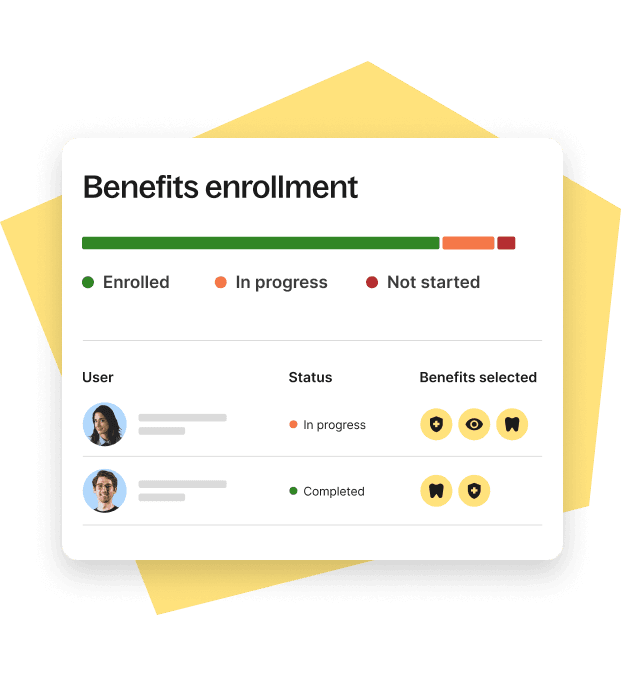
Benefits Administration
6. Choose your payment method
Another important decision you have to make is how you will hire and pay workers in Canada. Employers must adhere to federal and provincial regulations when choosing a payment method and implementing payroll practices.
- Consent: Employers may need to obtain employees’ consent for certain payment methods.
- Wage laws: All methods must comply with Canada's hiring compliance standards.
- Recordkeeping: Maintain accurate records for up to seven years.
- Fee disclosure: Provide clear disclosures if certain payment methods involve fees.
Payment must be made in local currency only (CAD). For many international employees, opening a bank account in Canada is the first step toward receiving local payments.
7. Distribute payments and payslips
Once you’ve calculated gross pay and made all the necessary Canadian payroll tax deductions, the remaining amount is the employee’s net pay. The next step is distributing these payments to your employees (in addition to any bonuses, expense reimbursements, etc.) and providing them with payslips (also known as paystubs). Payment must be made in local currency only.
Distributing payments
Employers can distribute payroll payments via their preferred payment method as long as it complies with local payroll regulations.
Through Deel, clients can fund their payroll with a variety of methods, including ACH, SEPA, BACS, PAD, Brex, credit cards, and debit cards, or manual transfers from your bank, Wise, or Mercury accounts, or cryptocurrency transfers through Coinbase.
Once your payroll is funded, Deel distributes payments to your payrolled employees on your behalf (where allowed) in compliance with the employee’s local payroll regulations.
Payslip requirements
In 2026, several provinces require payslips to clearly display vacation accruals, entitlements, and balances.Here’s a look at the payslip line items and definitions on a Canada payslip:
Earnings
| Payslip Item | What it means |
|---|---|
| Regular | This is the semi-monthly salary amount. This amount is pro-rated for the first and last pay. |
| Bonus | A company-paid bonus, including any signing bonus. This amount is taxable. |
| TB Allowance | A company paid a taxable allowance. |
| Gross Pay | The sum of any regular salary, bonus, taxable allowance, and other payments. |
| Net Pay | Gross pay minus all deductions. This is the amount that will be deposited on payday. |
| Expense Reimbursement | Reimbursements of any approved business expenses. This amount is not taxed. |
Deductions
| Payslip Item | What it means |
|---|---|
| CPP/QPP | Statutory deduction for the Canada Pension Plan or Quebec Pension Plan. |
| EI | Statutory deduction for Employment Insurance. |
| Federal Tax | Combined Federal and Provincial Tax (except in Quebec). |
| QIT | Quebec Income Tax. |
| QPIP | Quebec Parental Insurance Plan. |
| Health Benefit | Benefit deduction based on benefit service provider premiums. |
| RRSP | Tax-deductible registered retirement savings plan contributions. |
See also: How to reduce payroll costs in Canada
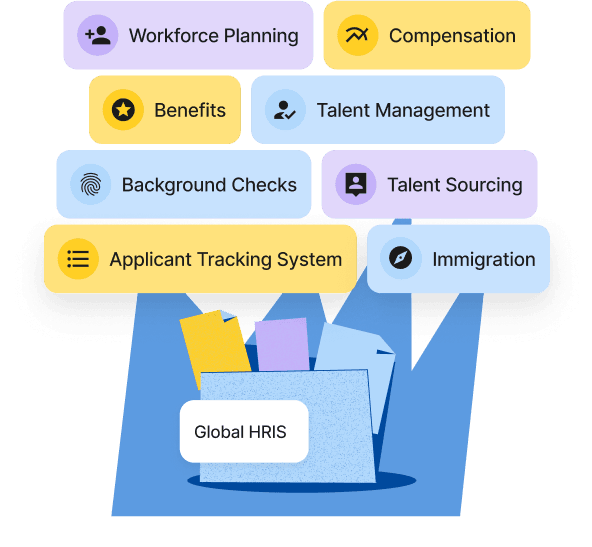
Deel HR
8. Compliant recordkeeping and tax documentation
Employers in Canada must keep comprehensive payroll records for each employee for at least six years from the end of the last tax year they relate to. When employment ends, you must also keep the employee’s records for another 36 months. This includes:
General records
- Start and end date of employment of each employee
- Name
- Address
- SIN
- Sex
- Age (only recorded for employees under the age of 18)
- Rate of wages
- Explanation of wages if on any other basis
- Hours of work provided each day (exceptions apply)
- Commission salespeople in the broadcasting industry
- Commission salespeople in the banking industry
- Railway running-trades employees
Earning records
- Amounts paid each payday
- Overtime pay recorded
- Vacation pay recorded
- General holiday pay recorded
- Personal leave pay recorded
- Pay for leave of victims of family violence recorded
- Bereavement leave pay recorded
- Medical leave of absence pay recorded
- Termination pay recorded
- Severance pay recorded
- Details of pay and deductions made each payday
- Start and end date(s) of each vacation period
- Year of employment with respect to each annual leave granted
- Copy of any written notice of an interruption or resumption of vacation:
- parental leave
- maternity leave
- compassionate care leave
- leave related to critical illness
- leave related to death or disappearance
- Start and end date of any leave granted to the employee
- Start and end date of any maternity reassignment/modifications/notices
- General holidays or another day with pay granted, notices of substitution
- Employer’s pay periods
Averaging records
- Posted notice
- Periods of averaging
- Start date of averaging
- Details of reductions in standard and maximum hours of work
- Number of overtime hours paid if applicable or granted time off for overtime worked
Tax forms and documentation
The documents you need depend on whether you have a Federal Corporation, or a provincial entity like an Ontario Corporation or a British Columbia Corporation.
- T4 Slip (Statement of Remuneration Paid): Issued annually to each employee, summarizing employment earnings and deductions for the calendar year. This form must be filed with the Canada Revenue Agency (CRA) and provided to employees by the last day of February following the calendar year.
- T4 Summary: A summary of all T4 slips issued by the employer, which must be submitted to the CRA along with the individual T4 slips by the end of February.
- TD1 Forms (Personal Tax Credits Return): Federal and provincial/ territorial forms, such as TD1ON for Ontario, are completed by employees to determine the amount of tax to be deducted from their income. Employers must have a completed TD1 form for each employee.
- Record of Employment (ROE): Issued when an employee experiences an interruption in earnings, used to determine eligibility for Employment Insurance (EI) benefits. This form must be submitted electronically to Service Canada within specific time frames based on the reason for the ROE.
- T2200 (Declaration of Conditions of Employment): Completed by employers for employees who are required to pay for work-related expenses out of pocket, helping employees claim employment expenses on their personal tax returns.
Run hassle-free payroll in Canada and beyond with Deel
Deel Payroll offers one platform to pay teams locally or globally. You can run payroll on your own or with Deel’s experts. Deel Payroll delivers the same consistent experience with global coverage, real-time accuracy, and built-in compliance.
- One product, one platform: Manage domestic and global payroll in a single system that connects payroll, HR, payments, benefits, and compliance across 130+ countries.
- Global reach with local compliance: Deel provides accurate, compliant payroll through its own infrastructure and in-country expertise—not outsourced providers.
- Real-time processing where it matters most: Native gross-to-net calculations in 50+ countries enable instant results, faster pay cycles, and smoother integrations.
- A single source of truth for your workforce: Payroll sits alongside HR, IT, and Benefits in Deel, giving you unified visibility into people spend, rewards, and compliance.
- Benefits that flow automatically: Direct integration with Deel Benefits keeps enrollments, deductions, and contributions synced into every pay cycle without manual updates.
- Enterprise-grade reliability and scale: Trusted by 37,000+ companies, backed by 2,000+ in-house specialists, with 99.9% payroll accuracy and fast implementations.
Book a 30-minute demo with a product expert to learn more about your payroll options for Canada and globally.
Shannon Ongaro is a content marketing manager and trained journalist with over a decade of experience producing content that supports franchisees, small businesses, and global enterprises. Over the years, she’s covered topics such as payroll, HR tech, workplace culture, and more. At Deel, Shannon specializes in thought leadership and global payroll content.


