Article
6 min read
CFO's Guide to Global Payroll Outsourcing ROI
Global payroll

Author
Joanne Lee
Last Update
June 09, 2026

Table of Contents
Start by mapping every cost, not just the contract
The ROI model: What to calculate and how
Key metrics to track after implementation
Integrating GL and HRIS with global payroll
Building the board-level business case
Partner with Deel to generate ROI on global payroll
Key takeaways
Accurately measuring global payroll ROI requires accounting for both direct and indirect costs. Vendor fees alone represent only a fraction of true operational cost.
Tracking eight core metrics (including TCO, compliance incident rate, and cost per employee) gives finance leaders the visibility needed to benchmark performance and defend investment decisions over time.
GL standardization and bidirectional HRIS integration are prerequisites for payroll ROI, not optional enhancements. Without them, reconciliation overhead compounds every other cost category.
Global payroll is one of the most complex line items on a finance leader's balance sheet. The vendor contract captures the headline fee, but the true operational cost is spread across internal headcount, third-party consultants, reconciliation overhead, compliance exposure, and error resolution.
Without a structured way to account for all of it, benchmarking performance or building a credible case for change becomes difficult.
This guide provides a framework for finance leaders to calculate total cost of ownership across global payroll operations, modeling ROI, and establishing the metrics needed to track performance over time.
Start by mapping every cost, not just the contract
The most common mistake in payroll outsourcing ROI analysis is limiting consideration to vendor fees. Contract pricing is only a fraction of your true operational cost. The rest lives in two categories: direct and indirect payroll costs.
Direct payroll costs
These are the costs that appear somewhere in your budget, even if they're scattered across departments:
Payroll vendor fees: This includes subscription costs, per-employee charges, country surcharges, implementation fees, and any support packages. Enterprises operating across multiple countries often have these split across several contracts
Banking and payment processing fees: Paying employees in multiple countries involves international wire transfers, currency conversion, and local payment rail charges. Organizations without integrated multi-currency payment infrastructure routinely absorb significant annual losses through unfavorable exchange rates and transfer fees that never appear on a payroll invoice
In-house payroll staff: Even with external providers, your HR and finance teams are managing data entry, reconciliation, compliance monitoring, vendor coordination, and error resolution. The full cost of that headcount (salary plus benefits) is a direct cost of your payroll operations, regardless of how it's classified in your budget
Third-party vendors and local consultants: Most multinational organizations rely on local accountants, legal advisors, or in-country partners to maintain compliance in markets where their primary vendor sub-contracts or falls short. Each relationship adds cost and accountability complexity
Compliance and regulatory costs: Maintaining compliance across jurisdictions includes payroll software licenses, external legal counsel, and the resources required to stay current as regulations change
Indirect payroll costs
Indirect costs are harder to isolate but often represent the larger share of total operational cost. This is also where the greatest ROI opportunity sits.
Payroll errors: Manual processes across disconnected systems create compounding error risk through overpayments, underpayments, incorrect tax withholdings, and misclassified workers. Each error takes hours to resolve, creates regulatory exposure, and erodes workforce trust. Organizations that have moved from decentralized to centralized payroll operations consistently report that error frequency drops significantly because the root cause (fragmentation) is addressed rather than managed
Delayed payments: Late payroll is more than an operational headache. For employees, it creates genuine hardship. For the organization, it triggers penalties, interest charges, and in certain jurisdictions, PE risk implications that can escalate well beyond the payroll error itself
Compliance incidents and fines: Payroll regulations change frequently across every market you operate in. A missed filing deadline, an outdated withholding rate, or a misclassified contractor can generate penalties, back taxes, and legal fees
Reduced productivity: Internal teams managing a patchwork of payroll vendors and spreadsheets have less capacity for planning, analysis, and strategic work. Quantify the hours your finance and HR teams spend per payroll cycle on coordination and error resolution and convert those hours to loaded labor cost
Limited operational agility: Payroll infrastructure that cannot scale with M&A activity, rapid headcount growth, or new market entries carries real costs. It results in delayed hires, compliance workarounds, and missed market timing. If your system requires weeks of setup before you can employ someone in a new country, the cost of that delay is attributable to the infrastructure, not the opportunity
Employee attrition attributable to payroll failures: Payroll errors and payment delays are consistently among the top drivers of voluntary attrition in global workforces. If your payroll operation is contributing to attrition, even marginally, that cost should be considered
Build a cost inventory across both categories before you benchmark any vendor or evaluate any platform change. In most fragmented payroll operations, indirect costs are significant enough to shift the total picture considerably, and they're where the greatest opportunity for reduction is.
Deel's infrastructure handles 90% of the heavy lifting for us. Whether we’re hiring contractors, expanding with EOR, or paying employees, Deel saves us time, money, and resources.
—Stephen Epling,
VP of Global Rewards and Workplace, Outreach
Read more about how Outreach achieved a 90% workload reduction with Deel.
The ROI model: What to calculate and how
Once you have a complete cost inventory, the ROI model has a straightforward formula:
ROI = (Cost reduction + Risk mitigation value + Efficiency gain) ÷ Total cost of ownership of solution
To get the most out of this model, approach each component intentionally.
Cost reduction is the most visible component. It includes vendor consolidation savings, reduced external consultant spend, elimination of redundant systems and middleware, and lower banking and payment processing fees through optimized payment infrastructure
Risk mitigation value is the most frequently underweighted component and often the largest. Assign a probability-weighted cost to one compliance incident in each of your high-risk jurisdictions. Factor in current misclassification exposure, PE risk in your existing contractor footprint, and the cost of a failed SOX audit. This line item often exceeds projected vendor savings by a significant margin, and it is the number that moves senior leadership from interested to committed
Efficiency gain captures what your finance and HR teams get back, such as hours per cycle recaptured and reallocated to strategic work, payroll cycle time reduction enabling a faster monthly close, and error rate reduction eliminating correction cycles and their downstream costs
Total cost of ownership must include implementation cost amortized over a 3-to-5-year horizon, normalized platform and service fees per employee per country, and ongoing internal management overhead post-implementation. A low annual fee paired with a nine-month implementation that consumes two FTEs is not a low-cost solution. Model the full picture
Create a spreadsheet model with conservative assumptions, particularly on risk mitigation value. A defensible low-end number carries more weight in a board presentation than an unrealistically optimistic one.

Report
Discover the Total Economic Impact™ of Deel
Key metrics to track after implementation
ROI is not a calculation you run once. It requires a tracking cadence that makes performance visible over time.
Establish baseline measurements across these eight metrics before any vendor transition to effectively measure and prove ROI.
Total cost of ownership
Total cost of ownership (TCO) is the foundational metric in any payroll outsourcing ROI analysis. Without it, every other comparison is incomplete. It represents the sum of all direct and indirect costs associated with running payroll operations: vendor fees, internal headcount, banking and payment processing, third-party consultants, compliance costs, error resolution, and productivity and attrition costs.
It establishes a defensible baseline to evaluate vendor changes and consolidation initiatives. Tracked quarterly, it also reveals whether operational efficiency is improving as the organization grows, or whether complexity is accumulating faster than the infrastructure can absorb it.
Payroll accuracy rate
This is the percentage of pay cycles completed without corrections. Track by country to identify systemic issues. A target of 99.5 percent or above is achievable with consolidated infrastructure; anything below 99 percent warrants a root-cause review.
Payment timeliness
Payment timeliness is measured as a percentage of employees paid accurately and on time, by country. Non-compliance with local payment timing rules carries direct financial penalty in most jurisdictions, making this a compliance metric in addition to operational.
Compliance incident rate
Compliance incident rate is the number and severity of regulatory findings, missed filings, and fines per quarter. Compliance incident rate matters because the consequences of non-compliance scale with operational complexity in ways that aren't linear.
A missed filing or misclassified contractor in a high-risk jurisdiction can trigger back taxes, penalties, and legal fees that far exceed the original error in magnitude. For enterprises operating across dozens of countries, even a low incident rate can represent significant aggregate exposure.
Payroll processing time
This is the hours per cycle spent by your finance and HR teams on payroll-related work. High processing time is a proxy for systemic inefficiency and a leading indicator of error risk. Deel reduces payroll processing time by 60% for organizations that consolidate onto its platform, a useful benchmark for what operational efficiency looks like at scale.
Cost per employee
Cost per employee, the total loaded payroll cost divided by headcount, normalizes operational cost in a way that makes performance comparable across time periods, geographies, and organizational changes.
In a well-functioning payroll operation, cost per employee should decrease as headcount grows, as fixed costs get spread across a larger base. If it's rising alongside headcount, that's a signal the system isn't scaling, and each new employee or market is adding disproportionate operational overhead rather than being absorbed efficiently.
Vendor count and consolidation ratio
Vendor count and consolidation ratio tracks the number of payroll vendors your organization uses (including sub-contracted local partners) relative to a prior period baseline.
It's the structural driver behind performance in nearly every other category on this list. Each additional vendor introduces a reconciliation point, a coordination cost, a compliance accountability gap, and a potential GL inconsistency. Consolidating payroll vendors doesn't just reduce direct vendor spend; it reduces the surface area for error, delays, and audit findings across the entire operation.
For enterprises that have grown through acquisition, vendor count often reflects the accumulated payroll infrastructure of every entity ever absorbed, and rationalizing it is one of the highest-leverage actions a finance leader can take on total cost of ownership.
Employee satisfaction with payroll
Employee satisfaction with payroll is worth tracking as a formal metric through regular surveys and payroll-related support ticket volume. It functions as an early warning system for operational issues that don't always surface immediately in accuracy or timeliness data.
Employees notice payment discrepancies, incorrect deductions, and benefit calculation errors before they're formally logged as corrections, and these errors significantly erode employee morale. Additionally, employee satisfaction directly impacts attrition, which can result in lost productivity that is costly to restore.
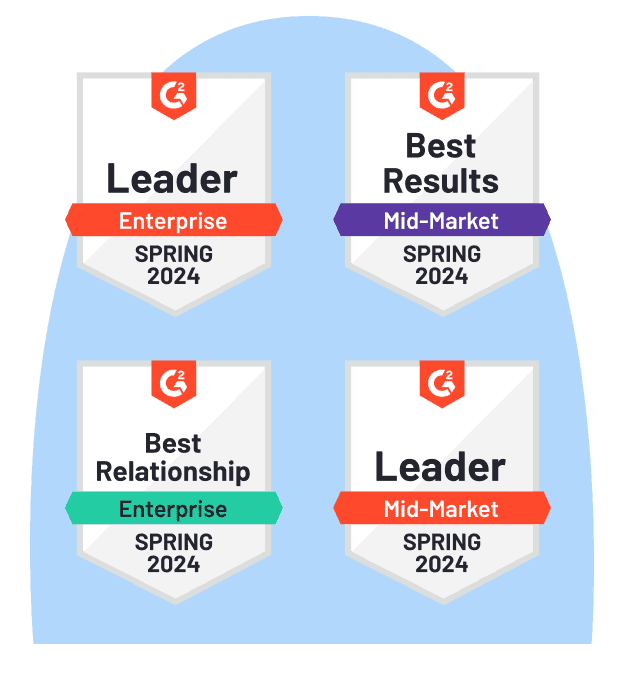
Deel on G2
G2 reviewers rate Deel #1 in multi-country payroll
Integrating GL and HRIS with global payroll
No global payroll ROI discussion is complete without addressing integration with finance and HR systems. It’s a common source of hidden indirect cost at the enterprise level.
Payroll data that doesn't flow cleanly and bidirectionally into Workday, SAP, or Oracle creates manual reconciliation work that compounds every cost category above. Inconsistent chart of accounts across countries forces your team to manually map GL entries. Batch exports that require transformation before entering your ERP multiply error risk and delay your monthly close. The reconciliation overhead is real, it is measurable, and it almost never appears on a payroll vendor invoice.
Require real-time, bidirectional HRIS integration from your payroll provider, not a batch export. Priotize standardized GL mapping across all in-scope countries and audit-ready data trails where every transformation is logged and attributable.
When evaluating any payroll vendor, ask specifically how data flows from their system into your HRIS environment. Who is responsible for GL mapping, how is that mapping validated, and what does the resolution process looks like when a mismatch occurs? The answers to those questions will tell you more about the true operational cost of that partnership than anything in the contract.

Template
Simplify your vendor search with an RFP template
Building the board-level business case
When the model is complete, the internal business case for global payroll transformation needs one page that a CFO or a board can read in a few minutes. This should include:
Current state cost: Full direct and indirect inventory of costs
Target state cost: Conservative model with documented assumptions
Projected savings: Three-year net present value (NPV)
Risk mitigation value: Probability-weighted, with assumptions stated
Implementation cost and timeline: Amortized, with break-even point (typically months 18 to 24 for consolidated programs)
Key risks and mitigations: Outline risks honestly and specifically
Present the risk mitigation case with equal weight to the savings case. Boards and executive leadership approve payroll transformation programs that protect the business. The programs that stall are the ones that only make a cost savings argument.
Watch on-demand: The ROI of Payroll Transformation: Lessons from Global Companies
Partner with Deel to generate ROI on global payroll
Deel's global payroll infrastructure is built for the complexity enterprises actually operate in. We’re backed by 150+ owned legal entities, 2,000+ in-house experts across HR, payroll, and legal, and native bidirectional integration with widely-used platforms like Workday.
That means standardized GL mapping, audit-ready data trails, and a single system of record for global workforce operations, without overhauling the infrastructure you already have.
Organizations that consolidate with Deel reduce payroll processing time by 60% and gain the visibility needed to track TCO, compliance performance, and operational efficiency.
Schedule a consultation with one of our experts to learn more about how Deel Payroll can generate ROI in your global payroll operations.
Deel Payroll
Run payroll on one platform, globally

Joanne Lee is a content marketing professional with 7+ years of experience creating effective social, search, email, and blog content for companies ranging from start-ups to large corporations. She's passionate about finding creative ways to tell a purpose-driven story, staying active at the gym, and diversity and inclusion. At Deel, she specializes in writing about topics related to global payroll and enterprise businesses.