Article
1 min read
Build a Recognition Program That Doesn't Fade out with Kudos
Deel news
Global HR

Author
Lorelei Trisca
Last Update
November 20, 2026
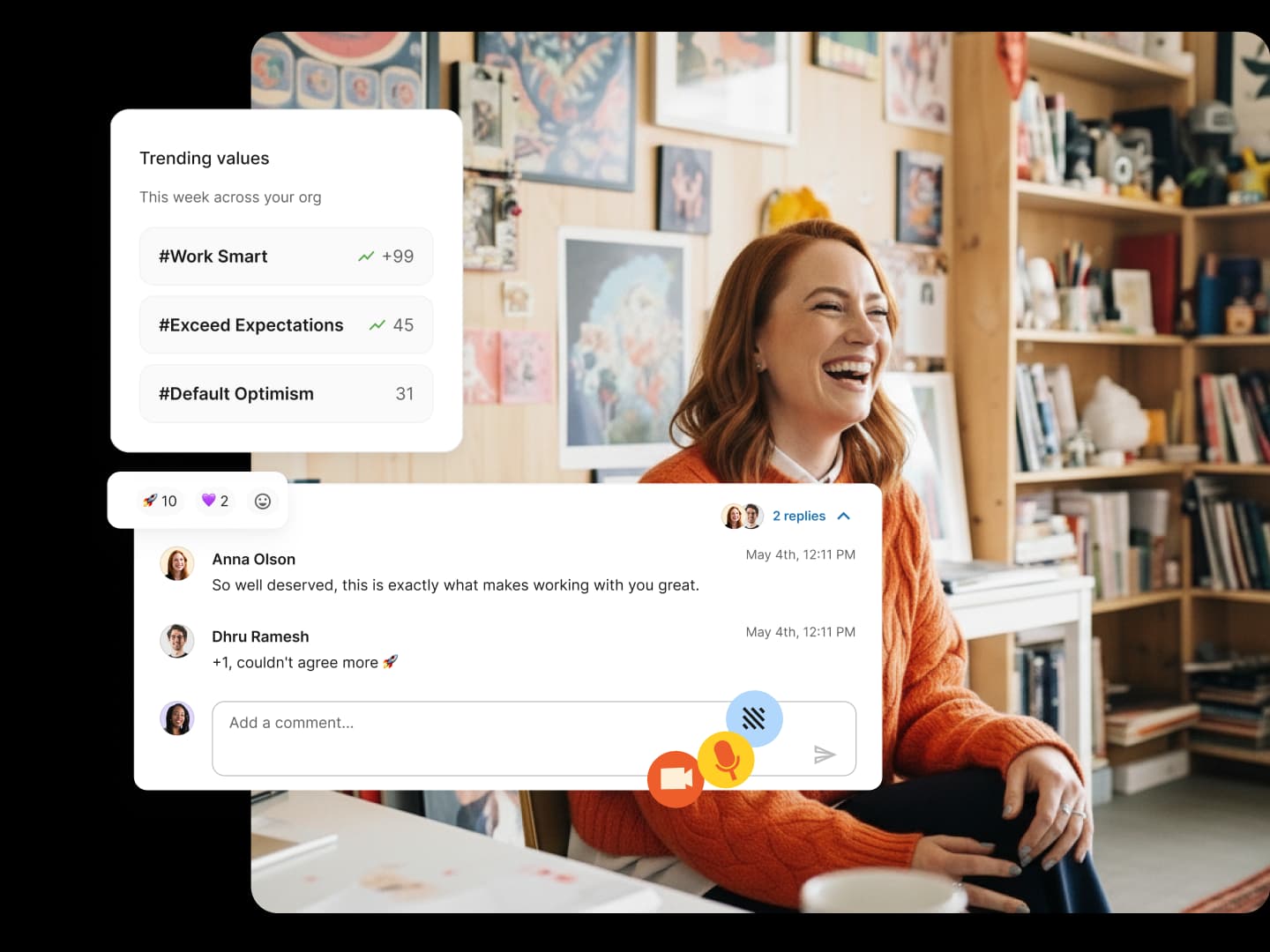
Table of Contents
Why recognition programs quietly decay
Recognition that never reaches the review is just a gesture. Kudos changes that
Why this works better inside your system of record
Most recognition programs have a half-life of about one Slack scroll.
Someone does genuinely good work. A teammate posts a thank-you in a channel. A few people react. Twelve messages later it's gone, and six months later, when that person's performance or promotion is being discussed in a room they're not in, nobody remembers it happened.
The intention was real, but the system wasn't there to hold it.
Why recognition programs quietly decay
Almost every company has tried some version of an employee recognition program, and the failure pattern is remarkably consistent:
The effort is front-loaded onto the giver. Writing good recognition takes a few minutes of thought: what specifically did they do, why did it matter, and what should others notice about it? Without an easy workflow to prompt that context, generic praise wins, and generic praise is worth very little.
Visibility is too narrow to build momentum. Recognition in a DM reaches one person. Recognition dropped into a busy channel reaches whoever happened to be looking. Programs fade when teams can't see consistent examples of what good actually looks like.
It isn't connected to anything consequential. If recognition has no bearing on how someone is evaluated, developed, or rewarded, everyone quietly understands it as a nice gesture. Nice gestures are pleasant, but they're always the first thing dropped in a busy quarter.
The launch was the whole program. Recognition initiatives are usually announced with real energy, then handed to nobody in particular. Three months later the channel has gone quiet, and no one wants to be the person who points it out.
Recognition that never reaches the review is just a gesture. Kudos changes that
In most companies, recognition lives in a chat channel or a standalone engagement app, and nowhere else. At the exact moment it matters most, when someone's year is being evaluated or a promotion case is being argued, none of it is in the room. The manager is working from memory again while a year of real evidence sits buried in a Slack thread they scrolled past months ago.
Recognition that never reaches the performance record is a gesture. Recognition that does is evidence.
When we built Kudos in Deel HR, we took a clear stance: recognition shouldn't live in a gamified silo detached from how people grow. To hold up past month three, recognition has to be timely, specific, tied to real company values, and connected directly to the performance record.
We designed Kudos around three principles to close that gap:
Captured in the flow of work: Team members can give Kudos directly inside Slack without breaking their workflow. Every shout-out posts publicly to a designated Slack channel for immediate team visibility while automatically syncing to the recipient's worker profile in Deel.
Anchored to your values: Admins configure organizational values, turning abstract company slogans into concrete, day-to-day examples of the behaviors you want to scale.
Surfaced when decisions happen: When a review cycle opens, Kudos appears automatically inside the reviewer's context alongside goals, check-ins notes, instant feedback, and learning progress. Managers don't have to dig through old chat threads to remember what someone delivered in March.
Nothing about the human act of recognizing a teammate changes. What changes is that it's still there in November.
Why this works better inside your system of record
Kudos is part of Deel HR’s talent management suite. Because it runs on the same core worker records as your org structure, performance reviews, development plans, compensation, and payroll, there are no brittle integrations to maintain and no data silos to reconcile.
This consolidation provides the answer to the question that kills most recognition programs: does this actually matter? When recognition shows up in the exact same place where performance is assessed and growth is planned, the answer is visibly yes.
Discover what else is new in Deel HR
About the author
Lorelei Trisca is a Product Marketing Manager at Deel passionate about the future of work and global talent. She drives go-to-market strategy, product launches, and global campaigns, while championing client enablement and product adoption to help teams get more value from the tools they use every day.