Article
4 min read
Employer of Record for Hospitality Teams: Remote and On-Site
Employer of record

Author
Jemima Owen-Jones
Last Update
June 12, 2026
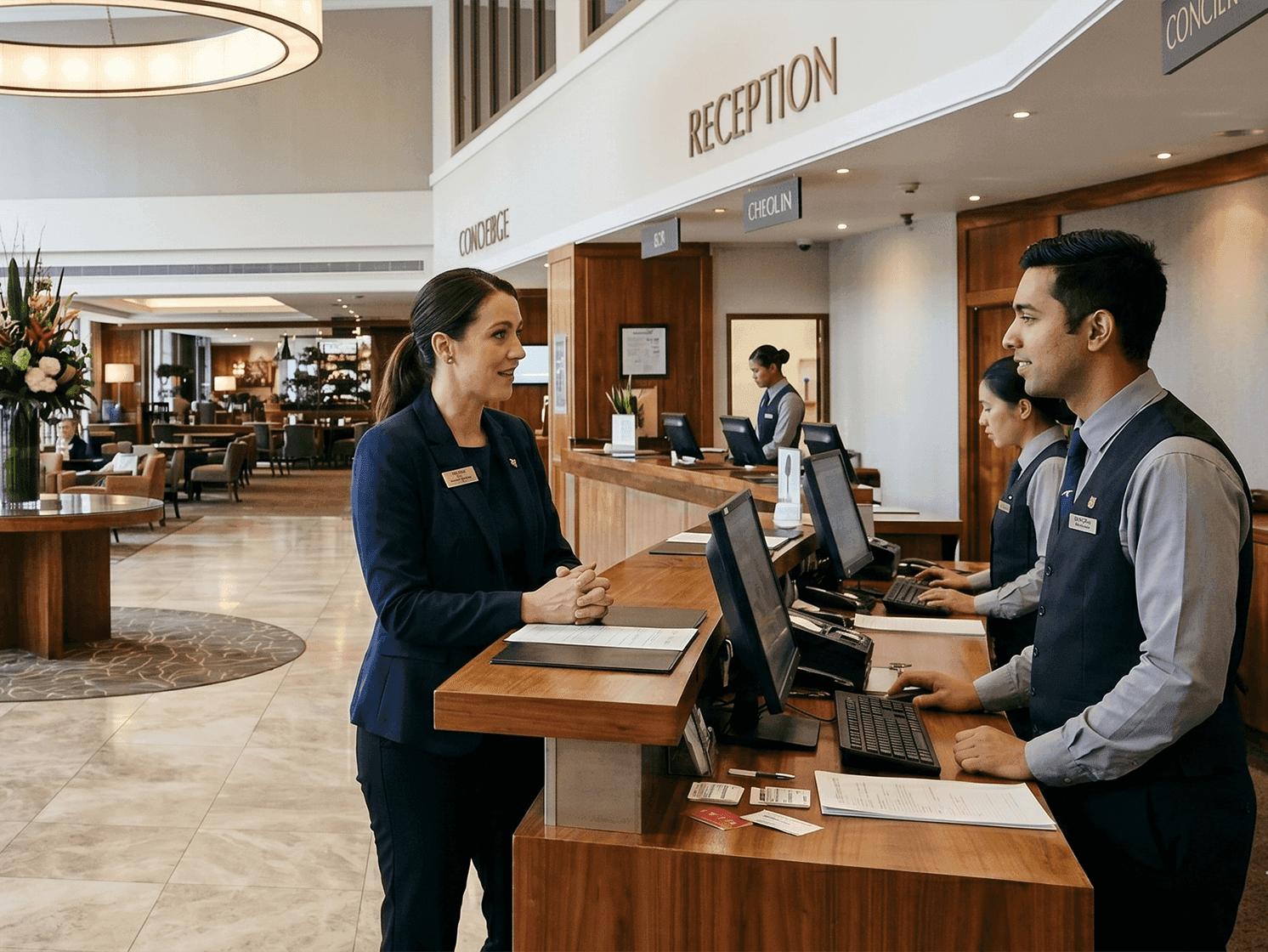
Table of Contents
The hospitality workforce isn't one workforce, it's two
Why entity setup isn't the answer — yet
The cost of workarounds
A better model: Deel as the legal employer
From pre-opening to full operations: what the deployment looks like
Deploy on-site and remote hospitality teams effortlessly with Deel
Key takeaways
Hospitality brands expanding globally can't afford to wait three to 12 months for entity setup, but opening on time means having a compliant employment structure in place before the doors open.
An Employer of Record (EOR) removes the entity setup barrier, but not all EOR services are built to support both remote corporate staff and on-site operations teams. Hospitality operators need one that can do both.
Deel Field Services was built exactly for this: one EOR with dual capabilities, legally employing remote and on-site hospitality teams across 110+ countries, from a single platform.
When a hospitality brand wins a new market, the countdown starts immediately. Lease agreements are signed. Opening dates are set. Investors are watching. But while the construction crews are finishing the lobby and the procurement team is sourcing linens, the people problem quietly becomes the most urgent one: how do you hire 50 on-site staff, compliantly, in a country where you have no legal employer, in time for opening day?
This is the reality of global hospitality expansion. And it's the moment most traditional HR infrastructure fails.
The hospitality workforce isn't one workforce, it's two
Modern hospitality groups operate with a split workforce model. On one side: remote corporate functions (finance, marketing, revenue management, brand) who can be hired through any standard EOR. On the other: on-site operations teams (restaurant managers, housekeeping supervisors, guest relations staff, concierge coordinators, event crews) whose roles are legally and physically tied to a specific location.
Most global employment solutions are built for the first group. The second group is where complexity compounds.
On-site hospitality workers aren't interchangeable with remote employees under local labor law. Their employment contracts, statutory benefits, shift regulations, gratuity rules, union entitlements, and payroll structures vary significantly, not just by country, but by city and sector. A restaurant manager in France has different contractual requirements than one in the UAE. A hotel crew in Southeast Asia faces different collective bargaining agreements than one in Southern Europe.
Managing both workforce types, across multiple markets, through a single accountable employer: that's the operational challenge that opens a hotel on time or delays it by months.
Why entity setup isn't the answer — yet
The default response to "we need to hire in a new country" has historically been: set up a local entity. And in a world where hospitality brands expand into one market per decade, that approach made sense.
It doesn't work for modern hospitality expansion.
Setting up a local legal entity takes three to 12 months. It requires local legal counsel, government registrations, bank accounts, payroll infrastructure, and an HR team that understands in-country obligations. Before a single team member is onboarded, you've already spent half a year and significant capital just creating the conditions to employ someone.
For hospitality brands opening properties on aggressive timelines, that gap is untenable. Your lease is running. Your brand reputation is tied to opening on time. Your competitor opened in Q1 and your guests are already booking their property instead of yours.
Even companies that already have an in-country presence frequently hit the same wall. A commercial entity structured to hold a franchise agreement or a management contract is rarely configured to hire and manage an operational workforce. Retrofitting it takes time, legal reconfiguration, and internal HR capacity that most lean regional teams don't have.
See also: What’s the Fastest Way to Enter Markets and Hire Globally?
Global Hiring Toolkit
EOR vs. Entity Calculator

The cost of workarounds
When entity setup isn't fast enough, hospitality operators turn to alternatives, and most create new problems.
Staffing agencies provide local workers but don't transfer employment liability. The client still carries the legal risk, and markups are significant and often opaque.
Independent contractor arrangements get workers on-site quickly, but if the relationship doesn't behave like a contractor relationship, misclassification follows — bringing penalties, back-pay claims, and reputational damage.
Aggregator EOR providers that work through local partner networks add handoffs, delays, and accountability gaps. When opening day is three weeks away and your EOR's local partner hasn't processed the contracts yet, who do you call?
These aren't edge cases. They're the standard experience for hospitality brands trying to move fast in new markets.
A better model: Deel as the legal employer
Deel’s Field Services are built for exactly this scenario. Rather than asking hospitality brands to build their own employment infrastructure, or patch together agency relationships and contractor workarounds, Deel’s Employer of Record acts as the legal employer for both remote corporate staff and on-site operations teams, through a single platform.
For on-site roles in controlled hospitality environments (hotels, restaurants, event venues, corporate dining facilities), Deel's Field Services covers the full employment lifecycle: contracts, payroll, statutory benefits, compliance, and HR management. Deel absorbs the employment liability. The hospitality brand retains operational direction of its teams while Deel handles the legal and administrative infrastructure.
Key capabilities for hospitality deployments:
Fast mobilization. Deel can deploy employed workers in as few as seven days. No entity setup required; Deel is already the legal employer across 110+ countries
High-volume, localized contracts. Opening a 200-room hotel requires a volume of localized employment agreements, onboarding workflows, and payroll registrations that can overwhelm any lean regional HR team. Deel manages this at scale
Trade union and collective bargaining compliance. Many hospitality markets operate under sector-specific collective agreements. Where applicable, Deel operates its local entity under the relevant CBA — ensuring EOR employees receive the wages, benefits, and protections those agreements require, built into their employment contracts at the outset
Local statutory benefits, handled correctly. Meal allowances, tip regulations, social contributions, paid leave entitlements: these vary significantly by market. Deel builds the correct local benefits structure for every worker
Seasonal workforce management. Hospitality is inherently seasonal. Ramp-up for peak periods and ramp-down afterward requires flexible employment structures that Deel's platform supports
One platform for remote and on-site. Revenue management analysts working remotely from one country and front-of-house managers working on-site in another are both managed through the same Deel dashboard, under the same Employer of Record model
Field Services
Deploy onsite workers compliantly in days

From pre-opening to full operations: what the deployment looks like
Early engagement
Before on-site hiring begins, Deel conducts a mandatory compliance review covering legal, insurance, and health and safety requirements for the target market. This step is a prerequisite — not a parallel workstream — and ensures the deployment is viable before contracts are scoped. Remote corporate staff (finance, marketing, operations planning) can begin onboarding through standard EOR during this period, as those timelines are generally faster.
On-site hiring phase
Once the compliance review is approved, employment agreements are prepared for on-site roles — restaurant managers, supervisors, and specialist staff. This process involves legal review, job description validation, and countersigning, and timelines vary by country. Statutory benefits and payroll registration follow once agreements are fully executed.
Pre-opening
Front-of-house and back-of-house onboarding is completed. The brand's regional manager has visibility across the workforce through the Deel platform.
Opening
Remote and on-site workers are compliantly employed. Your HR team is supporting operations, not managing paperwork.

Global Hiring Impact
Recognized as a Leader on Everest Group’s PEAK Matrix®
Deploy on-site and remote hospitality teams effortlessly with Deel
The hospitality industry doesn't forgive slow employment infrastructure. Opening delays cost revenue, damage brand reputation, and give competitors a window to capture your customers.
Deel’s EOR and Field Services removes the employment bottleneck from the hospitality expansion equation. Whether you're opening a single flagship property in a new region or managing a rolling multi-market expansion, Deel acts as the legal employer for every worker, on-site and remote, so the only thing standing between your brand and a successful opening is the work itself.
Deploy your hospitality teams in days, not months. Book a demo below to discuss how Deel’s Field Services can support your next expansion.
Deel Hire
Find, hire, and manage anyone, anywhere

More resources
FAQs
What is an Employer of Record (EOR) and how does it work for hospitality businesses?
An Employer of Record (EOR) is a third-party organization that legally employs workers on behalf of another business, taking on full responsibility for employment contracts, local taxes, employee benefits, and compliance with local labor laws.
For hospitality brands, this means you can hire hotel managers, front-of-house supervisors, and operations staff in a new market without first setting up a local entity. Deel acts as the legal employer while you retain day-to-day management of your teams.
Can EOR services cover both remote and on-site hospitality workers?
Most Employer of Record services are designed for remote workers, which creates a gap for hospitality brands that need staff physically present at a property. Deel's Field Services specifically covers on-site roles (including restaurant managers, housekeeping supervisors, and guest relations staff) alongside remote corporate functions like finance and revenue management, all through a single employment structure across multiple countries.
What does an EOR handle for hospitality teams operating internationally?
EORs handle the full legal and administrative employment lifecycle: drafting compliant employment contracts, registering workers for local taxes and social contributions, administering benefit packages, and ensuring ongoing compliance with local labor laws. For hospitality operators, this also includes sector-specific requirements such as meal allowances, statutory leave entitlements, and gratuity regulations — all of which vary significantly by country.
Where collective bargaining agreements apply, Deel operates its local entity under the relevant CBA, ensuring EOR employees receive the wages, benefits, and protections those agreements require, built into their employment contracts at the outset.
What are the legal risks of hiring on-site hospitality staff without an EOR?
Without a legal employer structure in place, hospitality brands expanding into unfamiliar markets often engage on-site staff as independent contractors — frequently not out of intent, but because the local legal requirements aren't fully understood.
In hospitality, this is particularly high-risk: on-site staff working set hours, under direct supervision, using employer-provided tools, are likely to meet the threshold for employee status under most jurisdictions regardless of how the contract is written. Misclassification can result in back-pay claims, tax penalties, and labor law violations.
An EOR eliminates this exposure by ensuring workers are legally employed, with contracts and benefit packages that meet in-country requirements from the outset.
Is setting up a local entity better than using an EOR for long-term hospitality expansion?
For long-term, high-volume operations in a single market, setting up a local entity may eventually make commercial sense. But entity setup typically takes three to 12 months, requires local legal and payroll infrastructure, and carries significant upfront cost, making it impractical for brands on tight opening timelines. Employer of Record services like Deel provide compliant international hiring from day one, with the flexibility to transition workers to a direct entity later if needed, protecting both your opening date and your long-term legal compliance.
How does Deel support hospitality brands expanding into multiple countries?
Deel provides Employer of Record services across 110+ countries through owned legal entities rather than third-party networks. For hospitality groups opening properties across multiple countries simultaneously, this means one platform, one accountable legal employer, and consistent legal compliance, whether you're hiring a general manager in Southeast Asia or a catering crew in Southern Europe.
Jemima is a nomadic writer, journalist, and digital marketer with a decade of experience crafting compelling B2B content for a global audience. She is a strong advocate for equal opportunities and is dedicated to shaping the future of work. At Deel, she specializes in thought-leadership content covering global mobility, cross-border compliance, and workplace culture topics.