Article
4 min read
EOR for Field and On-Site Workers: A Complete Guide
Employer of record

Author
Jemima Owen-Jones
Last Update
July 08, 2026

Table of Contents
What a mobile workforce actually looks like
Why standard EOR isn't enough
The compliance dimension of mobility
What Deel Field Services covers for mobile teams
Managing the remote-to-on-site transition
The bottom line for mobile workforce operators
Key takeaways
Most Employer of Record (EOR) providers manage hiring, payroll, tax compliance, and local labor laws for remote workers — but decline field and on-site roles entirely. The liability profile of physical, site-based work is different from desk work, and generalist EOR infrastructure isn't built for it.
When mobile workers cross borders as part of their deployment, the compliance picture multiplies: work permits, tax withholdings, social insurance obligations, and employment law continuity all need active management across every jurisdiction.
Deel Field Services acts as the legal employer for field and on-site teams across 110+ countries, handling site-specific payroll processes, immigration support, and cross-border HR support within a single employment structure — without the delay of setting up local legal entities.
Field engineers rotating between project sites. Construction crews mobilizing to wherever a contract lands. Energy technicians cycling through maintenance facilities across multiple countries.
These workers aren't remote and they're not permanently on-site — they're both, depending on the week, the contract, or the phase of a project.
Standard employment infrastructure wasn't designed for that reality, and it shows: the majority of Employers of Record providers routinely decline field and on-site roles because the liability profile doesn't fit their model.
Deploying a mobile workforce across borders without the right legal employer structure exposes your business to payroll compliance failures, work authorization gaps, and employment law violations in every jurisdiction your crews enter.
The companies that get this wrong don't usually find out until there's a worker on-site without authorization, a tax withholding dispute in a country they didn't realize they had obligations in, or a contractor misclassification claim that compounds across a multi-country deployment.
Deel’s Field Services were built specifically for workforces that exist in physical environments — including teams that move between them. We cover employment, payroll, immigration, and HR support for field and on-site workers across 110+ countries, including markets most EOR providers don't touch.
In this guide, we'll cover what makes mobile workforce employment genuinely different from remote hiring, where standard EOR breaks down, what compliance obligations multiply when workers cross borders, and how a purpose-built Field EOR handles the full employment lifecycle — from home base to deployment and back.
What a mobile workforce actually looks like
Mobile teams exist across industries, but the operational pattern is consistent: a group of workers moves between locations — sometimes within a country, often across borders — to deliver work that requires physical presence at each site.
In telecoms and infrastructure, field engineers are deployed to installation sites as projects are awarded. A team might work three months in one country, rotate to another, then split across two simultaneous sites
In construction and EPC, project workforces mobilize to wherever the contract is. Site supervisors, HSE coordinators, and technical specialists follow project timelines rather than fixed office locations
In energy and utilities, field crews are assigned to maintenance cycles, commissioning phases, or emergency response rotations across multiple facilities
In hospitality and events, mobile operational teams support multi-property rollouts, grand openings, and seasonal deployments, present on-site when needed, managed remotely between deployments
In each case, the workforce is characterized by the same challenge: workers are physically tied to a location that changes. Employment infrastructure built around a single fixed address — in either a traditional entity or a standard EOR model — doesn't accommodate this.
See also:
Why standard EOR isn't enough
Standard EOR is built on a simple model: a worker is based in country X, works remotely, and needs a compliant employment structure in that country. The legal employer — the EOR provider — maintains the employment relationship, and the worker's location is essentially static.
Mobile teams break this model in several ways.
Workers may need to work in multiple countries within a single employment relationship. A field engineer based in Germany who spends three months working on a site in Poland and two months in Romania isn't easily accommodated by a single-country EOR. Each jurisdiction has different employment requirements, and movement across borders often triggers additional compliance obligations.
Workers are physically present at sites, not working remotely. Most standard EOR providers explicitly decline workers who will be performing physical tasks at operational locations. The liability exposure of on-site, field-based, or industrial work is higher than remote desk work, and generalist EOR providers aren't structured to absorb it.
Project timelines, not HR calendars, drive deployment. Mobile teams are activated when contracts are awarded and projects start. There's no six-month runway to set up employment infrastructure. If a crew needs to be on-site in four weeks, the employment solution needs to work in four weeks.
Rotation and re-deployment create constant onboarding and offboarding cycles. Managing contracts, benefits, and payroll for workers who rotate between sites on 90-day cycles requires operational depth that lean HR teams — and most EOR providers — can't sustain without dedicated tooling.
Field Services
Deploy onsite workers compliantly in days

The compliance dimension of mobility
When workers cross borders as part of their deployment, the compliance picture multiplies quickly.
Work authorization
Mobile workers may need work permits or visas in each country they're deployed to. Some roles qualify for short-term business visitor status; others require full work permit sponsorship. Getting this wrong means workers on-site without work authorization, which is a legal risk for the employer and a personal risk for the worker.
See also: EOR-Sponsored Visas: A Guide for Enterprise Businesses
Social insurance
Where a worker pays social contributions depends on where they're working, how long they're there, and whether applicable bilateral agreements apply. In regions with complex multi-jurisdiction rules (the EU, the GCC), mismanaging social insurance can result in double contributions or gaps in coverage.
Tax residency
Extended deployment in a foreign country can trigger tax obligations for both the employer and the worker. Managing this proactively requires in-country expertise in every market where the team operates.
Employment law continuity
Workers moving between deployments still have employment rights in their home jurisdiction. Managing continuity of contract, statutory leave, and benefits through periods of active deployment requires an employment structure that doesn't reset with every project.
Deel Mobility
Get worldwide visas without the legwork
What Deel Field Services covers for mobile teams
Deel’s Field Services is built for workforces that exist in physical environments — including mobile teams that move between them. Through a combination of Onsite EOR (for fixed, controlled sites) and Field EOR (for variable, industrial, or high-complexity environments), Deel provides a single legal employer structure for teams regardless of where they're deployed.
Core capabilities for mobile deployments:
Cross-border employment continuity: Deel maintains the employment relationship through project rotations and site transitions, without the compliance resets that come with managing separate local entities in each country
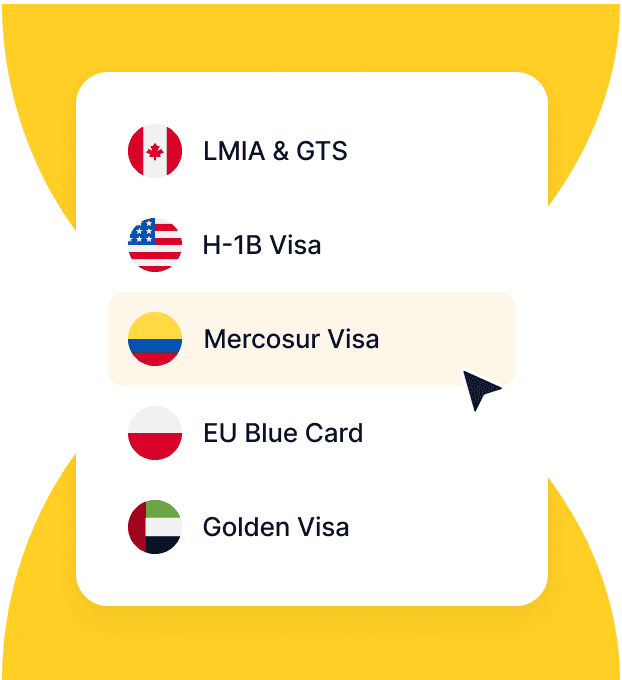
Work permit and visa support: Deel's in-house immigration team manages work authorization for mobile workers, including trades-specific permits and employer-sponsored visas, without outsourcing to fragmented immigration vendors.
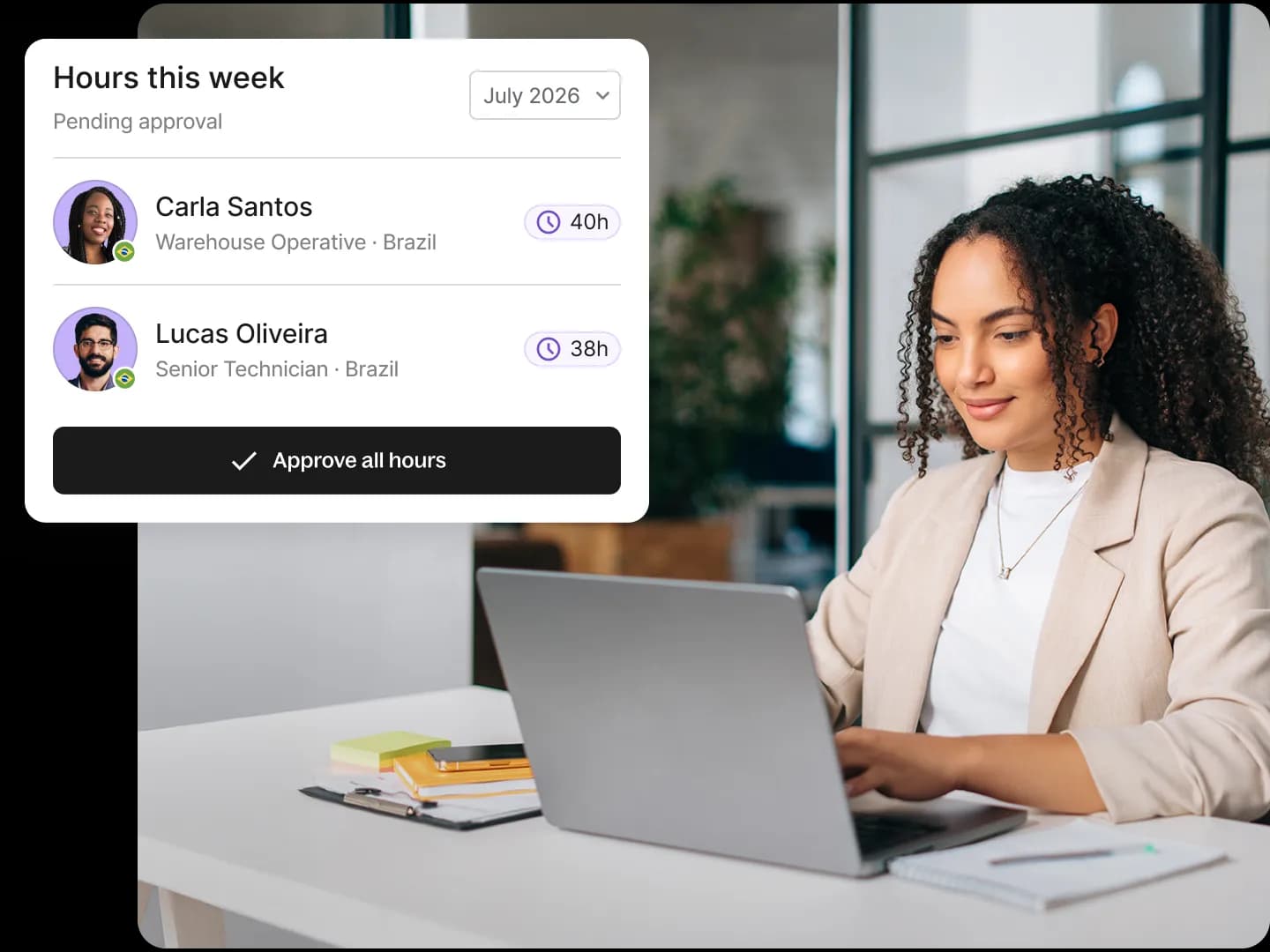
Site-specific payroll: Per diems, rotation premiums, location allowances, and site-specific pay structures are built into Deel's payroll logic. Mobile workers aren't shoehorned into a standard payroll template that doesn't reflect their actual compensation structure
Rapid mobilization: Deel can deploy employed workers in as few as seven days. When a project award comes through and the crew needs to be on-site in three weeks, the employment infrastructure moves with it
110+ countries, one platform: Whether the deployment involves three countries or 13, Deel's platform provides a single view across all workers, all sites, and all payroll runs. No fragmented vendor relationships. No opaque markups from local partners
Africa coverage at scale: Deel covers 40+ African markets — a critical capability for mobile teams deployed on infrastructure, energy, and development projects across the continent
Time Tracking
Time tracked. Payroll trusted. Nothing to reconcile.
Managing the remote-to-on-site transition
Mobile teams typically include workers on standby between deployments and workers actively on-site. Deel Field Services covers both states, maintaining employment through the standby period so workers aren't left without a compliant structure between rotations.
Workers between rotations are employed through Deel under a "no work, no pay" standby contract — though local law can affect this. In Brazil, for example, legislation requires compensation for on-call time regardless of whether work is performed.
When a new deployment is confirmed, a full compliance cycle is required before work can begin. Legal and insurance sign-off are the primary gates that unblock the hire decision; H&S review runs in parallel and must be completed before the worker's start date. Where a deployment crosses a border, immigration review — covering visa and work authorization — is also required. Once legal and insurance approval is in place, site-specific pay elements, per diems, and mobility documentation are confirmed.
The employment relationship continues from standby into active deployment rather than terminating and restarting — making workers easier to retain and re-mobilize, and sparing operators the overhead of re-onboarding entire crews each rotation. The continuity is in the employment relationship; the compliance requirements for each new deployment remain substantive regardless.

Global Hiring Impact
Recognized as a Leader on Everest Group’s PEAK Matrix®
The bottom line for mobile workforce operators
If your teams follow the work rather than a fixed address, your employment infrastructure needs to follow them too.
Standard EOR isn't built for physical deployments. Entity setup isn't fast enough for project timelines. Staffing agencies and aggregator networks add cost, complexity, and accountability gaps that compound when things go wrong on site.
Deel’s Field Services provide a single accountable legal employer for mobile teams, remote and on-site, local and internationally deployed, across projects of any size and duration. So the next contract award doesn't come with a three-month employment infrastructure delay attached.
Your crew is ready. Your deployment timeline shouldn't wait for employment infrastructure to catch up.
Book a demo below to see Deel's Field Services can support your mobile teams.
Deel Hire
Find, hire, and manage anyone, anywhere

FAQs
What does an EOR manage for international hires?
An employer of record acts as the legal employer for your workers in countries where you don't have your own legal entity.
The EOR manages payroll processes, tax withholdings, benefits, and onboarding, and ensures employment contracts comply with local labor laws, while you retain day-to-day control over the work itself. For international hires, this removes the need to incorporate in each country before you can hire.
Can an EOR support workers who move between countries during a project?
Standard EOR is designed for workers with a fixed location in a single country. When a field worker crosses borders as part of a deployment — spending three months on a site in one country, then rotating to another — each jurisdiction triggers its own employment laws, tax compliance obligations, and work authorization requirements.
A small number of EOR providers are structured to manage this, maintaining the employment relationship and payroll compliance across multiple countries within a single contract.
How does an EOR handle payroll for on-site and field-based workers?
For office-based or remote workers, EOR manages payroll through a standard structure. Field and on-site workers typically have more complex payroll processes: rotation premiums, per diems, location allowances, and site-specific pay elements that standard templates don't accommodate.
An EOR built for physical workforces incorporates these into payroll runs directly, rather than requiring workarounds or manual adjustments by your HR team.
What's the difference between using a staffing agency and an EOR for mobile teams?
Staffing agencies place workers on short-term assignments and manage the recruitment process, but they don't provide long-term employment or take on the full scope of compliance responsibility. Legal risk for payroll compliance, employment laws, and worker classification often stays with the client.
An EOR becomes the legal employer, assuming those obligations entirely — which matters significantly for field teams operating across multiple jurisdictions where compliance gaps carry real consequences.
Does Deel’s Field Services provide HR support across multiple deployment countries?
Deel’s Field Services maintains a single employment structure for mobile teams regardless of where they're deployed. HR support, payroll compliance, immigration, and employment law management are handled within one platform across 110+ countries, including 40+ African markets.
Workers between deployments remain employed in their home country; when activated for a new site, their work arrangement, pay structure, and any required mobility documentation are updated within the same employment relationship.
Jemima is a nomadic writer, journalist, and digital marketer with a decade of experience crafting compelling B2B content for a global audience. She is a strong advocate for equal opportunities and is dedicated to shaping the future of work. At Deel, she specializes in thought-leadership content covering global mobility, cross-border compliance, and workplace culture topics.