Article
6 min read
Employer of Record: Energy, Mining, and Construction Workers
Employer of record

Author
Jemima Owen-Jones
Last Update
July 08, 2026

Table of Contents
The compliance landscape in heavy industry is unlike any other sector
What Deel's Field Services are — and how they're structured
Challenge 1: Deploying legally when you have no entity
Challenge 2: Payroll that doesn't fit standard systems
Challenge 3: Health, safety, and liability that most EOR providers won't touch
Challenge 4: Local content compliance across frontier markets
Challenge 5: Immigration for the workers who don't fit standard pathways
Challenge 6: The transitions no one plans for
Deploy field workers effortlessly with Deel
Key takeaways
Most EOR providers decline blue-collar, on-site workers entirely — leaving energy, mining, and construction companies without a compliant employment structure for the people who actually build and operate their projects.
The problem is rarely a talent shortage. Companies almost always have the right people. What they lack is the legal structure to deploy them compliantly into markets where they have no entity — and entity setup takes three to 12 months.
Deel's Field Services act as the legal employer in 110+ countries, handling rotational payroll, HSE compliance, trades-specific immigration, and local content obligations — with crews deployable in seven days or fewer.
The contract is signed. The site is ready. The workforce isn't.
For operators in mining, oil and gas, LNG, and engineering and construction, this is a common pattern — one that repeats every time a project mobilizes in a new market and the same wall appears: no legal entity in the host country, no compliant way to deploy the people who are supposed to be there.
An Employer of Record (EOR) built for field services solves this directly. Rather than spending three to 12 months on entity setup — or taking on the legal exposure of home-country contracts — operators can legally employ workers through Deel's own in-country entities and have crews on site in seven days or fewer.
But the entity problem is just the beginning. Heavy industry has a workforce compliance problem that most of the HR technology market has never been built to solve. The workers aren't remote. They're on rigs, in mines, on construction sites, in refineries. They work in rotational cycles. They cross multiple jurisdictions in a single deployment. And the regulatory environments they operate in — across Africa, the Gulf, Latin America, and Southeast Asia — are among the most demanding in the world.
This article breaks down the six specific compliance challenges that energy, mining, and construction companies face when deploying field workforces, and how Deel's Field Services are built to address each one.
The compliance landscape in heavy industry is unlike any other sector
Before getting to solutions, it's worth being clear about what field workforce compliance actually means in this context — because it's structurally different from the compliance challenges most global HR platforms were designed to solve.
A software company hiring a remote engineer in a country where it has no entity needs a legal employer in that country, a locally compliant contract, and someone to run payroll. That's what standard Employer of Record services do well.
A mine operator deploying 150 expat workers into a frontier African market needs all of that — plus local content compliance, rotational payroll structures, workers' compensation for high-risk environments, pre-employment medicals, PPE documentation, immigration for trade-certified workers whose visas don't fit standard pathways, and ongoing health and safety management specific to the site environment.
Most EOR providers stop at the first list. Virtually none are built for the second.
The result is a market gap that heavy industry companies fill with fragmented workarounds: VMS platforms, multiple staffing agencies, separate immigration providers, local payroll bureaus, country-specific law firms. Each vendor adds cost, each handoff creates a compliance gap, and no single party is accountable for the whole.
Deel's Field Services were built to close that gap.
What Deel's Field Services are — and how they're structured
Deel's Field Services are an expansion of Deel EOR designed specifically for workers who can't work remotely. It covers three categories of physically present employment:
Remote EOR handles fully remote, home-based workers — the original Deel product, designed for knowledge workers in office environments
Onsite EOR covers workers who need to be physically present at a fixed, controlled client premises — offices, warehouses, production sites, retail environments — where standard health and safety requirements apply
Field EOR covers workers deployed to rotational or operational sites in challenging or high-risk environments — mines, oilfields, offshore rigs, refineries, construction zones. This is the tier built for heavy industry
A worker is classified under one tier only. Field EOR replaces, rather than stacks on top of, the standard EOR fee.
Deel's Field Services currently operates across 110+ countries, with a particular concentration across Africa — the continent where the majority of new mine construction, LNG development, and upstream oil and gas activity is currently concentrated — through the Employ Africa Group, acquired by Deel specifically to build genuine operational infrastructure in these markets.
Now, lets dive into the specific compliance challenges that energy, mining, and construction companies face when deploying field workforces, and how Deel solves them
Challenge 1: Deploying legally when you have no entity
Partnering with an Employer of Record for field services removes the most fundamental barrier to deploying workers in a new market: the need for a local legal entity.
Without one, there's no compliant way to employ workers in the host country. Setting up a local entity takes three to 12 months in most markets — a timeline that is simply incompatible with EPC contract award dates and project start schedules. And even when entity setup is viable, it creates obligations that don't disappear when the project ends. Companies are left maintaining a legal presence, with ongoing tax and compliance costs, in countries where they no longer operate.
The workaround most companies reach for — deploying workers under home-country contracts — doesn't solve the problem. It creates a new one. Sending workers into a host country under a contract issued in a different jurisdiction violates local immigration and labor law in most markets. It exposes both the operator and the worker to fines, back-payment demands, and in some cases project shutdowns.
There's also a less visible risk: when a company's employees work continuously in a foreign country, the host tax authority may determine that the company has created a Permanent Establishment — triggering unplanned corporate tax liability, back taxes, and penalties that can significantly exceed the cost of proper employment infrastructure.
Deel acts as the legal employer in 110+ countries through its own entities.Employment contracts are issued by Deel's local entity in the host country, structured to local labor law, with tailored clauses for expat versus local workers, onshore versus offshore deployment, and single-country versus multi-country structures.
Because Deel is the legal employer, the operator doesn't need a local entity to deploy compliantly — and the employment relationship that typically triggers Permanent Establishment concerns shifts away from the client. Crews can be mobilized in seven days or fewer.
If we tried setting up a local entity in Germany ourselves, we never would have hit our expansion goals in time. We needed a fast and compliant solution like Deel’s EOR.
—Junya Hiroshima,
HR Manager, Kyoto Fusioneering
Field Services
Deploy heavy industry field workers compliantly in days

Challenge 2: Payroll that doesn't fit standard systems
The good news is that compliant, consolidated payroll for rotational field workers is solvable — and Deel's payroll infrastructure handles it natively. The problem is that standard systems simply weren't built for it.
Upstream workers operate on 28/28 rotational cycles — 28 days on site, 28 days off — which means payroll isn't calculated against calendar months. It's calculated against rotation schedules, with hardship allowances, per-diems, housing supplements, and travel allowances added on top, often across multiple currencies and multiple countries simultaneously.
Standard payroll systems are not built for this. Getting it wrong isn't just an administrative problem — in markets with strong union presence and active labor inspectorates, payroll errors create serious legal and commercial exposure.
The cost problem runs alongside the complexity problem. Traditional manpower agencies — Airswift, NES Fircroft, Brunel, and others — charge significant markups on placement, with limited transparency about what those markups actually cover. For operators running multi-country deployments with hundreds of workers, that cost difference matters.
There's also a visibility problem. Companies running workers across multiple simultaneous projects, sites, and countries often have no consolidated view of total employer costs. Finance teams manually reconcile across local payroll companies, each with its own reporting format and currency.
Deel's payroll infrastructure processes rotational cycles natively — rotation schedules, hardship pay, per-diems, housing allowances, multi-currency splits, and full gross-to-net calculations with local reporting and host-country taxes compliance for every cycle.
Pricing is transparent: Field EOR is structured as a transparent flat monthly fee, replacing opaque agency markups with a predictable, auditable cost.
Consolidated payroll reporting across all projects and sites is available in real time from a single platform — giving finance and project management teams immediate visibility into total employer costs across the global workforce.
Best payroll company! Everything is made easy. Deel Local Payroll updates legislation and its program so you don't have to... And the best part is that it's affordable.
—Renee Swanepoel,
The Eastside Coal Company
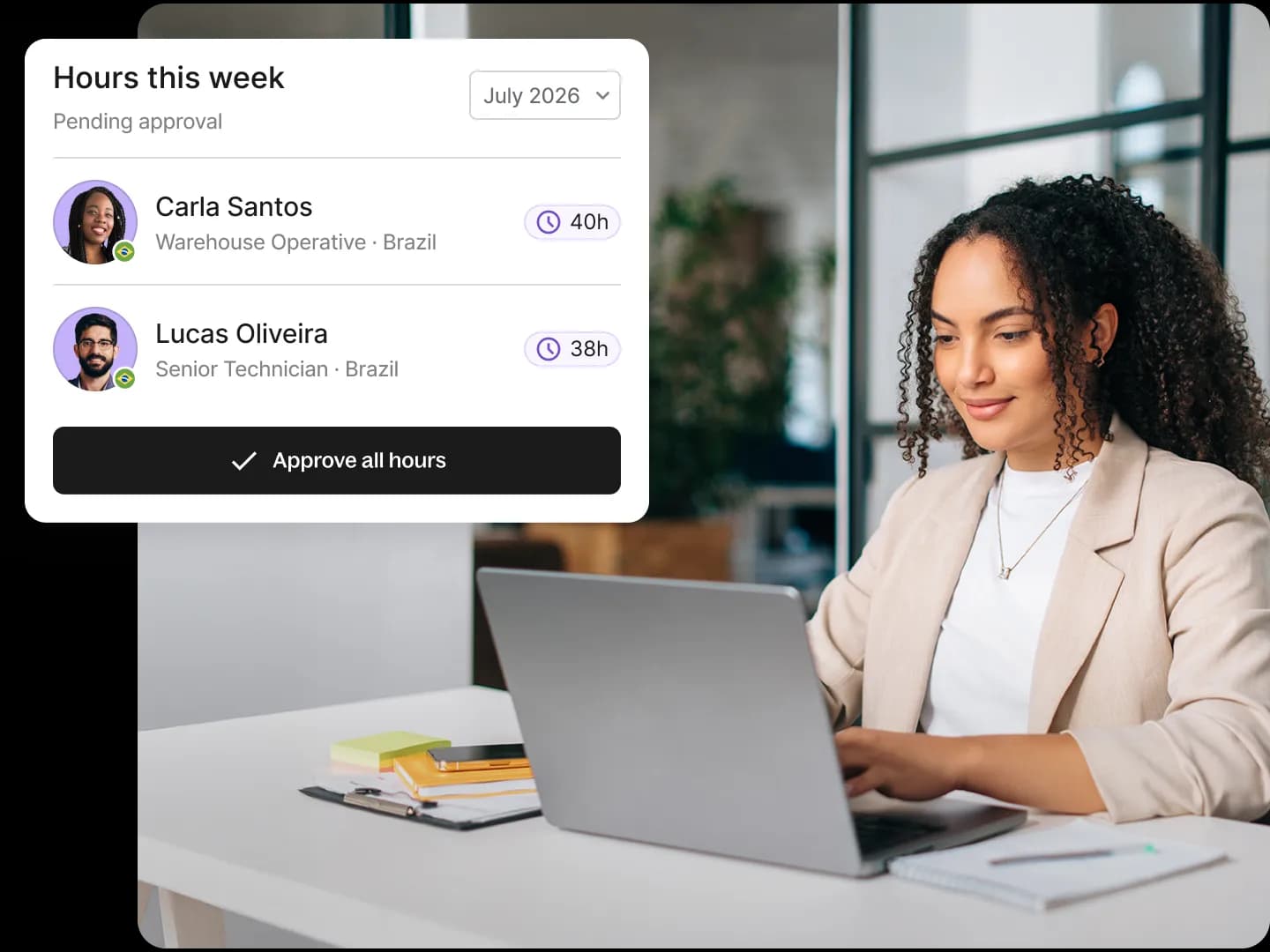
Time Tracking
Time tracked. Payroll trusted. Nothing to reconcile.
Challenge 3: Health, safety, and liability that most EOR providers won't touch
Deel's Field Services is purpose-built to absorb the H&S liability that most EOR providers decline — making it one of the only global EOR solutions that can legally employ blue-collar, on-site workers in high-risk industrial environments.
Most EOR providers decline to employ blue-collar, on-site workers entirely, precisely because of the insurance and compliance complexity involved.
Workers' compensation, pre-employment medicals, drug testing, PPE provision, site safety inductions, incident reporting, and emergency evacuation (medevac) are not optional obligations — they're legally required and operationally non-negotiable. Standard EOR providers are not structured to absorb this liability. The result is that the entire heavy industry sector has been effectively excluded from the global EOR market.
The H&S obligations that attach to field workers also vary significantly by country.
In Germany, deploying a worker to a power station or industrial site requires a comprehensive risk assessment under the Arbeitsschutzgesetz, a psychosocial risk assessment for high-stress safety roles, mandatory pre-employment medical examinations including fitness-to-work certification, site-specific safety training, and a Safety Coordinator on multi-company worksites.
In Spain, industrial deployments require a Site-Specific Safety Plan, coordinated factory hazard assessments, electrical safety awareness training, and recorded PPE fit-testing.
In Portugal, mandatory occupational medical exams must be scheduled before the start date. Offshore and LNG environments add process safety competency verification and gas safety training to the list.
Getting any of these wrong isn't a compliance process failure — it's a liability event.
With Deel, H&S training is completed by the employee during onboarding — within the first seven days of employment — and includes a risk assessment component covering work setup risk factors. If potential risks are identified from the employee's responses, the relevant person follows up to help mitigate them. Periodic re-evaluations are also conducted on a schedule that varies by country, typically annual, biennial, or triennial.
Where applicable, onboarding documentation includes a Certificate of Delivery of PPE and pre-employment medical records. Background checks and credential verification are available through Deel's standard process for any worker type where they're required.
Challenge 4: Local content compliance across frontier markets
Deel's Continuous Compliance gives operators visibility into the regulatory changes that affect their workforce — including employment law updates in mining and energy markets — while Deel's legal employer structure in key African markets provides the compliant employment foundation that any local content strategy depends on.
The reason this matters is that the regulatory environment is tightening fast, and the consequences of getting it wrong are escalating. Local content requirements — mandated ratios of host-country nationals in a project workforce — are a condition of operating in most of the world's major mining and energy markets.
Zambia's new Geological and Minerals Development regulations, in force since January 2026, make non-compliance a criminal offense. Directors, managers, shareholders, and partners can face personal liability.
In Qatar, the Qatarization Law (Law No. 12 of 2024, in force since April 2025) requires private-sector employers to advertise all vacancies on the government Tawteen portal, prioritize Qatari nationals, and submit biannual workforce composition reports to the Ministry of Labor — with penalties up to QAR 100,000. Critically, while QatarEnergy-owned companies and those engaged directly in petroleum operations are exempt, their contractors and subcontractors are not.
In Mozambique, the LNG project restart in January 2026 came with explicit commitments: up to 7,000 direct jobs for Mozambican nationals.
Guinea, Tanzania, the DRC, Sierra Leone, and Namibia all tie local content obligations directly to the terms of the mining license.
Managing these obligations manually — across multiple jurisdictions, each with its own regulatory calendar and enforcement posture — is operationally complex and genuinely high-risk when the consequences extend to loss of operating license or personal criminal liability.
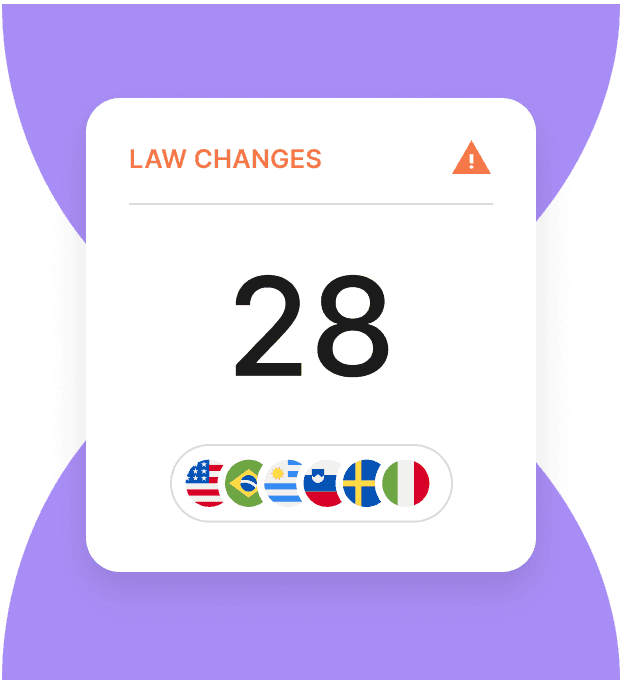
Deel's Continuous Compliance monitors employment law changes across 150 countries and surfaces regulatory updates and workforce compliance alerts relevant to each client's active workforce — covering changes to wages, tax obligations, benefits, leave entitlements, and more. For operators tracking regulatory developments across multiple frontier markets simultaneously, this removes the manual burden of monitoring each jurisdiction independently.
Workforce Insights, part of the Continuous Compliance suite, proactively flags compliance gaps in the existing workforce, including misclassification risks and non-compliance with employment obligations such as minimum wage and mandatory benefits.
On the employment structure side, Deel can act as the legal employer in key African mining markets — including Zambia, DRC, Mozambique, Tanzania, Namibia, and Sierra Leone — through EOR or Local Payroll, ensuring employment contracts, payroll tax, and statutory labor law obligations are met in each jurisdiction.
Where Collective Bargaining Agreements apply — as they do in South Africa under BEE frameworks and in West African markets where union recognition is a project license condition — Deel operates its local entity in compliance, ensuring workers receive the applicable terms and entitlements.
One important boundary: mining license-linked local content quota compliance is a sector-specific regulatory obligation that goes beyond employment law. Meeting those quotas in full requires specialist legal counsel in each jurisdiction alongside Deel's employment compliance layer.
We considered Rippling for our US workforce, but Deel provided more value with superior compliance management, real-time customer support, and a truly centralized system.
—Hassan Ibrahim,
Operations Manager, Tough Leaf
Compliance
Unlock Continuous Compliance™ with Deel
Challenge 5: Immigration for the workers who don't fit standard pathways
An in-house immigration team with trades-specific permit experience is one of Deel's most operationally significant differentiators for heavy industry deployments — eliminating the stalls and delays that ground crews experience at exactly the wrong moment.
The problem is structural. Host-country visa systems are designed for degree-qualified professionals, not for the trade-certified specialists that heavy industry depends on. Mine electricians, HV jointers, heavy equipment mechanics, drill technicians, tower riggers, and cable installation technicians all face the same issue: standard work visa pathways simply don't apply to their credentials. Applications stall. Work permits get refused. The specialist who was willing to deploy to a remote site in Guinea or Kazakhstan waits, and the project waits with them.
For rotational workers cycling across multiple jurisdictions on rolling 28/28 schedules, the problem compounds. Every permit renewal is a potential delay. Every jurisdiction is a different process. A single missed renewal grounds the crew.
Most agencies address this by outsourcing immigration to local law firms — which introduces another handoff, another accountability gap, and typically slower turnaround times in exactly the markets where bureaucratic complexity is highest.
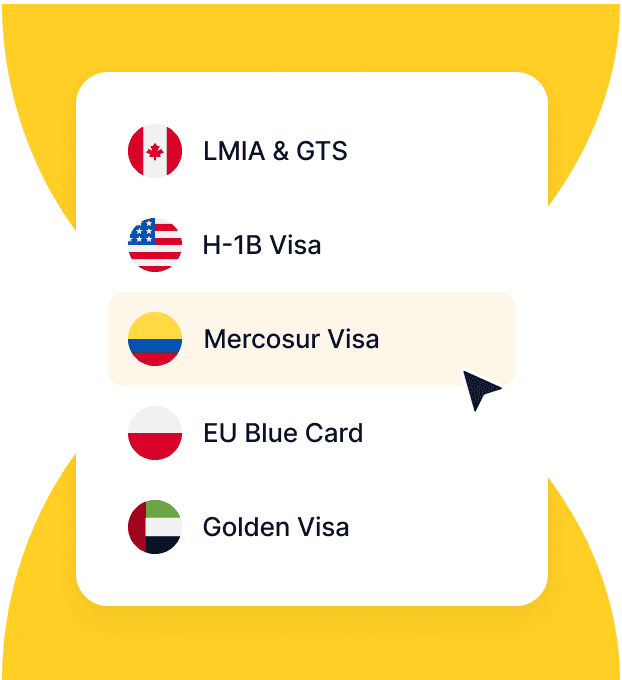
Deel Mobility has an in-house team, not outsourced. The same team that structures the employment contract handles the work permit application, the renewal, and the mobilization plan — including trades-specific permit applications across 50+ countries. Proactive renewal management and multi-country coordination for workers moving across project sites simultaneously are built into the service, not available as an add-on.
Deel Mobility
Get worldwide visas without the legwork
Challenge 6: The transitions no one plans for
A field-ready Employer of Record provides employment continuity through both of the transitions that catch heavy industry operators off guard — the LNG construction-to-operations handover, and the exploration-phase misclassification liability that accumulates silently over years.
The first problem is specific to LNG and large-scale infrastructure. During the construction phase, the EPC contractor is the employer. When the project transitions to operations — typically 18 to 24 months before first cargo — that employment responsibility transfers to the operator.
Workers employed by the EPC contractor don't transfer automatically. If the operator hasn't built employment infrastructure for the operations phase, they arrive at commissioning without a legal basis to employ the people who know the plant. The specialist workforce that built the facility is legally unreachable.
The second problem is more widespread and affects any company with an active exploration program. Geologists, drill technicians, site surveyors, and camp managers deployed under short-term consulting arrangements are, in most host-country jurisdictions, legally classified as employees if they work on-site, full-time, under the client's direction — regardless of what the contract says.
A decade of exploration activity across multiple frontier markets can accumulate significant retroactive liability that only becomes visible when a labor authority investigates.
For LNG projects, Deel provides employment continuity through the EPC-to-operations transition — retaining key workers under the operator's direction with no gap in compliance, and without requiring the operator to have established a local entity before handover.
For exploration-phase companies, Deel provides a compliant legal employer structure from day one, with no minimum headcount and no long-term commitment, that scales with the exploration program as it ramps up and contracts.

Global Hiring Impact
Recognized as a Leader on Everest Group’s PEAK Matrix®
Deploy field workers effortlessly with Deel
The financial argument for getting field workforce compliance right is direct. In oil and gas, a single idle rig day can cost $100,000 or more in direct operating expenses, before lost production is counted. EPC and project contracts routinely carry penalty clauses tied to project start dates. A workforce gap that delays mobilization by a week can trigger contractual penalties that dwarf any savings made on workforce management.
In mining, the talent scarcity problem makes speed a competitive advantage, not just a cost consideration. EY's 2026 mining risk report found that 75% of mining executives are not confident in their ability to resolve onsite labor shortages.
McKinsey found that 71% say the talent shortage is actively preventing them from hitting production targets. In that environment, the company that can put a qualified drill technician on site in seven days wins that specialist over the company that needs three months to navigate entity setup.
And in LNG, where project economics depend on first-cargo schedules tied to long-term offtake agreements and financing structures, a compliance failure that delays commissioning doesn't show up as an HR cost. It shows up in project economics, investor relations, and relationships with host governments who signed production-sharing agreements expecting on-schedule delivery.
Workforce compliance in heavy industry isn't an HR budget line. It's a project delivery issue — and increasingly, a competitive one.
Talk to Deel's Field Services team about your next project today.
Deel Hire
Find, hire, and manage anyone, anywhere

FAQs
What is an Employer of Record (EOR), and how does it work for field workers in energy, mining, and construction?
An Employer of Record is a third-party organization that legally employs workers on behalf of a client company — handling employment contracts, payroll and benefits, tax filings, and compliance with local employment laws, while the client retains day-to-day operational control.
For energy, mining, and construction companies, partnering with an Employer of Record solves a problem that standard global employment solutions were never designed for: deploying on-site, blue-collar workers into markets where the operator has no legal entity, in environments where HSE obligations, rotational payroll structures, and sector-specific regulations make compliant employment structurally different from office-based hiring.
Deel Field Services provides global EOR capabilities specifically for workers at refineries, mine sites, offshore rigs, and construction zones across 110+ countries — acting as the legal employer in each jurisdiction so operators can mobilize compliantly without entity setup.
What's the difference between an Employer of Record and a PEO?
A Professional Employer Organization (PEO) is an organization that supports full-service HR, payroll, benefits for your US employees under a co-employment model: both the PEO and your company share legal employer responsibilities within the US, which means the client retains some liability for compliance, tax obligations, and employment disputes.
A PEO also typically requires the client to have an existing legal US entity where workers are being employed. An Employer of Record works differently. The EOR is the sole legal employer — it takes full responsibility for employment contracts, payroll and benefits, taxes compliance, and adherence to US employment laws, while the client company retains operational control of the workforce. Critically, no US entity is required.
For energy, mining, and construction companies deploying workers into US markets where they have no existing presence, this distinction is decisive: a PEO model requires the infrastructure you're trying to avoid building, while global EOR services provide compliant local employment without it.
Why can't standard EOR providers support workers in mining, oil and gas, or construction?
Standard EOR work is built around remote knowledge workers — the software engineer working from home, the marketing manager in a co-working space. These providers aren't structured to absorb the liability that comes with on-site industrial work: workers' compensation, HSE compliance, PPE documentation, and site safety obligations.
Most global EOR providers decline blue-collar field workers entirely because of this risk profile. Deel Field Services is purpose-built to fill that gap — one of the only EOR solutions built to employ workers on behalf of operators in physically demanding, high-risk environments, with a dedicated health and safety team that conducts per-deployment compliance assessments, handles the full workforce management layer, and carries out background checks on workers in applicable jurisdictions.
How does an Employer of Record handle work permits and visas for specialist field workers?
A field-ready Employer of Record handles trades-specific work permit and work visa applications in-house — which is the critical distinction, because standard immigration pathways simply don't work for most heavy industry specialists.
Host-country visa systems are typically designed for degree-qualified applicants, not trade-certified mine electricians, rig technicians, or HV jointers. Applications stall, and projects wait. Deel's in-house immigration team handles work permit applications across 110+ countries — not outsourced to local law firms — covering the full process from application through renewal.
For rotational workers moving across multiple jurisdictions on 28/28 cycles, proactive permit renewal management is built into the service, ensuring no crew is grounded by a missed renewal deadline.
What's the difference between using a global Employer of Record and setting up a local entity?
An EOR like Deel, gets your workers legally on site in seven days. Local entity setup takes three to 12 months — and creates obligations that persist long after the project ends. Setting up a local legal entity requires significant capital, ongoing tax filings, accounting, and compliance with local employment laws in every country where you operate, including after your project has closed.
A global EOR removes all of that.
Deel legally employs workers through its own in-country entities, enabling operators to mobilize crews in seven days or fewer without entity setup, without Permanent Establishment exposure, and without maintaining a local presence post-project.
For project-based businesses running deployments across multiple markets simultaneously, global employment through an EOR is also considerably more cost effective than establishing and maintaining entities in every jurisdiction where work is being performed.
How quickly can an Employer of Record deploy workers to a new country?
Deel Field Services deploys crews in seven days or fewer — compared to three to 12 months for local entity setup.
Entity setup timelines are simply incompatible with EPC contract award dates and project mobilization schedules. When a global Employer of Record already has its own legal entities established in a country, it can legally employ workers on behalf of a client company and get crews on site within days.
For operators where a competitor mobilizing three months faster means losing the next contract, or where a week's delay triggers penalty clauses worth more than the entire workforce management budget, deployment speed is a direct project management and commercial consideration, not just an HR metric.
How does an Employer of Record manage payroll and benefits for workers on rotational schedules?
Rotational payroll for field workers is complex — but it's exactly what Deel's payroll infrastructure is built to handle.
The 28/28 cycles common in offshore oil and gas, mining, and large construction projects require pay to be calculated against rotation schedules rather than calendar months, with hardship allowances, per-diems, housing supplements, travel allowances, and multi-currency splits all processed simultaneously, with full taxes compliance in each host country.
Standard payroll systems cannot handle this reliably, and errors in markets with strong union presence carry serious legal and commercial consequences.
Deel's payroll engine processes rotational pay structures natively — covering all on-site specific payroll and benefits, field allowances, and gross-to-net calculations — with consolidated reporting across all projects and sites available in real time, giving finance teams clear visibility into total employer costs across a global workforce.
What local expertise does Deel have in frontier mining and energy markets?
Deel has genuine operational infrastructure across 40+ African countries — not a partner network — through the Employ Africa Group, acquired specifically to build boots-on-the-ground capability in the markets where most new mining and energy projects are concentrated.This means real local expertise and established relationships with labor authorities in Nigeria, Angola, Mozambique, Tanzania, South Africa, Zambia, DRC, Namibia, Sierra Leone, Ghana, Algeria, Kenya, and more.
In each market, this local employment infrastructure covers statutory compliance, local content obligations, collective bargaining requirements, and sector-specific employment laws — ensuring the employee experience meets both legal standards and local market expectations, and that regulatory changes are caught and acted on before they create exposure for the operator.
Is an Employer of Record a cost-effective alternative to traditional staffing agencies in heavy industry?
Yes — and the difference is significant. Traditional staffing agencies in energy, mining, and construction charge significant markups, with limited transparency on what those fees cover. Post-placement, legal, payroll, and compliance risk typically remains entirely with the client company.
EOR services work differently: Deel is the legal employer, with a transparent fee structure that replaces opaque markups with a predictable, auditable cost. For operators running multi-country deployments with large crews, the cost difference over the life of a project can be significant.
An EOR also consolidates what would otherwise require multiple vendors — staffing, immigration, payroll and benefits, HSE compliance — under one contract, removing the stacked fees and coordination overhead of a fragmented vendor model. That consolidation improves project management and gives operators a single point of accountability across the entire workforce layer.
How does an Employer of Record support risk mitigation for companies deploying workers to high-risk environments?
An Employer of Record removes risk across every dimension of field workforce deployment — employment structure, taxes compliance, operational, and financial.
As the legal employer, Deel holds the employment contracts and statutory obligations — removing the heavy industry company from the direct employment relationship that creates Permanent Establishment exposure and misclassification liability.
On taxes compliance, Deel handles payroll tax in each host jurisdiction, ensuring workers are correctly classified and employer contributions are made accurately and on time.
H&S training completed during onboarding ensures every worker starts with the right documentation and coverage.
In-house immigration management eliminates the permit delays that ground crews — all of which supports stronger project management and delivery confidence for operators working in high-stakes environments.
What happens when employment laws change in a host country?
When employment laws change, Deel's in-house experts identify the impact and update employment contracts, payroll structures, and compliance processes before the change creates exposure for the client company.
In frontier markets — particularly across Africa and the Gulf, where the majority of new mining and energy projects are concentrated — employment laws and local content regulations change frequently and sometimes with little warning.
Zambia's criminal liability regulations for local content non-compliance came into force in January 2026. Qatar's Qatarization Law took effect in April 2025.
Monitoring and responding to these changes is operationally complex for any company managing its own local employment arrangements across multiple jurisdictions simultaneously. When a client company partners with an Employer of Record, ongoing regulatory monitoring is part of the service — not an extra.
For a global workforce deployed across multiple frontier markets at once, this ongoing compliance layer is one of the most practical and underappreciated benefits of the EOR model.
Does Deel handle compliance with local employment laws and local content requirements?
Yes — Deel monitors local law changes and your workforce compliance, alerting you when a change could breach content ratio thresholds for example. This is one of the most significant compliance obligations in mining and energy markets, where local content requirements are tightening and penalties are escalating to criminal liability.
Deel can act as the legal employer in key markets including Zambia, DRC, Mozambique, Tanzania, Namibia, and Sierra Leone, ensuring employment contracts, payroll tax, and statutory obligations are met under local employment laws in each jurisdiction.
Where collective bargaining agreements apply — as they do under South Africa's BEE frameworks, and in West African markets where union recognition is tied to the operating license — Deel operates its local entities in compliance with those agreements, ensuring every worker's legal employment reflects the applicable terms.
One important boundary: mining license-linked local content quotas are sector-specific regulatory obligations that typically require specialist legal counsel alongside Deel's employment compliance layer.
Can an Employer of Record employ blue-collar and trade-certified workers, not just office-based staff?
This is the critical question — and the honest answer is that most cannot. Standard Employer of Record services are built for white-collar, office-based, or remote workers. The liability profile of on-site industrial work — workers' compensation, HSE obligations, site safety compliance, medevac exposure — is simply outside the risk appetite of most global EOR providers, who decline blue-collar field workers entirely.
Deel Field Services is purpose-built for exactly this gap. As the legal employer, Deel employs workers on behalf of client companies across the full spectrum of industrial roles: rig electricians, mine electricians, heavy equipment mechanics, HV jointers, construction equipment operators, drill technicians, HSE coordinators, field supervisors, and more.
H&S training is completed by the worker during onboarding, alongside background checks where required, PPE documentation, and workers' compensation coverage — all elements that standard EOR work simply doesn't include.
For operators in energy, mining, and construction, this is not a marginal capability difference. It's the difference between a provider that can actually support your workforce and one that cannot.
How does partnering with an Employer of Record improve the employee experience for internationally deployed field workers?
Partnering with an Employer of Record that has genuine local employment infrastructure removes the uncertainty that field workers deployed to frontier markets commonly face: unclear employment status, delayed payments, and no local support when something goes wrong.
Workers employed through Deel have locally compliant contracts in their own jurisdiction, access to statutory benefits and payroll and benefits that meet local legal requirements, and a dedicated support team available in their time zone.
For expat workers, Deel provides end-to-end relocation support — including settling-in assistance and family support — which meaningfully improves the employee experience and makes it easier to attract specialist talent willing to deploy to remote or demanding environments. In a market where 75% of mining executives say they can't resolve onsite labor shortages, improving the employment experience for field workers isn't just a compliance question — it's a talent retention strategy.
What is global EOR, and why does it matter for energy and mining companies operating across multiple countries?
A global EOR replaces the fragmented local employment arrangements, law firms, and payroll providers that most multi-country heavy industry operators currently manage — giving them one contract, one invoice, and one point of accountability across the entire global workforce.
A global EOR — sometimes referred to as a global Employer of Record — is an Employer of Record with its own legal entities established across multiple countries, enabling it to employ workers on behalf of client companies in any of those jurisdictions without the operator needing to set up local entities of their own.
For energy and mining companies operating across multiple frontier markets simultaneously, global EOR is the critical infrastructure layer that makes multi-country deployment viable. Deel's global EOR capability currently spans 110+ countries, with particular depth across Africa, the Gulf, and Latin America — the regions where the majority of new mining and energy projects are currently concentrated.
Jemima is a nomadic writer, journalist, and digital marketer with a decade of experience crafting compelling B2B content for a global audience. She is a strong advocate for equal opportunities and is dedicated to shaping the future of work. At Deel, she specializes in thought-leadership content covering global mobility, cross-border compliance, and workplace culture topics.