Article
3 min read
Reduce Turnover by Offering Geographic Flexibility Across Borders
Immigration
Worker experience

Author
Jemima Owen-Jones
Last Update
September 22, 2026

Table of Contents
Geographic flexibility drives retention more than pay raises
Step 1: Define what you will support
Step 2: Assess what legal and tax rules apply
Step 3: Build your business case
Step 4: Build your approval process
Step 5: Use Deel Mobility to execute
Make geographic flexibility your competitive advantage
Key takeaways
Location constraints cost you valuable employees. A pay raise or better benefits don't solve the need to move. You lose people you want to keep because traditional retention tools don't address where they work.
Supporting a relocation can cost less than replacing the employee. Compare the cost of immigration support and relocation against hiring fees, training time, and lost productivity. The business case often favors keeping the person in a new location.
One platform helps replace spreadsheets and vendor sprawl. Deel Mobility provides one global system to track visas, work authorization, and immigration across 75+ countries—with AI-assisted document processing and in-house immigration experts. You choose how much support you need: self-serve platform access or fully managed support. Either way, you improve visibility and reduce coordination complexity.
This article is provided for general informational purposes and should not be treated as legal, tax, immigration, or HR advice. Consult qualified professionals for guidance specific to your circumstances.
An employee tells you they need to move. The role is right. The manager is good. The pay is fair. But they need to relocate—to join family, pursue a partner's opportunity, or live closer to home. You know losing them costs money and time. Yet you don't know how to say yes. That's the gap geographic flexibility fills.
Most retention tools don't solve location constraints. A higher salary won't keep someone who must move. A better benefits package won't change their reason for leaving. If your retention strategy stops at compensation, you're already losing people you want to keep.
The real problem isn't deciding to support a relocation. The real problem is executing it without compliance chaos. Immigration becomes a continuous operational challenge. Visa requirements change by country. Tax obligations shift. Payroll systems don't always connect across borders. Most teams manage this using spreadsheets, email threads, and a patchwork of local providers—leading to poor visibility, missed deadlines, and unnecessary compliance risk.
Building geographic flexibility requires more than policy. It requires a system. Without centralized visibility, relocation requests stall between legal, finance, HR, and security teams.
Deel has built Deel Mobility—one global platform for managing immigration and mobility across 75+ countries. This article shows you how to build a relocation policy your teams can deliver, assess the business case against replacement costs, and use Deel Mobility's platform and expert support to execute geographic flexibility without spreadsheet sprawl or vendor chaos.
Geographic flexibility drives retention more than pay raises
Industry research suggests employees value choice in where they work. Studies report that (49%) of workers would consider relocating internationally for a job, (28%) say they would accept lower pay for flexible work location options, and (85%) report valuing location flexibility over salary.¹ (2 in 3 workers) rank where they work as a key part of total compensation—often higher than paid time off or retirement plans.
When an employee must move, they often leave. No bonus stops them. No better benefits change their need. The choice is yours: support the move, or lose the person.
The barrier isn't the desire to relocate—it's the operational and compliance complexity. Without a centralized system, relocation requests bounce between legal, finance, HR, and security teams. Visa requirements are unclear. Document deadlines pass. Spreadsheets go out of sync. Teams don't know the status. The employee waits. The role stays empty.
Your first step: Stop treating relocation as an exception. Make it a standard option in your retention toolkit. Define which roles and destinations your company can support. Set clear criteria and a single owner who approves moves. And use one platform—like Deel Mobility—to manage the immigration and compliance work so nothing falls through the cracks.
Deel Mobility
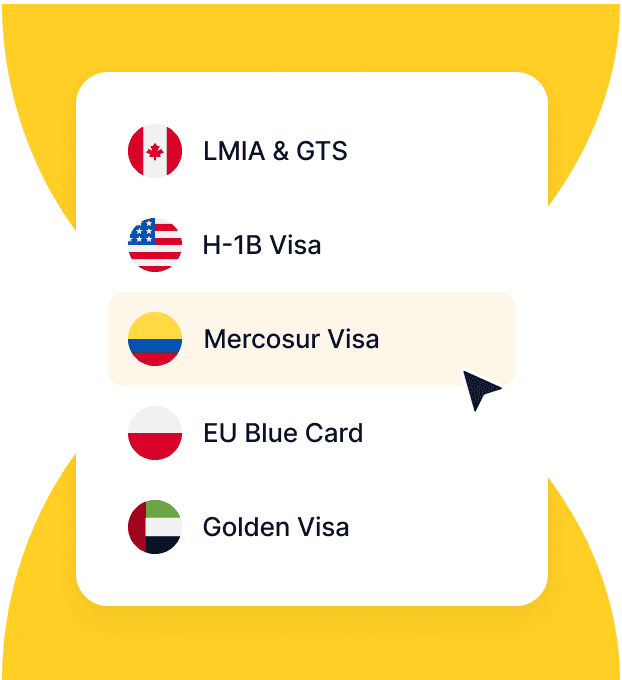
Get worldwide visas without the legwork
Step 1: Define what you will support
Geographic flexibility only works if your team knows what you will approve. Start narrow. Start clear. A smaller policy you can deliver is better than a broad promise you cannot keep.
Define four things in writing:
Which roles can relocate?
Not every role works in every location. A role that needs daily office presence in your HQ cannot move. A role that works fully remote can move anywhere your company operates. List the roles you will support, and list the roles you will not.
Which destinations will you support?
You don't need to support every country. Start with two or three countries where you have strong legal and payroll infrastructure. As you learn, add more. Your Global Mobility Strategy guide suggests starting with destinations and roles you can support well, then expanding based on demand and delivery capacity.
What types of moves will you approve?
Will you approve permanent relocations? Short-term assignments? Temporary moves? Each type has different legal, tax, and payroll needs. Define which types your company will support. See the guide on relocating employees for the different assignment types and their requirements.
Who pays for what?
Will you fund visa costs? Relocation costs? Housing? Will the employee cover any costs? A clear relocation package removes confusion and sets expectations. Document this in your policy.
Action: Write a one-page policy document that covers these four areas. Share it with your legal and finance teams, then communicate it to employees.
Use Deel's Employee Relocation Policy Template as a starting point—it includes guidelines for eligibility, relocation purposes, reimbursement, permits, and compensation adjustments. Then set up Deel Mobility as your system of record. When a relocation request comes in, Deel Mobility becomes your single source of truth for tracking eligibility, documents, deadlines, and compliance status across all countries you support.
Step 2: Assess what legal and tax rules apply
A cross-border move involves five separate compliance areas. Without a centralized system, each area becomes a separate email thread, a separate vendor, and a separate deadline. That's how relocations stall.
Immigration and work authorization
The employee needs the right visa or work permit for the destination country. Some countries issue work permits in weeks. Others take months. Some require an employer to have a sponsor license before you even apply. Some have visa quotas that fill up mid-year. Applying for the wrong visa type wastes time and money.
What actually varies: Processing times differ by 200+ days depending on country and visa type. Some destinations let you start work while the visa is pending. Others require approval before day one. Some countries have quota years that don't align with your calendar.
What to ask: What visa type does this person qualify for? Can your company sponsor it, or does a local partner need to? Does this country have processing backlogs? Is there a visa quota, and if so, when does it reset? Can the employee start work before the visa is approved, or must you wait for approval?
Deel helps by: The visa eligibility tool gives you a personalized recommendation after a few questions—exact visa type, realistic timeline, and cost. Deel's in-house immigration experts confirm the recommendation and manage the application process. Deel tracks deadlines and visa renewals proactively so you don't miss them.
Deel Mobility
Know in seconds if your team can work anywhere
Employment and payroll
The destination country has employment laws. These aren't just minimum wage. They cover overtime rules, mandatory benefits, how many hours per week are legal, when you can terminate someone, and what severance costs. If you misclassify the employee (calling them a contractor when local law says they're an employee), you face fines and legal penalties.
What actually varies: Some countries mandate 25+ days of paid leave per year. Others mandate 10. Some require 3 months' severance at termination. Others require none. Overtime multipliers range from 1.25× to 2× base pay. Some countries have strict rules about working hours; others are more flexible.
What to ask: Will your company entity employ the worker, or will you use an EOR? What are the local minimum wage and mandatory benefits? What's the total employment cost including all mandatory contributions? What severance or termination costs might apply if the relocation doesn't work out?
Deel helps by: If you don't have a legal entity in the destination country, Deel EOR becomes the legal employer and handles all local compliance. Deel calculates total employment cost upfront so you know the real expense. Deel handles contract writing, benefits setup, and payroll so you don't accidentally violate local labor laws.
Personal tax and social security
This is where compensation differs most by country. Some destinations have mandatory social security contributions of 20%+ of salary. Some have wealth taxes. Some have restrictions on how much foreign income can be earned tax-free. Home countries may still tax the employee on foreign income even though they've moved. Tax treaties between countries determine who pays what.
What actually varies: Social security obligations range from 0% to 25%+ of salary. Some countries tax on worldwide income; others only tax local income. Home countries sometimes have "step-out" rules that prevent you from avoiding home-country tax by moving. The employee's net take-home in the destination could be significantly lower than at home, even with the same gross salary.
What to ask: What are the destination country's social security obligations? Will the employee's home country still tax them on foreign income? What's the employee's actual take-home pay in the destination country? Will you adjust salary upward to maintain their financial position?
Deel helps by: Deel models total employment cost and take-home pay in the destination country, including all social security and tax obligations. This lets you quote the employee an honest number before they agree to the move. Deel can model different scenarios (raise salary, maintain take-home, etc.) so you find a workable arrangement.
Corporate tax
Your company may have tax obligations in the destination country even if you don't have an office there. If the employee's work generates revenue in the destination, or if they stay long enough and do substantive work there, your company might be deemed to have a "permanent establishment" (PE) and owe taxes in that country. This isn't obvious—it depends on the activity, the country's tax rules, and tax treaties.
What actually varies: Some countries have very broad PE rules. Others don't tax foreign companies at all unless there's a physical office. The length of stay matters—in some places, 183 days triggers PE; in others, it doesn't. The type of work matters—sales activity triggers PE in many countries; training doesn't. Tax treaties can override both countries' normal rules.
What to ask: Does this relocation create permanent establishment risk in the destination country? If yes, what corporate tax filings would be required? Are you managing PE risk through entity setup or another structure? Should you establish a legal entity now, or can you wait?
Deel helps by: Deel coordinates with your tax advisers to assess PE risk upfront. If PE is a concern, Deel can explain entity-setup options. If you use Deel EOR, Deel becomes the local employer, which can help manage PE exposure.
Data protection and security
Some countries have strict data residency laws—they require that employee data or customer data stays in-country. Some have cybersecurity rules about how data is encrypted or transmitted. Some restrict access to certain systems from specific countries. If the employee can't access the tools they need, they can't do the job. If you violate data protection rules, you face regulatory fines.
What actually varies: Some countries have no restrictions on data access. Others have strict rules on what data can leave the country. Some require encryption in transit. Others require data to be stored on local servers. Your company's own security posture may limit access from certain regions regardless of local law.
What to ask: Can the employee access the systems they need from this country? Are there data residency requirements that would prevent data from leaving the country? Does your company's security policy allow access from this country? Do you need to adjust security controls or systems access?
Deel helps by: Deel coordinates with your security team to confirm system access is workable. If there are restrictions, Deel helps you understand options (VPN, local data storage, adjusted tooling) so you can clear the move before the visa application starts.
Action: Create a single decision owner—one person who tracks all five areas and coordinates approvals. Without this, requests stall between teams. Set a timeline. For example: "All five compliance checks must complete within four weeks of the request."
Then—and this is crucial—use Deel Mobility as your centralized platform to replace spreadsheets and email threads. Instead of juggling separate conversations with immigration lawyers, tax accountants, payroll vendors, and security teams, one platform helps you:
Track immigration and mobility progress in one place (visa eligibility, applications, documents, timelines, status)
Coordinate inputs from legal, tax, payroll, and security teams without vendor sprawl
Improve visibility across relocation requests with automated deadline alerts
Streamline document intake with AI-powered review (Deel's in-house immigration experts stay in control)
Access Deel's in-house immigration experts for guidance on immigration and employment questions
Ask your advisers (immigration lawyer, tax accountant, security team) to provide input into Deel Mobility so all five areas feed into one case. This reduces coordination friction and manual tracking. Schedule a consultation with Deel Mobility to see how the platform streamlines immigration and mobility tracking alongside your existing legal, tax, and payroll processes.

In-depth walkthrough
Watch a live demo of our Global Mobility platform
Step 3: Build your business case
Relocation costs money. Replacing the employee also costs money. Compare them.
Calculate the cost of replacing the employee
Use your own finance data. This example is illustrative:
| Cost | Example |
|---|---|
| Recruiting fees | $15,000 |
| Internal hiring time | $5,000 |
| Interim coverage during vacancy | $10,000 |
| Onboarding and training | $8,000 |
| Productivity loss during ramp-up | $12,000 |
| Total replacement cost | $50,000 |
Calculate the cost of supporting the relocation
This example is illustrative:
| Cost | Example |
|---|---|
| Immigration and visa costs | $2,000 |
| Relocation benefits (moving, housing) | $8,000 |
| Employment setup and payroll transition | $1,000 |
| Ongoing service costs (first year) | $500 |
| Compensation adjustments (if needed) | $3,000 |
| Total relocation cost | $14,500 |
In this scenario, relocation costs $14,500. Replacing the employee costs $50,000. The business case may support approving the move.
Action: Document the business case for each relocation request. Share it with finance and the employee's manager. Track whether employees actually stay. Update your assumptions based on what happens.
Deel Mobility's case management and reporting capabilities can support this process:
Track requests, approvals, visa timelines, and outcomes in one system
Review which destinations and roles tend to have better outcomes
Generate reports on immigration costs, timelines, and program metrics
Share data with leadership on retention vs. replacement costs
Improve your business case model over time as your program grows
The more relocations you track in Deel Mobility, the better your program data becomes. Your assumptions will improve based on actual outcomes rather than benchmarks.
Step 4: Build your approval process
Clear process beats ambiguous approval every time.
Who decides?
Name one decision owner. This person:
Gathers information from legal, finance, HR, and security
Tracks the timeline
Makes the final yes or no decision
Communicates the result to the employee and manager
Timeline and checkpoints
Create a clear timeline. For example:
| Week | Step | Owner |
|---|---|---|
| Week 1 | Employee submits request with destination, role, dates | Employee |
| Week 1–2 | Legal and tax assess compliance | Legal/tax team |
| Week 2 | Finance calculates business case | Finance |
| Week 2–3 | Security approves data access | IT/security |
| Week 3 | Decision owner reviews all inputs and makes decision | Decision owner |
| Week 3 | Communicate result to employee | Decision owner |
| Week 4–8 | Execute visa and payroll setup (if approved) | Deel Mobility + payroll team |
Tell employees the timeline upfront. This reduces anxiety and sets expectations.
What triggers a "no"?
Be clear about what will cause a rejection:
The role cannot be done remotely in that country
Compliance costs exceed the relocation budget
The business case doesn't support it
The employee hasn't been with the company long enough
The destination is not on your approved list
See the guide to streamline employee relocations for more process examples.
Action: Document your approval process. Share it with all teams. Use it the same way every time. Then implement it in Deel Mobility:
Eligibility checks run through AI-powered visa assessment tools to help identify visa options
Compliance assessments (immigration, tax, payroll, security) are tracked in one central dashboard
Timeline tracking and deadline alerts help prevent missed dates
Every team can see case status—legal, finance, HR, and security track progress from request to approval
Bottlenecks become visible—if a case stalls in legal review, you see it
This reduces email threads and spreadsheet coordination. When every stakeholder can see case status in real time, approvals tend to move faster. Timelines and availability vary by country and case complexity.
Step 5: Use Deel Mobility to execute
Once you approve the relocation, immigration becomes the final barrier. Visa requirements change by country. Document deadlines vary. Consulates move at different speeds.
Deel Mobility helps streamline this process by giving you one platform with flexible support options.
Flexible support levels
Deel Mobility works the way you work:
Self-serve: Use the platform yourself
Visa eligibility tool helps you assess what visa types may apply (with estimated timeline and cost)
AI-powered document review speeds up intake—applicants get feedback on missing or incorrect documents, Deel experts verify the work
Case dashboard tracks status, deadlines, and documents in one place
You manage cases on your timeline
Fully managed: Let Deel handle execution
Deel's in-house immigration experts manage the relocation case
Visa application filing, consulate appointments, document submission
Status tracking and deadline alerts go to you automatically
Visa renewals are tracked proactively to help prevent missed deadlines
Mix and match: Use self-serve for some cases, fully managed for others
Start with self-serve to learn the process and keep costs low
Hand off complex cases to Deel's experts when needed
Scale your support level as your program grows
Immigration and employment together
If you don't have a legal entity in the destination country, Deel Mobility integrates with Deel’s EOR. Together they support:
Visa sponsorship and work authorization (Deel Mobility)
Compliant employment contracts (Deel’s EOR)
Local payroll and tax handling (Deel’s EOR)
One integrated platform for immigration and employment
Your employee benefits from coordinated support. You work with one vendor instead of managing multiple providers.
Action: Before your first relocation, set up a consultation with Deel Mobility. Share your approved destinations and relocation scenarios. Ask Deel about:
Visa timelines and requirements for your priority countries (timelines vary by country)
Cost estimates for immigration and employment setup
Self-serve vs. fully managed—which approach fits your team's capacity
How AI-powered document review supports faster intake
Visa renewal tracking and how alerts work
Integration with Deel EOR (if you need employment setup)
How the platform scales from your first case to managing multiple relocations
Deel can help you choose which support level works best and get your first relocation started.
Make geographic flexibility your competitive advantage
Employees value choice in where they work. A structured approach helps you support relocations more effectively.
Deel Mobility provides one global platform to manage immigration and mobility—with centralized tracking, automated alerts, AI-assisted document processing, and in-house immigration expert support when you need it. You choose how involved you want to be.
Start with one destination. Approve one relocation. Use Deel Mobility to track it end-to-end. Learn what works. Expand to additional countries and employees.
Geographic flexibility is increasingly important for retention. Companies that build this capability systematically—with centralized systems instead of spreadsheets—are better positioned to keep valued employees.
For a complete framework, download the Global Mobility Strategy guide.
Ready to build a geographic flexibility program on a centralized platform? Schedule a consultation with Deel Mobility below. Deel will help you design your program, choose the right support level, and get your first relocation underway.
Deel Mobility
Get your immigration and mobility questions answered

FAQs
What counts as geographic flexibility for enterprise employees?
Geographic flexibility includes approved permanent relocations, temporary cross-border work, and moves between offices. Your policy should define eligible roles, destinations, and conditions for each arrangement.
How do enterprises manage compliance when employees relocate cross-border?
Coordinate separate immigration, employment, payroll, tax, and data-security reviews before the move. Assign a decision owner and confirm required permissions before the employee starts work in the destination.
Does offering relocation support actually reduce turnover?
Relocation support can help you retain employees whose reason for leaving is a location constraint. Measure outcomes in your own workforce because support doesn't guarantee retention or resolve unrelated job concerns.
What is Deel Mobility, and how does it differ from a traditional relocation vendor?
Deel Mobility supports immigration case management, including eligibility checks, documentation, and renewals. Compare providers by their actual scope, and confirm responsibility for housing, shipping, tax advice, employment, and payroll rather than assuming every relocation package includes them.
Jemima is a nomadic writer, journalist, and digital marketer with a decade of experience crafting compelling B2B content for a global audience. She is a strong advocate for equal opportunities and is dedicated to shaping the future of work. At Deel, she specializes in thought-leadership content covering global mobility, cross-border compliance, and workplace culture topics.