
Article
9 min read
10 Essential Questions to Ask When Choosing a Global Benefits Vendor
Global HR

Author
Shannon Ongaro
Last Update
December 02, 2025

Table of Contents
1. What services do they offer?
2. What is their pricing structure and transparency?
3. How do they ensure compliance across countries?
4. What technology and tools do they provide?
5. How flexible are their solutions for changing needs?
6. What level of customer support do they provide?
7. Can they provide references or case studies?
8. How do they measure success and ROI?
9. What is their approach to employee engagement?
10. How do they handle employee feedback?
Your next step toward confident global benefits management
Key takeaways
- Choosing a global benefits vendor is a high-stakes decision that affects compliance, cost control, and employee experience across every country you operate in.
- The strongest vendors combine end-to-end services, transparent pricing, real-time compliance coverage, and modern, integrated technology that reduces manual work.
- Deel stands out by unifying global benefits administration in one platform, helping teams stay locally compliant, scale into new countries faster, and deliver a consistent benefits experience that employees trust.
Selecting the right global benefits vendor is one of the most consequential decisions HR, finance, and operations leaders make. The wrong choice can lead to compliance risks, hidden costs, and frustrated employees across multiple countries. The right partner, however, streamlines administration, ensures regulatory adherence, and delivers meaningful value to your workforce.
This guide walks through ten essential questions that help you confidently evaluate vendors, avoid common pitfalls, and build a benefits program that scales with your global ambitions. By asking the right questions upfront, you'll gain clarity on service scope, pricing transparency, compliance capabilities, and the technology that powers modern benefits administration.
1. What services do they offer?
Understanding the full range of services a vendor provides is the foundation of any evaluation. Global benefits administration is complex, spanning payroll processing, compliance management, healthcare plans, retirement programs, and paid leave tracking across dozens of jurisdictions. A vendor's service breadth directly impacts your ability to maintain compliance, deliver consistent employee experiences, and operate efficiently.
Look for vendors that handle end-to-end benefits administration, including enrollment support, claims processing, and ongoing plan management. Global benefits standardization creates consistent employee experiences and smooth transitions for mobile workers, which is only possible when a vendor offers comprehensive, integrated services rather than piecemeal solutions.
Benefits administration refers to the process by which companies manage employee benefits programs—insurance, retirement plans, paid leave, and more—ensuring access, accuracy, and regulatory compliance. The best vendors provide not just administration of benefits but also strategic guidance on plan design, cost optimization, and employee communication.
When evaluating service offerings, consider creating a comparison table:
| Service Category | Essential Features | Questions to Ask |
|---|---|---|
| Payroll Processing | Multi-country payroll, tax compliance, direct deposit | How many countries do you support? |
| Compliance Management | Regulatory tracking, audit support, government filings | How do you monitor law changes? |
| Healthcare Benefits | Medical, dental, vision plans, local provider networks | Do you offer local and global plans? |
| Retirement Plans | 401(k), pension, superannuation options | How do you handle cross-border portability? |
| Time Off Management | PTO tracking, statutory leave, local holiday calendars | Does your system auto-update for local laws? |
The depth and integration of these services will determine whether you'll need multiple vendors or can consolidate under one platform—a decision that significantly affects administrative burden and cost.
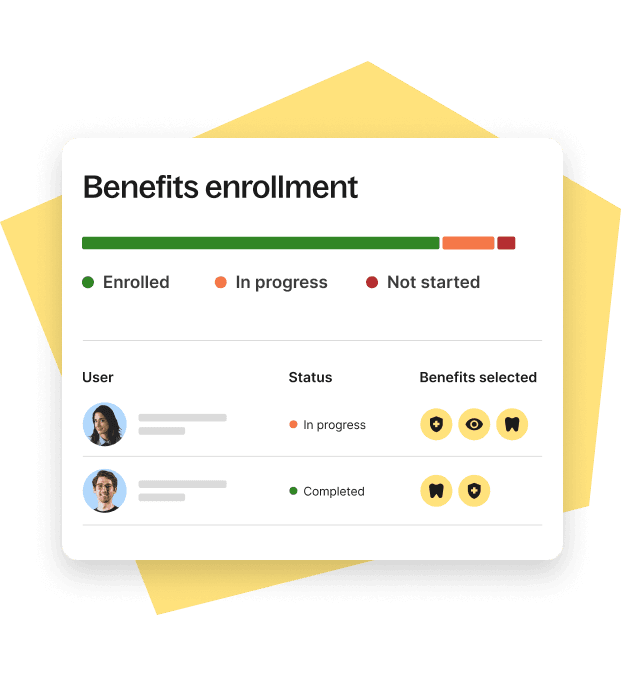
Benefits Administration
2. What is their pricing structure and transparency?
A clear pricing structure protects you from budget surprises and enables accurate vendor comparisons. Many global benefits vendors use complex fee models that obscure the true cost of service, making it difficult to assess value or plan long-term budgets.
Request itemized cost breakdowns that detail base fees, per-employee charges, implementation costs, and any potential surcharges for additional services or countries. As Wise notes, supplier cost breakdown analysis improves transparency and negotiation in procurement, giving you leverage to question unclear charges and negotiate better terms.
Cost transparency means the clear, upfront disclosure of all fees, surcharges, and potential extra costs in a vendor agreement. Without it, you may discover hidden charges for currency conversion, expedited support, or regulatory updates that should be standard.
Be particularly cautious of vendors that charge premium rates without justification. Some global vendors charge significantly higher fees, which can disproportionately affect smaller firms with tighter budgets. Ask for sample invoices from existing clients and clarify whether pricing scales with headcount, service usage, or geographic expansion.
Key pricing questions include:
- What is included in your base fee versus add-on charges?
- How do costs change as we add employees or enter new countries?
- Are there penalties for reducing headcount or changing service levels?
- Do you charge for platform access, integrations, or customer support?
Transparent pricing isn't just about cost—it's about trust and partnership. Vendors willing to explain their pricing logic demonstrate confidence in their value proposition.
3. How do they ensure compliance across countries?
Compliance is non-negotiable in global benefits administration. Each country has unique labor laws, tax requirements, and benefits mandates that change frequently. A single misstep can result in fines, legal disputes, or reputational damage that far exceeds vendor costs.
The best vendors maintain dedicated compliance teams that monitor regulatory changes in real-time and automatically update systems to reflect new requirements. Sharing data across silos helps companies ensure compliance and optimize global benefits costs, which requires vendors with integrated systems that track obligations across all jurisdictions.
Compliance in a global HR context means ensuring organizational practices adhere to all applicable labor, tax, and employment laws across different jurisdictions. This includes statutory benefits like social security contributions, mandatory health insurance, severance requirements, and data privacy regulations such as GDPR.
Ask vendors how they stay current with regulatory changes. Do they have local legal experts in each market? How quickly do they implement updates to their platform? What happens if a compliance issue arises—who is responsible, and how is it resolved?
Sample compliance questions to ask:
- How do you track and implement changes to local labor laws?
- What is your process for managing government audits or inquiries?
- Do you provide compliance reports and documentation for our records?
- How do you handle data privacy requirements across different regions?
- Can you demonstrate your compliance track record with case examples?
Vendors should provide clear documentation of their compliance processes, including audit trails, government filing confirmations, and regular compliance reports that give you visibility into your obligations.
4. What technology and tools do they provide?
Technology is the engine of modern benefits administration. The right platform reduces manual work, minimizes errors, empowers employees with self-service capabilities, and provides the data insights needed for strategic decision-making.
Look for vendors offering robust HR and payroll analytics with predictive insights. For example, Deel provides detailed HR and payroll analytics that help leaders forecast costs, identify trends, and make data-driven decisions about benefits investments. Analytics transform benefits from a cost center into a strategic tool for talent attraction and retention.
Employee self-service platforms are equally critical. When employees can access pay stubs, time off balances, and benefit summaries through an intuitive portal, it boosts transparency and reduces HR's administrative burden. Self-service also improves employee satisfaction by giving workers control over their information and reducing dependency on HR for routine questions.
Essential technology features include:
| Feature | Why It Matters |
|---|---|
| Integration capabilities | Connects with HRIS, accounting, and time-tracking systems |
| Automated workflows | Reduces manual data entry and processing errors |
| Real-time reporting | Provides instant visibility into costs, participation, and compliance |
| Mobile access | Enables employees to manage benefits from anywhere |
| Multi-language support | Ensures usability for global teams |
| API access | Allows custom integrations and data flows |
Ask vendors for platform demonstrations focused on your specific use cases. Can the system handle your current countries and scale to new markets? How easy is it for employees to enroll in benefits or update their information? What level of technical support is provided during implementation and ongoing use?
Technology should simplify, not complicate, your benefits administration. Prioritize vendors with intuitive interfaces, strong integration capabilities, and proven reliability.
5. How flexible are their solutions for changing needs?
Business needs evolve. You may expand into new markets, adjust benefits offerings based on employee feedback, or need to scale up or down based on economic conditions. Vendor flexibility determines how easily you can adapt without disruption or excessive costs.
Companies should regularly evaluate vendor performance and be ready to adapt services or renegotiate terms to maintain flexibility. This requires vendors who view contracts as living agreements rather than rigid commitments.
Solution flexibility refers to a vendor's ability to modify or customize services quickly in response to evolving business needs. This includes adding or removing benefit plans, adjusting service levels, incorporating new technologies, or tailoring offerings to specific regions or employee populations.
Flexible vendors demonstrate their adaptability through:
- Modular service offerings that allow you to add capabilities as needed
- Contract terms that accommodate growth or contraction without penalties
- Regional customization that respects local preferences while maintaining global consistency
- Technology upgrades included in standard agreements rather than requiring costly migrations
- Willingness to co-develop solutions for unique requirements
Ask about the vendor's approach to change management. How quickly can they implement new benefits or enter a new country? What costs are associated with modifications? Do they charge for every change request, or is reasonable flexibility included in your agreement?
Real-world examples help assess flexibility. Request case studies showing how the vendor adapted to a client's changing needs, whether through rapid expansion, benefit redesign, or integration of new technologies.
Global Hiring Toolkit

6. What level of customer support do they provide?
Even the best technology and processes require human support. When issues arise—and they will—responsive, knowledgeable customer support is the difference between minor inconveniences and major disruptions that affect employee trust and satisfaction.
Evaluate support across multiple dimensions: availability, expertise, responsiveness, and proactivity. Ask about support hours and whether they cover all time zones where you operate. Is multilingual support available for employees who don't speak English? What are typical response and resolution times for different issue types?
Strong vendor partnerships involve two-way feedback to prevent small issues from escalating. The best vendors don't wait for you to report problems—they monitor systems proactively, reach out with solutions, and provide regular account reviews to identify improvement opportunities.
Key support questions include:
- What support channels are available (phone, email, chat, portal)?
- Are dedicated account managers included, or is that an add-on service?
- How do you handle urgent issues outside business hours?
- What is your average response time for different priority levels?
- Do you provide training and onboarding support for our team and employees?
Review service level agreements (SLAs) carefully. Vague commitments like "we respond quickly" are meaningless. Look for specific metrics: "95% of tickets resolved within 24 hours" or "dedicated account manager responds within 2 hours."
Check third-party reviews and request references specifically about support quality. Ask references about their worst support experience and how the vendor handled it—this reveals more than asking about typical service.
7. Can they provide references or case studies?
References and case studies validate a vendor's claims with real-world evidence. They demonstrate proven success with companies similar to yours and reveal how the vendor performs under pressure.
Request references from organizations with comparable size, industry, and geographic footprint. A vendor's success with a 10,000-person enterprise doesn't necessarily translate to a 200-person startup, and vice versa. Similarly, expertise in manufacturing may not apply to technology or professional services.
Effective case studies detail measurable outcomes, not just implementations. Look for specific metrics: "reduced compliance incidents by 60%," "improved benefits enrollment completion from 70% to 95%," or "decreased benefits administration costs by 30%." These quantifiable results help you estimate potential value for your organization.
When evaluating references and case studies, consider:
- Relevance: Does the reference company face similar challenges?
- Recency: Are the examples current, or from years ago when the vendor was different?
- Specificity: Do they provide concrete details and data, or just vague praise?
- Challenges: Do they acknowledge difficulties and explain how they were overcome?
- Longevity: How long has the reference been a client? Long relationships suggest satisfaction.
Don't limit yourself to vendor-provided references. Search for independent reviews on platforms like G2, Capterra, or Trustpilot. Ask your network for unfiltered opinions about vendors you're considering.
Prepare specific questions for reference calls: What surprised you about working with this vendor? If you could change one thing, what would it be? Would you choose them again knowing what you know now?
Leading Global Hiring Platform

8. How do they measure success and ROI?
Transparent, data-driven performance metrics are essential for tracking vendor impact on costs, compliance, and employee satisfaction. Without clear success measures, you can't determine whether you're getting value or need to make changes.
The best vendors help you define relevant key performance indicators (KPIs) upfront and provide regular reporting against those metrics. Using analytics, vendors can help personalize reporting and optimize benefits investment and employee engagement.
Return on investment (ROI) for global benefits refers to the measurable business value generated from benefit programs—improved retention, attraction, and productivity—relative to total spend. While benefits ROI can be challenging to quantify, leading vendors provide frameworks and data to demonstrate value.
Common KPIs for benefits vendor performance include:
- Participation rates: Percentage of eligible employees enrolled in each benefit
- Employee satisfaction: Survey scores related to benefits quality and accessibility
- Compliance metrics: Number of incidents, audit findings, or regulatory issues
- Cost per employee: Total benefits spend divided by headcount, trended over time
- Time to resolution: Average time to resolve employee questions or issues
- Retention rates: Employee turnover compared to industry benchmarks
- Claims accuracy: Percentage of benefits claims processed correctly the first time
Ask vendors how they track these metrics and what reporting they provide. Can you access real-time dashboards, or do you receive quarterly reports? Are reports standardized, or can they be customized to your specific needs?
Discuss how the vendor will work with you to establish baseline metrics and improvement targets. The best partnerships include regular business reviews where you analyze performance data together and identify optimization opportunities.
9. What is their approach to employee engagement?
Benefits only deliver value when employees understand and use them. Active employee engagement leads to higher utilization, greater satisfaction, and stronger organizational loyalty—but it requires intentional effort from your vendor.
Effective vendors provide tools and platforms that educate employees about their benefits and make enrollment intuitive. This includes clear communication materials, interactive decision support tools, and accessible portals where employees can explore options and make informed choices.
Companies can boost employee benefits participation with clear communication, enrollment support, and flexible options that lower costs while improving satisfaction. This requires vendors who view employee engagement as a core responsibility, not an afterthought.
Employee engagement in this context refers to the degree to which employees feel informed, involved, and empowered to maximize their benefits. High engagement means employees understand what's available, appreciate the value, and actively use benefits to improve their lives.
Vendors support engagement through:
- Personalized enrollment experiences that guide employees based on their situations
- Educational resources explaining benefit options in plain language
- Year-round communication, not just during open enrollment
- Mobile-friendly platforms that employees can access anytime, anywhere
- Decision support tools that help employees compare options and estimate costs
- Multilingual materials and support for diverse workforces
Ask vendors for examples of their employee communication strategies and materials. Request to see sample enrollment portals, educational videos, or decision support tools. How do they measure employee engagement, and what results have they achieved for other clients?
The vendor's approach to engagement should align with your culture and employee preferences. Some workforces prefer detailed written materials, while others respond better to videos, webinars, or one-on-one support.
Deel HR
10. How do they handle employee feedback?
Ongoing feedback loops help vendors continuously adapt offerings and resolve emerging issues before they become significant problems. The best vendor relationships are bidirectional partnerships where both parties actively share insights and work together to improve.
Strong vendor partnerships involve two-way feedback, which helps adapt services over time and ensures the relationship remains valuable as your needs evolve.
Effective feedback mechanisms include:
- Regular employee surveys measuring satisfaction with benefits and administration
- Pulse checks after major events like open enrollment or plan changes
- Direct feedback channels where employees can report issues or suggest improvements
- Advisory councils that bring together vendor representatives and employee stakeholders
- Quarterly business reviews where you share employee feedback and discuss responses
- Performance scorecards that track vendor responsiveness to feedback
A best-practice feedback process might look like this:
- Collect employee feedback through surveys, support tickets, and direct conversations
- Analyze feedback to identify patterns, priorities, and root causes
- Share insights with vendor during scheduled review meetings
- Collaboratively develop action plans to address key issues
- Implement changes and communicate improvements to employees
- Measure impact and adjust as needed
- Repeat the cycle continuously
Ask vendors how they incorporate client and employee feedback into their service delivery. Can they provide examples of changes they've made based on feedback? How quickly do they typically respond to improvement suggestions?
The vendor's willingness to listen and adapt is as important as their initial capabilities. Markets change, regulations evolve, and employee expectations shift—your vendor must be a learning partner, not just a service provider.
Your next step toward confident global benefits management
Global benefits are only as effective as the partner behind them—and the right platform makes it easier to stay compliant, control costs, and deliver a consistent employee experience worldwide.
Deel helps companies manage global benefits end-to-end, with locally compliant coverage, intuitive employee self-service, and centralized administration that scales as you expand into new markets.
With Deel’s global employee benefits software, you can consolidate vendors, simplify enrollment and ongoing management, and ensure employees get meaningful, region-appropriate benefits wherever they’re based. Book a 30-minute demo to speak with an expert and learn more.
FAQs
What should I look for in a vendor's global legal presence?
Look for vendors with established legal entities in your target markets, as this streamlines compliance and provides more direct oversight than relying on third parties.
How can I evaluate the vendor's compliance management capabilities?
Assess the vendor's systems for tracking regulatory changes, conducting audits, and managing filings, as well as their track record in maintaining compliance for similar companies.
Why is transparency in pricing important when choosing a benefits vendor?
Pricing transparency ensures you understand the true cost of services, avoid hidden fees, and can accurately compare vendors to maximize value.
What role does technology play in effective benefits administration?
Modern technology simplifies benefits management, enhances compliance, empowers employees through self-service, and provides actionable analytics for HR teams.
How can a vendor improve employee understanding and use of benefits?
Vendors improve understanding by offering clear communication, easy-to-use portals, and enrollment support so employees can make informed choices.
Shannon Ongaro is a content marketing manager and trained journalist with over a decade of experience producing content that supports franchisees, small businesses, and global enterprises. Over the years, she’s covered topics such as payroll, HR tech, workplace culture, and more. At Deel, Shannon specializes in thought leadership and global payroll content.


