Article
6 min read
What Is an Applicant Tracking System (ATS) and How to Find the Best One for Global Hiring
Global hiring
Global HR

Author
Jemima Owen-Jones
Last Update
November 02, 2026

Table of Contents
What is an applicant tracking system (ATS)?
Why HR leaders can't scale global hiring without an ATS
Key features to look for in an ATS for global teams
How to choose the best ATS for your organization
ATS vs. HRIS vs. recruitment CRM: what global HR leaders need to know
Best ATS platforms for global HR leaders
Build your global hiring pipeline with Deel
Key takeaways
An applicant tracking system (ATS) consolidates every candidate record and hiring workflow into one searchable pipeline.
For global hiring teams, the critical ATS capability is direct data handoff from accepted offer to compliant onboarding.
Deel routes every hiring decision from ATS pipeline to compliant onboarding and employment across 150+ countries.
Filling a role takes longer than most hiring teams expect. According to SHRM's 2025 recruiting benchmarks, the median time-to-fill runs around 45 days, even for single-country hiring.
For HR leaders managing candidate pipelines across multiple countries, time zones, and hiring models simultaneously, the complexity multiplies fast.
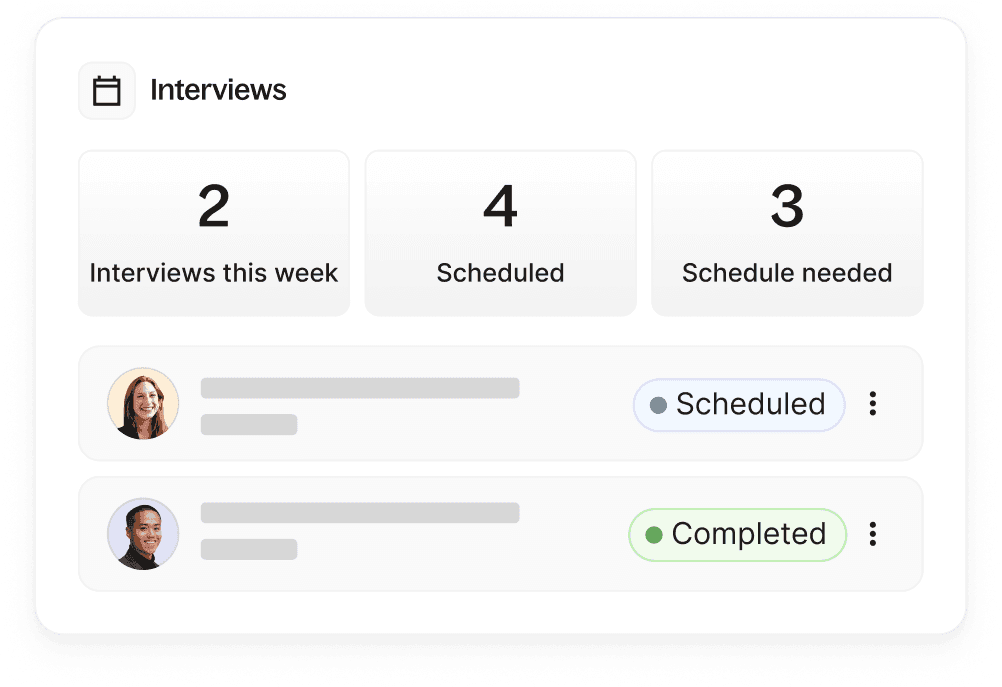
An applicant tracking system (ATS) is what keeps that complexity manageable: one place to post jobs, track candidates, run collaborative reviews, and move a hire from offer to onboarding without losing data at the handoff.
But not every ATS is built for global teams. Some stop at the offer letter. Many don't support multi-country compliance, General Data Protection Regulation (GDPR)-aligned data handling, or direct handoff to an Employer of Record (EOR) or payroll provider.
This guide explains what an ATS does, which capabilities matter most for global hiring, how to evaluate the options, and how Deel's integrated platform connects candidate pipeline management to compliant cross-border onboarding.
What is an applicant tracking system (ATS)?
An applicant tracking system manages the full candidate lifecycle, from job posting and application collection through screening, interviewing, offer management, and onboarding handoff. It replaces manual tracking across email threads and spreadsheets with a centralized pipeline where every candidate's status, feedback, and communication history lives in one place.
Modern ATS platforms are the central record for a company's hiring activity. Recruiters use them to post roles to multiple job boards simultaneously. Hiring managers use them to review candidates and leave structured feedback. HR teams use them to generate offer letters, run compliance checks, and trigger onboarding.
The best systems connect that candidate record directly to payroll or a human resources information system (HRIS) so that confirming a hire doesn't require re-entering data into a second system.
Why HR leaders can't scale global hiring without an ATS
Manual hiring management at scale creates three problems that compound quickly:
Duplicated effort
Compliance exposure
Inconsistent candidate communication
Without a central pipeline, every recruiter on a global team maintains their own candidate list. The same candidate can be in conversation with two different hiring managers simultaneously, or fall out of process entirely because no one logged a follow-up. At volume, managing 20 or more open roles across multiple markets, that fragmentation turns into real delays and missed hires.
Recruiting in more countries means managing more rules for candidate consent, retention, and deletion. Manually tracking GDPR requirements for EU candidates while managing separate consent flows for US applicants isn't a sustainable process. An ATS with built-in compliance controls handles that variation systematically.
Candidates receive slower updates and less consistent communication when hiring teams lack a shared process. An automated, well-paced workflow (timely status updates, clear interview scheduling, and consistent communication) reflects directly on an employer's brand.
According to SHRM, 43% of organizations used AI for HR tasks in 2025, up from 26% the year before, and 89% of those using AI in recruiting say it saves time or increases efficiency. That efficiency matters most because it frees recruiters to focus on candidate engagement rather than administrative overhead.
AI in recruiting: by the numbers
SHRM's 2025 Talent Trends survey found that 43% of organizations used AI for HR tasks in 2025, up from 26% the year before. Among those using AI in recruiting, 89% say it saves time or increases efficiency — freeing recruiters to focus on candidate engagement rather than administrative work.
Deel HR
Hire and recruit faster, with less effort
Key features to look for in an ATS for global teams
The following capabilities matter most when global teams evaluate platforms for international hiring.
Pipeline management and collaborative review
The core ATS function: a shared view of every candidate's status, with structured feedback forms for interviewers and configurable stage-based workflows. Stage automations that move candidates forward or trigger notifications without manual intervention are a key indicator of pipeline quality.
AI-powered screening
Leading platforms now use AI to surface the strongest candidate profiles first, generate job descriptions, and score applicants against role criteria, not to replace human judgment, but to reduce the time recruiters spend on lower-signal tasks.
Multi-country job board integrations
Posting a role in the UK, Germany, and Brazil simultaneously shouldn't require three separate uploads. An ATS that distributes to regional job boards automatically extends reach without adding administrative overhead.
GDPR and multi-jurisdiction compliance tools
These include consent management, configurable data retention schedules by jurisdiction, and candidate right-to-erasure workflows. For EU hiring specifically, ATS compliance rules for global recruitment are non-negotiable. ISO 27001 certification and SOC 2 auditing indicate the vendor takes data security seriously.
EOR and HRIS handoff
For global teams, the ATS doesn't end at the signed offer. The platform needs to pass candidate data directly into an employment infrastructure, whether EOR, professional employer organization (PEO), or direct payroll, without requiring manual re-entry.
For teams using Deel, the ATS module integrates natively with Greenhouse, Ashby, and Lever, so organizations keeping their existing recruiting tools can still connect candidate data to Deel's onboarding and employment workflows.
Pipeline analytics
Time-to-hire, offer acceptance rates, source quality, and stage-conversion rates give HR leaders the data to identify bottlenecks and optimize the hiring process by market.
ATS evaluation checklist for global teams
Does the platform support hiring in every country where the organization operates?
Does it connect directly to a payroll system and HRIS at offer acceptance?
Where is candidate data stored, and what are the data processing agreement terms?
How does pricing scale as hiring velocity grows across markets?
How to choose the best ATS for your organization
No ATS evaluation for a global team should start with a capability checklist alone. These four questions are a better starting point.
Does it support hiring in every country where the organization operates?
This means more than posting a job internationally. It means compliance tools calibrated to each jurisdiction's data protection and labor laws, job board distribution specific to each market, and a clear path from hired candidate to compliant employment contract.
Does it integrate directly with the organization's payroll system and HRIS?
The buyer's guide to applicant tracking systems for global teams consistently names the ATS-to-onboarding handoff as the point where manual work re-enters the process. An ATS that writes directly to the HRIS, or that is built into the same system, eliminates that step.
What is the data residency and sovereignty setup?
For teams subject to GDPR, UK GDPR, or country-specific data localization requirements, where candidate data is stored and how it's processed matters. The vendor's data center locations, sub-processor list, and data processing agreement terms are worth reviewing before signing.
What does the pricing model look like at scale?
Per-user pricing works well for small teams but compounds quickly as hiring velocity grows. Flat monthly or per-role pricing may be more predictable for teams managing high volumes across multiple markets.
ATS vs. HRIS vs. recruitment CRM: what global HR leaders need to know
Global HR leaders often manage all three of these systems, sometimes without recognizing exactly where one ends and the other begins. Knowing what an ATS does versus what an HRIS covers prevents over-buying or under-buying when building out a global HR tech stack.
Each tool has a distinct job and a distinct point in the worker lifecycle where it runs. The table below maps the key differences:
| Tool | Primary job | When it runs | What it doesn't do |
|---|---|---|---|
| ATS | Manage candidates from application to offer | Pre-hire | Store employee records post-hire |
| HRIS | Manage employees throughout the lifecycle | Post-hire | Track candidate pipelines |
| Recruitment CRM | Nurture passive candidates before they apply | Pre-application | Process applicants or generate offers |
An ATS and an HRIS are complementary tools that run at different stages: the ATS handles pre-hire candidate management, and the HRIS takes over once the hire is confirmed. The transition from accepted offer to new employee record is where data re-entry, manual handoffs, and compliance issues most commonly occur.
A recruitment CRM sits even earlier in the pipeline, focused on building and warming talent pools before a specific role opens. Some ATS platforms include CRM functionality, and others treat it as a separate module or integration.
Global HR teams running high-volume, high-complexity hiring typically need all three tools working together. The practical question isn't which one to choose: it's whether those three systems share one data model or require manual synchronization between them.
Talent
Find top talent, hire globally

Best ATS platforms for global HR leaders
Within Deel's platform, the ATS is a module under Deel HR rather than a standalone product. Deel Hire serves a different role: it routes hiring decisions to EOR, PEO, Deel Payroll, or Contractor once a candidate accepts an offer. Understanding that distinction helps when comparing Deel against standalone ATS platforms.
The six platforms below are options global HR teams frequently evaluate. The comparison draws on publicly available product information and the Gartner 2026 Magic Quadrant for Talent Acquisition (Recruiting) Suites for competitive context. The right choice depends on an organization's geography, team size, and existing tech stack.
| Platform | Pipeline features | Global support | Compliance tools | Pricing model |
|---|---|---|---|---|
| Deel's ATS | AI-powered candidate matching, posting to 1,000+ job boards, interview scheduling, reporting dashboards, native integrations with Greenhouse/Ashby/Lever, hiring-path routing through Deel Hire | 150+ countries, EOR in 130+, payments in 200+ | ISO 27001, SOC 2, GDPR-aligned | From $10 per employee per month |
| Greenhouse | Structured hiring workflows, deep integrations marketplace, Visionary in 2025 Gartner MQ | Requires a separate integration for EOR workflows | GDPR-capable | Per user/month |
| Workable | Multi-board job posting, AI-powered sourcing | International job distribution, no built-in EOR | GDPR tools included | Per job or monthly subscription |
| Ashby | Unified ATS and CRM, analytics-focused | Primarily US and Western Europe | Standard | Flat monthly |
| Lever | ATS and candidate relationship management (part of Employ Inc.) | Primarily US and Western Europe | Standard | Per user/month |
| BambooHR | Basic ATS within HRIS, simple pipeline | Designed primarily for US-based teams | Standard | Per employee/month |
Greenhouse, Workable, Ashby, and Lever are strong choices for teams operating primarily in North America and Western Europe with an existing HRIS already in place. BambooHR suits companies where both HR and recruiting are US-based.
Deel's connected platform stands out for what happens after offer acceptance: the ATS module passes candidate data directly into Deel HR, while Deel Hire routes the hiring decision to EOR, PEO, Deel Payroll, or Contractor.
Build your global hiring pipeline with Deel
Global hiring creates enough complexity without adding integration overhead between recruiting, HR, and employment infrastructure. When an offer is accepted in Deel's ATS module, the candidate record flows directly into Deel HR without manual re-entry or data export.
Deel Hire then routes the employment decision to EOR in 130+ countries, PEO for US co-employment, Deel Payroll for direct employment, or the Contractor model, with payments supported in 200+ countries. This connection makes onboarding consistent whether a company is hiring its first international employee or scaling across dozens of markets.
Read more about how Deel connects recruiting to onboarding and book a demo below to see the full pipeline in action.
Live Demo
Get a live walkthrough of the Deel platform
FAQs
What is the difference between an ATS and an HRIS?
An ATS is a pre-hire tool, managing candidates from application through offer letter. An HRIS manages employees from onboarding through their full lifecycle, including compensation, performance, time off, and offboarding. They serve different stages of the worker lifecycle and are most effective when their data connects without manual re-entry.
What features should global HR leaders prioritize in an ATS?
Multi-jurisdiction compliance tools (GDPR consent, configurable data retention, candidate data rights), direct HRIS or EOR handoff at offer acceptance, multi-country job board distribution, AI-powered screening to manage application volume, and pipeline analytics to track time-to-hire and conversion rates by market.
How does an ATS handle candidate data across different countries?
A compliant ATS lets teams configure data collection forms, retention schedules, and deletion workflows by jurisdiction. For EU candidates, this means collecting consent at application, storing data only as long as local law permits, and supporting right-to-erasure requests. ISO 27001 certification and a clear data processing agreement are baseline indicators to look for.
Can a small HR team manage international hiring without an ATS?
For very low-volume hiring (one or two roles per market per year), a shared spreadsheet can work temporarily. As soon as volume increases, or a team is actively hiring across three or more markets simultaneously, manual tracking creates too much compliance risk and too many coordination gaps to sustain.
How does Deel compare to standalone ATS platforms like Greenhouse or Workable?
Many standalone platforms require a separate integration to pass accepted-candidate data into HR and employment systems. Deel's ATS connects the candidate record directly to Deel HR, while Deel Hire routes the hiring decision to EOR, PEO, Deel Payroll, or Contractor, eliminating a separate handoff step.
For teams already operating globally with Deel, this connection removes the need for a separate integration between recruiting and employment.
This article is for general informational purposes only and should not be treated as legal, HR, or compliance advice. Consult a qualified professional for guidance specific to your situation.
Jemima is a nomadic writer, journalist, and digital marketer with a decade of experience crafting compelling B2B content for a global audience. She is a strong advocate for equal opportunities and is dedicated to shaping the future of work. At Deel, she specializes in thought-leadership content covering global mobility, cross-border compliance, and workplace culture topics.