
Global Work Glossary
- Results for ""
Table of Contents
What is a fraud watchlist / blacklist?
How fraud watchlists work in hiring
What fraud watchlists may contain
Fraud watchlist vs. other types of fraud screening
Key facts
Detect hiring fraud with Deel Security
FAQ
What is a fraud watchlist / blacklist?
What is a fraud watchlist / blacklist?
A fraud watchlist (also called a fraud blacklist) is a database of individuals, identities, or entities flagged for suspected or confirmed fraud in employment, hiring, or financial contexts. Organizations use it to identify candidates or workers who might have been involved in identity fraud, credential misrepresentation, or employment-related scams. Many organizations are replacing "blacklist" with "watchlist," "denylist," or "blocklist" as more inclusive language, though all three describe the same underlying concept.
How fraud watchlists work in hiring
When a candidate applies for a role, an organization could compare their identifying details against watchlist records to flag potential matches for review. A potential match triggers a manual review by HR or a security team, who weigh it against other verification results rather than treating it as confirmation of fraud. Watchlists may operate in real time as part of an identity verification flow, or as periodic checks run during employment.
Fraud watchlists may be internal records built by a single organization, industry-shared lists, or curated databases provided by security vendors. The data could include flagged names, known aliases, email addresses, phone numbers, or other identifiers linked to past fraud attempts.
What fraud watchlists may contain
Records on a fraud watchlist typically relate to one or more of the following:
Candidate impersonation fraud: posing as another person during a hiring process.
Synthetic identity fraud: creating a composite identity from real and fabricated data.
Document forgery: misrepresented or falsified credentials, certificates, or identification.
Account takeover: unauthorized access to an employer's or worker's accounts, often after a hire.
Known associations with financial fraud or employment-related payment schemes.
Organizations often combine watchlist screening with threat intelligence feeds to surface newly flagged entities and keep records current.
Fraud watchlist vs. other types of fraud screening
Fraud watchlists differ from other employment screening tools in both purpose and legal status.
Government sanctions lists (such as the OFAC Specially Designated Nationals list): identify entities legally prohibited from conducting business in a jurisdiction. Screening against them is a legal obligation in many countries, not a risk management choice.
Background checks: formally regulated processes that verify criminal history, employment history, or academic credentials. They often require candidate consent and follow specific adverse-action rules under applicable law.
Dark web exposure monitoring: surveillance of data dumps and illicit markets for compromised credentials that could be used in employment fraud.
Key facts
Here are some key facts about how fraud watchlists work, the risks they help organizations address, and how they fit into hiring.
A fraud watchlist may flag names, identities, device signals, or behavioral patterns linked to fraud, with any match triggering a review rather than an automatic rejection.
Watchlists can be internal, industry-shared, or vendor-maintained, and many draw on current fraud intelligence to flag new threats.
Unlike sanctions screening, which is a legal obligation in most jurisdictions, fraud watchlist use is a risk management practice.
Fraud watchlist data should be treated as one signal alongside other verification steps, not as a standalone basis for any employment decision.
Fraud watchlists are increasingly relevant in remote and cross-border hiring, where organizations may never meet workers in person during the screening process.
Organizations could combine watchlist screening with document authenticity verification for a more complete picture of fraud risk.
Detect hiring fraud with Deel Security
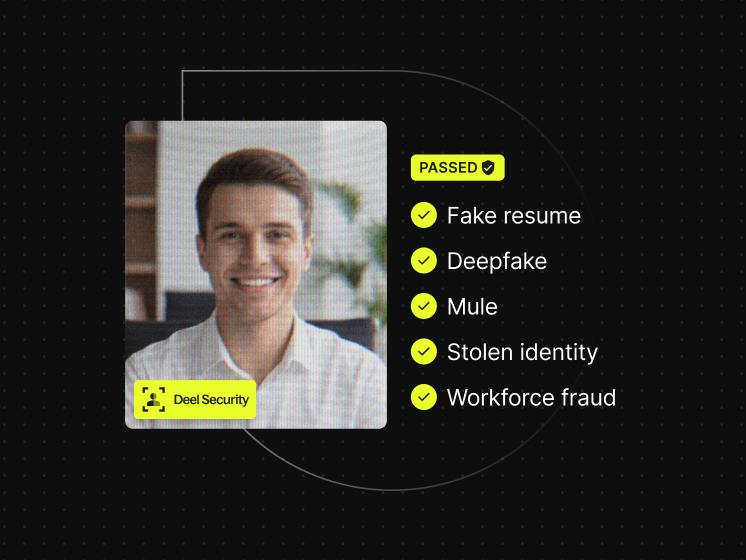
Deel Security detects fake candidates, synthetic identities, deepfakes, and impersonation attempts throughout hiring, onboarding, and ongoing employment.
Deel Security integrates with your existing applicant tracking system (ATS), bringing identity fraud detection directly into your hiring process. AI-powered checks flag potential fraud, and Deel's fraud experts review every high-risk alert, giving hiring teams the information to make the final decision.
Book a demo to see how Deel Security helps protect your business from hiring fraud.
Deel Security
Hire real people, keep fraud out from hiring to offboarding
FAQ
What is the difference between a fraud watchlist and a fraud blacklist?
The two terms are interchangeable. "Blacklist" was the original industry term, and legacy systems or older vendor documentation may still use it. Organizations transitioning to inclusive language typically rename the list without changing how it works or what data it holds.
Is screening against a fraud watchlist a legal requirement?
Fraud watchlist screening is generally a risk management practice, not a legal obligation. The applicable rules vary by jurisdiction: in many countries, hiring decisions must comply with data protection and employment law. Organizations should consult qualified legal advisers before implementing watchlist screening.
What happens when a candidate matches a fraud watchlist?
A match typically triggers a review, not an automatic rejection. HR or security teams examine the evidence, compare it with other verification signals, and decide how to proceed. They document their reasoning and account for false positives before making a determination.
How often should organizations update their fraud watchlist?
Organizations relying on watchlists could review and update them regularly, as fraudsters frequently change identities and methods. Supplementing internal records with current fraud intelligence helps keep watchlist data accurate and relevant.
This entry is for informational purposes only, and organizations implementing fraud watchlist screening should consult qualified legal advisers before doing so.