Article
1 min read
Born global: how Deel built the infrastructure the world's workforce needed
Global HR

Author
Deel Team
Last Update
May 27, 2026

Table of Contents
A founder with a very personal problem to solve
COVID didn't create the problem. It revealed it.
The architecture advantage most people miss
Why Deel refuses to hold customers hostage
AI is killing the migration moat
Building with domain obsessives, not generalists
What this means if you're evaluating HR tech right now
About OutSail
Most companies start with a product. Deel started with a belief.
The belief was simple: the world is full of extraordinary people, and the companies that can access them, regardless of where they live, will be the ones that win. The infrastructure to make that happen, though, didn't exist. So Deel built it.
Seven years later, that bet has paid off. Deel now serves 40,000+ customers, from early-stage startups to the world's largest enterprises, and has grown into a global people platform spanning payroll, HR, compliance, benefits, mobility, and IT — across more than 150 countries.
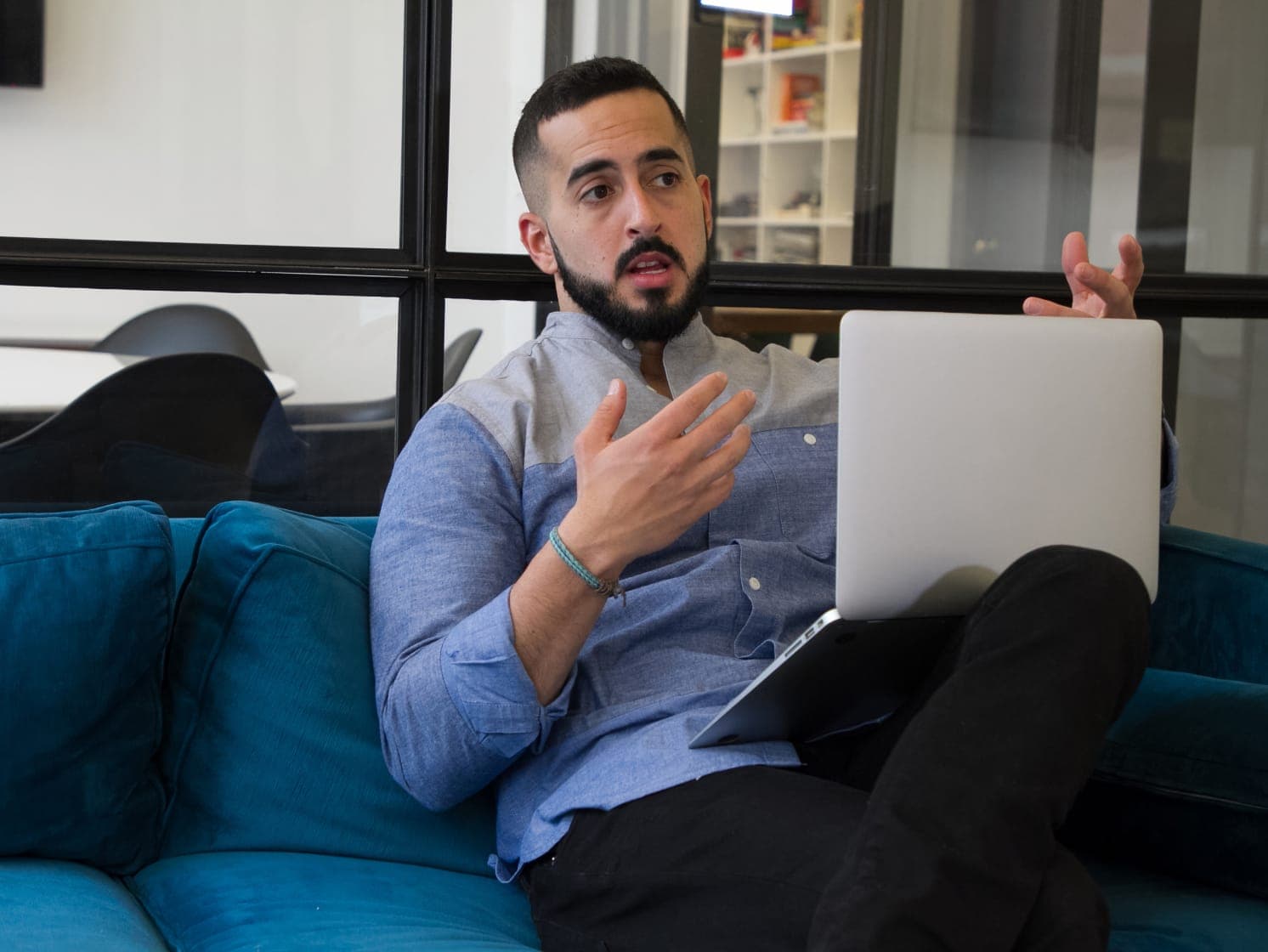
Recently, Deel Co-founder and CEO Alex Bouaziz sat down with Brett Ungashick, Founder of OutSail — a leading HR software advisory platform that helps companies navigate the increasingly complex world of HR tech, for a candid, wide-ranging conversation about where the industry has been, where it's going, and how Deel is thinking about all of it.
The result was one of the more honest conversations we've seen about what it actually takes to build HR infrastructure at a global scale. Here's what stood out.
A founder with a very personal problem to solve
Alex grew up in Paris. His co-founder grew up in China. Their paths crossed at MIT, and they spent years meeting and working with exceptional people scattered across the globe.
"We just want to enable amazing companies to be able to have the best people in the world," Alex told Brett. "And funnily enough, the world was converging towards this—and there was just no real infrastructure built for supporting it."
That gap became Deel.
When they launched, the dominant model for global hiring was a patchwork of workarounds: paying contractors via PayPal, setting up a single entity in Ireland, or using informal arrangements that created serious compliance exposure. It worked — until it didn't.
COVID didn't create the problem. It revealed it.
When the pandemic forced every office-based team into remote work overnight, something shifted. Suddenly, companies that had never carefully considered how they paid and managed distributed teams were forced to do so.
"The balance of power of second-tier employees versus first-tier employees got really disrupted," Alex explained. "People in HR leadership were assigned more budget to do something they always had in mind—making all employees have an amazing experience."
That moment accelerated years of progress. Employer of Record (EOR)—a model most HR professionals had never heard of before 2019—became a standard part of the conversation almost overnight.
But for Deel, EOR was just the beginning. "EOR is the product that kind of got us on the map," Alex said. "But our global payroll product, our US payroll product, our immigration products, our IT products — those have been the greater story of Deel. How we reinvented ourselves over time and stayed true to our core beliefs."
The architecture advantage most people miss
Here's the thing about building HR software for a global workforce: it's genuinely hard. Not just complicated-to-implement hard, but architecturally hard.
Most legacy HR systems were built for a single country. When those companies expanded globally, they didn't rebuild from the ground up—they layered global functionality on top of a mono-country foundation. The result? Clunky experiences, inconsistent data, and compliance gaps that only show up when it's too late.
Deel took a different approach from day one.
"Whether you're in the US, the UK, Nigeria, or Japan—we built horizontally," Alex said. "Being the first, and I think the largest, EOR provider in the market today, understanding all forms of worker was very important for us."
That horizontal architecture—where every worker type, in every country, is a first-class citizen in the system—is what makes global compliance at scale actually workable. It's not a feature you can bolt on. It has to be baked in from the start.
Why Deel refuses to hold customers hostage
As the HR tech market consolidates, many vendors are leaning hard into the "walled garden" playbook: get customers onto a single platform, make switching painful, and lock them in.
Deel has made a deliberate choice to go the other direction.
"I hate the way some of those products work," Alex said. "It's not okay to lock people into sub-quality products when you have one really good product.”
Instead, Deel built with fully open APIs, designed to integrate with whatever tools a company already loves. The philosophy: earn the business by being the best product, not by making it impossible to leave.
And according to Alex, that philosophy is about to matter a lot more than it used to.
AI is killing the migration moat
For years, one of the biggest competitive advantages an entrenched HR platform could have was the sheer cost and complexity of switching. Migrating years of employee data, rebuilding workflows, and retraining teams could take 12 to 18 months—or longer. That friction kept customers stuck, even when better options existed.
AI is changing that calculus quickly.
"If you can start having AI agents doing the full migration for you end-to-end," Alex explained, "and switching the system goes from months, if not years, into a couple of weeks or a couple of days—then that moat is completely gone."
What replaces it? Simple: the best product wins.
This is a bet Deel is comfortable making. The company has spent seven years investing in infrastructure that most competitors couldn't (or wouldn't) build—owned payroll rails, localized compliance engines, in-country legal and HR expertise. That foundation doesn't disappear when migration gets easier. If anything, it becomes more valuable.
Building with domain obsessives, not generalists
One of the more counterintuitive things Alex shared was how Deel thinks about acquisitions.
Most companies treat M&A as a way to buy revenue or market share. Deel treats it as a way to recruit the most obsessive domain experts in the world.
"The best way to acquire people that are obsessed with the problem you want to solve," Alex said. "You bring the best people in the world, acquire their business, have them come to the company and build with you."
That's how Deel approached Zavvy (learning and performance), LegalPad (immigration), and Safeguard Global (enterprise). In each case, the goal wasn't to inherit a product — it was to inherit a team that had been thinking about a specific problem longer and harder than anyone else.
The acquired products get rebuilt in-house. The domain expertise stays.
What this means if you're evaluating HR tech right now
If you're an HR leader or executive at a scaling company and you're currently in the market for a global HR solution, the conversation between Alex and Brett is worth your time in full.
The takeaways that matter most:
Infrastructure is the differentiator that doesn't depreciate. Flashy features can be copied. A payroll engine that handles compliance across 150+ countries, owned end-to-end, cannot be replicated overnight.
Openness is not weakness. A platform that plays well with your existing tools and doesn't hold your data hostage is a sign of confidence, not a gap in strategy.
AI will lower the cost of switching faster than you think. If you're staying on a legacy system because migration feels impossible, that calculation may change sooner than you expect. Now is a good time to evaluate what's out there.
About OutSail
Brett Ungashick and the team at OutSail help HR and people leaders at growing companies cut through the noise in the HR tech market. Their advisory platform connects buyers with the right tools across hiring, engagement, and payroll, and their newsletter and LinkedIn following have built a well-deserved reputation for straight talk on a complicated industry.
To explore how Deel and OutSail work together, visit our partnership page.
Live Demo
Get a live walkthrough of the Deel platform