Article
14 min read
UK Employment Law 2025: Key Changes for Employers
Legal & compliance
Global HR

Author
Jemima Owen-Jones
Last Update
October 23, 2025

Table of Contents
What is the “Make Work Pay” plan?
A timeline of UK employment law reforms
Key changes to UK employment law: What employers need to know
Changes to the National Minimum Wage and National Living Wage
How to prepare for upcoming changes to UK employment law
Stay one step ahead of UK employment law reforms with Deel
Key takeaways
- The UK is introducing significant reforms to improve employee rights and raise working standards.
- Businesses must adjust HR, payroll, and compliance processes to stay aligned with proposed changes.
- A proactive compliance strategy, supported by payroll automation and continuous regulatory updates, keeps you agile during reforms.
UK employment laws are undergoing a major upheaval. You’re here to understand what’s changing, how it applies to you, and the best ways to ensure compliance.
The concern is that if you overlook something, you risk creating a compliance gap. But if you play it safe and prepare for all 28 proposed reforms, you could unnecessarily strain your operations.
Deel has supported hundreds of UK-based and international businesses through regulatory updates. We understand the challenges of adapting to widescale changes, but know that you can remain agile with the right resources and support.
So let’s unpack the UK employment law reforms for 2025 and beyond, exploring what action to take now and what lies ahead.
What is the “Make Work Pay” plan?
The “Make Work Pay” plan is a three-year government initiative aiming to:
- Strengthen employment laws
- Improve worker rights
- Increase employment levels
- Raise working standards
The Employment Rights Bill is the legislation the UK government is using to implement this plan. It covers 28 significant reforms from 2025 to 2027 concerning everything from pay and leave to union activity.
While the government aims to see fast progress, it is allowing time to prepare. It is implementing laws in phases and has published a comprehensive roadmap of all the proposed policies.
A timeline of UK employment law reforms
| Timeframe | Employment law | Status |
|---|---|---|
| Now | Neonatal leave and pay | Passed into law |
| Late 2025 | Rollback of strike laws and stronger protections for unions | Confirmed |
| April 2026 | Double the maximum protective award for collective redundancy ‘Day 1’ paternity leave and unpaid parental leave Stronger whistleblower protections Launch of the Fair Work Agency No Lower Earnings Limit (LEL) and waiting period for Statutory Sick Pay (SSP) Easier union recognition and ballot process | Confirmed |
| October 2026 | Fire and rehire measures Procurement two-tier workforce protections Tipping law reforms New employer duties to prevent harassment Employment tribunal time limit reforms Stronger union access and protections | Confirmed |
| 2027 | Gender pay gap and menopause action plans Rights for pregnant workers Bereavement leave Ban on blacklisting Reform of industrial relations framework Regulation of umbrella companies Lower collective redundancy consultation thresholds Expanded flexible working rights Limits on zero-hours contracts ‘Day 1’ protection from unfair dismissal | Planned but not confirmed |
Key changes to UK employment law: What employers need to know
Here’s a breakdown of the measures in the UK Employment Rights bill:
1. Supporting family-friendly rights
- Neonatal leave and pay: Parents get one week of paid leave for every seven days their child receives neonatal care for up to 12 weeks
- ‘Day 1’ paternity and unpaid parental leave: Parents have access to paid leave from the first day of employment, and they can take this after shared leave, not just before
- Rights for pregnant workers: Employees are protected from dismissal during maternity leave and for 180 days afterwards
- Bereavement leave: Workers can request unpaid time off to grieve
- Expanded flexible working rights: Companies must provide reasonable justification for declining flexible work arrangements
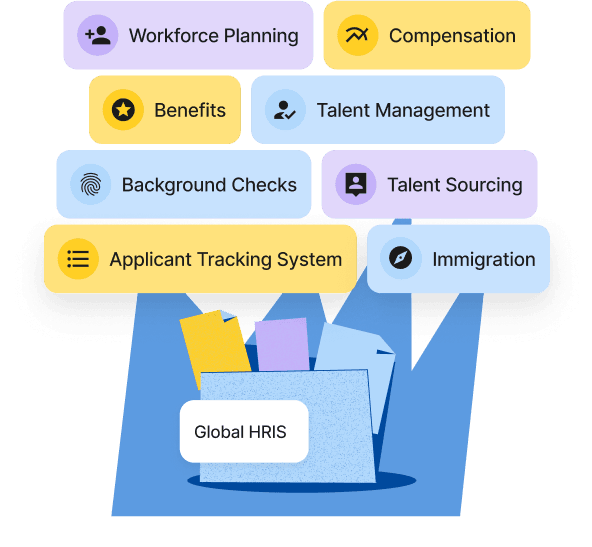
Unsure about flexibility? Deel HR makes it simple to manage a remote workforce, whether you have ten employees or thousands. Our platform offers a centralized dashboard, document management, workforce planning tools, and Slack integrations for remote communication.
Deel HR
2. Ensuring fair compensation
- No LEL and wait period for SSP: Everyone qualifies for sick pay from the first day of leave
- Tipping law reforms: Employers must consult with workers about how to distribute tips
- Procurement two-tier workforce protections: Businesses taking over public sector contracts must offer the same compensation
3. Addressing one-sided flexibility
- Fire and rehire measures: Companies can’t dismiss employees for rejecting new contracts unless they have no alternative
- Limits on zero-hours contracts: Workers must have guaranteed hours, advance notice of shifts, and pay for shifts cancelled at late notice
- ‘Day 1’ protection from unfair dismissal: Employees can no longer be terminated without cause
- Lower collective redundancy consultation thresholds: Employers need to notify authorities if planning over 20 layoffs within 90 days
4. Prioritising fairness, equality, and wellbeing
Reforms in 2026 require UK employers to take more reasonable steps to prevent sexual harassment. This includes ensuring third parties don’t harass employees and excluding harassment from Non-Disclosure Agreements (NDAs)
Another reform in 2027 calls for UK employers to demonstrate how they plan to address the gender pay gap and support those going through the menopause.
5. Modernising trade union legislation
The UK government plans to give unions more power through the following reforms:
- No longer requiring employees to meet minimum service levels
- Agreeing that strikes only need annual votes and 10 days’ notice before action
- Allowing unions to organize ballots digitally
- Preventing employers from unfairly blocking or delaying union recognition
- Making it easier for employees to learn about union activity
- Protecting unionized employees from retaliation
6. Improving enforcement of employment rights
- Launch of the Fair Work Agency: This new government body can investigate companies and enforce the new laws
- Employment tribunal time limit reforms: Workers have six months instead of three to make a legal claim against employers
- Regulation of umbrella companies: Companies that act as third-party employers will be regulated and monitored
Involved in a dispute with a worker? Deel is available 24/7 to offer support for nuanced and high-stakes situations through either our human agents or AI assistant.
Changes to the National Minimum Wage and National Living Wage
While minimum wages aren’t mentioned in the roadmap, the UK government is still planning to reform them through the following policy changes:
- Basing rates tightly on the cost of living
- Abolishing discriminatory age bands
- Strongly enforcing minimum wages
- Consulting with employers and unions
The UK government substantially increased the National Minimum Wage and the National Living Wage in April 2025. Similar increases are expected for the annual adjustments in April 2026 and 2027.
Hire minimum wage employees? Deel Local Payroll UK tracks and applies rate changes to your UK processes and warns you when employee updates, like birthdays or new roles, affect salary requirements.
Global Hiring Toolkit

How to prepare for upcoming changes to UK employment law
Here are some tips for ensuring compliance while minimizing disruption during reforms:
Stay up to date with regulatory changes
Real-time updates help you keep pace as the UK government consults on laws and confirms dates and policies. This gives you the maximum possible time to adjust processes, notify teams, and review hiring budgets.
Deel’s Continuous Compliance Hub updates you via our dashboard so you get the latest news in one place. Better yet, our team of local experts can provide advice on how to apply laws to your context and deal with unique challenges.
With just me covering seven different countries, it would be very challenging to keep track of every regulation change. Having the Deel Compliance Hub updates is incredibly helpful.
—Hetty Townsend,
APAC People And Culture Business Partner at Lloyd's List Intelligence
Compliance

Review current policies, processes, and practices
Audit your company to identify which operations to change and what impact to expect, including:
- Employment contracts
- Compensation and benefits
- Leave policies
- Complaints procedures
- Notifications concerning employee rights
You can automate contract creation to save time and prevent non-compliance. Global people platforms like Deel generate documents based on the role and current UK employment law within minutes. All your HR department has to do is review and approve.
Adjust payroll processes
Check that your payroll processes are ready for new rates, thresholds, and leave policies for when reforms come into effect.
Deel Payroll can handle all payroll compliance on your behalf. Our software updates processes as local regulations change and calculates wages and benefits according to the latest requirements. This eliminates the risk of error, leaving you less open to costly penalties.
Deel is the only truly complete solution for scaling a global team. The moment I saw everything it could do in just one platform, I knew they truly understood our challenges and had built exactly what we needed.
— Emily Curtis,
CPO, Directional Pizza
Local Payroll / United Kingdom
Train managers and communicate changes to teams
Ensure your entire team understands how the reforms will affect operations. For managers, this means explaining their role and responsibilities in implementing changes and the organization’s official stance on each reform.
Simply send UK employees an announcement via email. Managers can then clarify new protocols and deal with individual questions and challenges as they arise. You can also introduce a dedicated Slack channel to handle FAQs, concerns, and issues.
Consider outsourcing HR, payroll, and compliance
Do you operate across multiple countries? An Employer of Record (EOR) can hire your UK-based employees and handle all your payroll compliance to lighten your administrative burden.
EOR offers:
- Benefits enrolment and management
- HR, payroll, and compliance tools
- Integrations with global payroll processes
- EOR-sponsored visas
- Over 2000 experts to review and update policies
But while EOR is the legal employer on paper, you still maintain total control of your UK workforce. You also have the option to switch to owned entities at any time.
Deel Employer of Record

Stay one step ahead of UK employment law reforms with Deel
When countries enact widespread reforms, manual processes and scattered workflows leave you scrambling to catch up. The best way to maintain resilience in the face of change is to take a proactive, integrated approach.
Deel can support this as regulations and business needs evolve. Our range of compliance automation, analytics, and notification services makes your hiring and payroll processes more adaptable. We also provide localized legal and compliance support for the UK and beyond.
Want to minimize the impact of UK reforms on operations and maintain compliance? Book a demo so the Deel team can talk you through your options.

Global Hiring Impact
Recognized as a Leader on Everest Group’s PEAK Matrix®
More resources
Jemima is a nomadic writer, journalist, and digital marketer with a decade of experience crafting compelling B2B content for a global audience. She is a strong advocate for equal opportunities and is dedicated to shaping the future of work. At Deel, she specializes in thought-leadership content covering global mobility, cross-border compliance, and workplace culture topics.