Article
3 min read
Who Really Owns the UK's Burnout Problem?
Worker experience

Author
Deel Team
Last Update
September 01, 2026

Burnout is often treated as a personal failing or a well-being perk issue. In reality, the data shows it’s driven by work design, management capability, and organisational choices. However, finding and implementing the solution usually falls to one function: HR.
If the root causes of burnout are multifaceted, so should ownership of the solution be. Here, we’ll get into the scope of the UK’s current burnout problem, examine why HR often become the proxy owner (and why this is a mistake), and explore a multi-pronged approach to improving employee wellbeing.
How big is the UK’s burnout problem?
Before we dive into strategies for solving the burnout crisis, we need some context. That workplace stressors impact people’s wellbeing (and therefore their productivity, engagement, and retention) is a well-known problem. The question is not whether it is happening, but rather, what is the scale of the problem?
The Great British Burnout: A snapshot
In 2025, 964,000 UK workers reported work-related stress, depression or anxiety. (HSE)
This led to a loss of 22.1 million working days (HSE)
Unsurprisingly, this means that mental health is the leading cause of long-term absence, cited by 41% of employers. (CIPD Health & Wellbeing at Work 2025)
When compared with our European neighbours, the picture is bleaker still. Among the 38 countries surveyed in Gallup’s State of the Global Workplace report, the UK ranked:
2nd for daily sadness in the workplace/due to work-related issues
8th for daily loneliness
13th for daily stress
13th for daily anger
On the other side, the UK also ranked:
28th for work climate
30th for overall employee engagement
New research also shows that the problem goes deeper than quiet quitting or low satisfaction scores. A poll of 5,000 SME employees across the UK revealed that 21% have avoided or delayed booking a GP appointment because of their work schedule. The report, commissioned by Bupa and YuLife, focuses primarily on the tech industry. However, it wouldn’t be surprising to see this pattern across various verticals. Where there is a high workload and pressure from leadership to be always ‘on’, people will prioritise work over personal commitments.
Why does burnout keep landing on HR’s desk?
HR is the bridge between the organisation and its workforce, driving feedback cycles, owning satisfaction and engagement metrics, and monitoring retention. When HR owns the analysis of employee sentiment, accountability for improving overall well-being tends to follow. This is a mistake.
By the time issues with sentiment and well-being reach HR’s attention, they’ve gone beyond survey responses and become absences, performance issues, and retention risk. What begins as a management issue often becomes an HR issue by default, because HR is where organisational problems go once they’re already costing time, money, or people. When these issues become widespread, organisations risk reputational damage. That’s everyone’s problem.
The roots of burnout are typically spread out across multiple sources, and few of them are HR’s responsibility. By making HR the de facto owner of wellbeing, businesses risk overlooking the true causes.
Complementary reading:
Deel HR
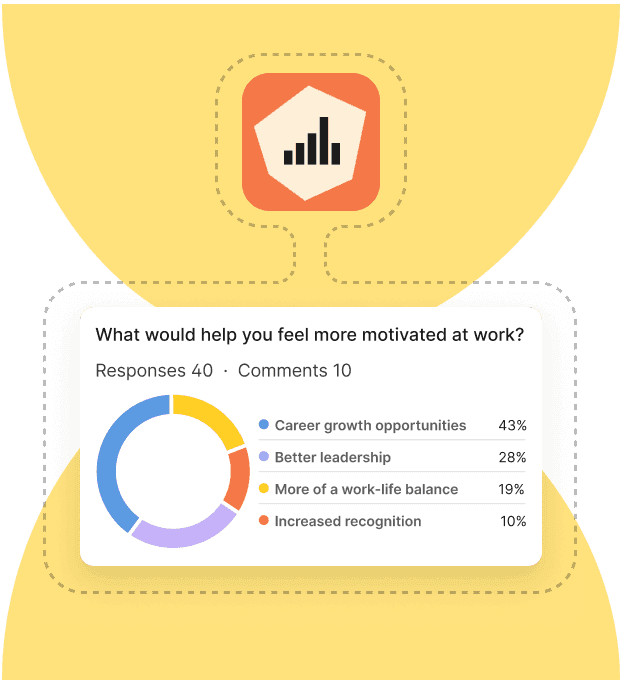
Collect insightful worker feedback
So who owns the battle against burnout?
The organisation: work design, expectations, capacity
At the highest level, burnout is a structural outcome. Decisions about resourcing, growth targets, role scope, and what “good” performance looks like all sit with the organisation. When capacity planning lags ambition, or expectations are left deliberately vague, pressure becomes systemic rather than situational. No amount of individual resilience can compensate for a work environment that is consistently under-resourced or poorly designed.
Leaders: day-to-day behaviours and psychological safety
Senior leaders set the tone for how work is done and what is rewarded. These signals around availability, pace, and response times matter more than policies ever will. Leaders who model boundaries, prioritise realistically, and make it safe to surface concerns create conditions where burnout is identified early. Those who don’t unintentionally normalise overload, even while investing in wellbeing initiatives.
Middle management: where burnout is either prevented or accelerated
Middle managers have the power to either manage or magnify burnout risk. Line managers control task allocation, deadlines, feedback, and escalation — yet they are often under-trained and over-stretched themselves. Without support, they become pressure multipliers rather than buffers, despite being closest to the problem.
Individuals: signals and boundaries
Employees are not passive in the burnout equation. Speaking up, setting boundaries, and recognising early warning signs all matter. But individual responsibility has limits. It’s unrealistic to expect people to self-regulate in environments where workloads are unsustainable or psychological safety is low. Personal accountability only works when organisational conditions make it possible.
HR: systems, accountability, and manager enablement
While HR doesn’t create burnout, it shapes the systems that either allow it to persist or bring it into the open. HR owns the processes of handling individual burnout cases, tracking and analysing key wellbeing metrics, and enabling manager training.
The solution: Shared accountability
HR should continue to own wellbeing metrics, to respond and assist with individual burnout cases, and to drive overall wellbeing improvement strategies. So what difference will shared accountability make, and what does it look like in practice?
Rather than HR owning burnout from beginning to end, HR facilitate a cross-functional approach to preventing burnout. By sharing accountability, it’s easier to focus on preventative people management rather than constantly reacting to individual cases.
This means:
Agreeing with senior leadership that they own team health and wellbeing as well as performance - using data, goals, and consequences to reinforce that sustainable performance is a leadership responsibility.
Equipping middle managers with the skills needed to spot early warning signs and how to follow up without stigma. Creating systems and policies for reducing workload.
Create systems that encourage early self-reporting through safe feedback channels, regular check-ins, and clear boundaries.
Engage, our talent management module within Deel HR, lets you measure engagement and retention, and improve wellbeing with targeted action plans all in one place. If you’re ready to get aligned on employee wellbeing, book your 30-minute demo today.
Live Demo
Get a live walkthrough of the Deel platform