Article
3 min read
EU Pay Transparency Directive in Sweden: What's Live, and What's Still Coming
Global HR

Author
Ellen Simmonds
Last Update
August 28, 2026

Key takeaways
The EU Pay Transparency Directive requires employers across member states to disclose pay ranges to candidates, give workers the right to compare their pay, and report gender pay gaps starting in 2027.
Sweden asked the European Commission to postpone and renegotiate the Directive rather than transpose it on schedule, and the Commission rejected that request, leaving Sweden without a bill or a confirmed timeline.
Deel keeps compensation infrastructure ready to adapt as requirements take shape, so employers in Sweden aren't caught off guard whenever national legislation eventually lands.
This update reflects the situation in Sweden as it stood at the time of publishing, August 2026. Sweden has not transposed the Directive into national law, and its position is genuinely unsettled rather than simply delayed. Details below may change, and employers should watch for further developments rather than treat this as a final compliance picture.
Every other country covered in this series is somewhere between "fully transposed" and "drafting, but moving." Sweden is neither. On March 26, 2026, the Swedish government announced it would not submit a transposition bill for the EU Pay Transparency Directive to the Riksdag at all. Instead, it asked the European Commission to postpone the Directive's deadline and renegotiate its terms. The Commission said no.
That refusal, and the rejection that followed it, is the story here. There's no decree to walk through, because there isn't one yet.
What Sweden already requires
Sweden isn't starting from zero on pay equity, even without a transposition law. The Discrimination Act (Diskrimineringslagen, 2008:567) has required employers with 10 or more employees to conduct annual equal pay surveys, known as lönekartläggning, since 2008. That requirement remains in force, unchanged, throughout everything described below. It's the one piece of Swedish pay equity law that hasn't moved during this entire standoff.
Sweden also voted against the Directive when it was adopted in 2023. The government's concern at the time, and the concern it's raised consistently since, is that the Directive's design doesn't fit well with Sweden's labor market model, which relies heavily on collective bargaining between unions and employers rather than statutory minimums set directly by government.
The reversal, in order
Sweden's position didn't arrive at a standoff overnight. Early in 2026, Sweden referred a draft bill to the Council on Legislation, working through amendments to the existing Discrimination Act, with an initial target of July 1, 2026. By early March, that target had already slipped to January 1, 2027, with first pay gap reports pushed out to the Equality Ombudsman by May 20, 2028.
Then, on March 26, 2026, Sweden went considerably further than a delay. The government announced it did not currently intend to submit any bill to the Riksdag, Sweden's parliament, and would instead push, at the EU level, for both a postponement of the Directive's implementation deadline and a formal renegotiation of the Directive itself. The government's stated reasoning was that the Directive, as designed, is too administratively burdensome, doesn't provide enough flexibility for Sweden's collective bargaining model, and risks undermining the gender equality progress it's meant to advance. The Confederation of Swedish Enterprise, a major employer association, publicly welcomed the announcement.
EU Compliance with Deel
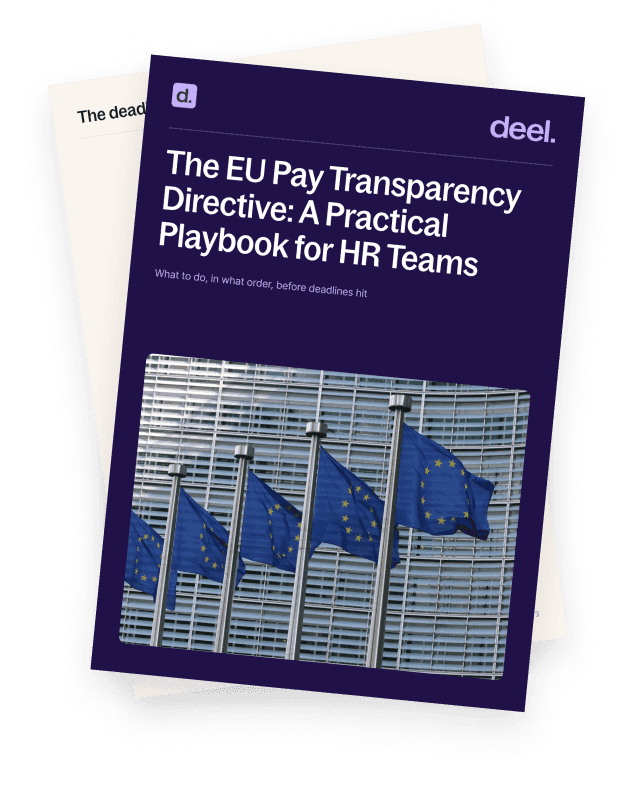
EU Pay Transparency Directive: A Practical Playbook for HR
The Commission said no
On May 22, 2026, the European Commission responded. There would be no postponement and no renegotiation. The June 7, 2026 transposition deadline stood for every member state, Sweden included.
That leaves Sweden in an unusual position. As of this writing, Sweden has no finalized legislative proposal, no bill before the Riksdag, and no confirmed implementation date. The only mandatory pay equity framework currently in force is the pre-existing lönekartläggning requirement under the Discrimination Act, which predates the Directive entirely.
What actually applies in Sweden right now
This is the part that needs careful handling, because it's genuinely nuanced.
The Directive is EU law. Its transposition deadline expired on June 7, 2026, and that expiry is what can trigger direct effect regardless of Sweden's domestic status. Under established EU legal principles, a directive that a member state hasn't transposed by its deadline can, in some circumstances, have direct effect against the state itself and against public sector employers. That principle generally doesn't extend to creating enforceable obligations between private parties, meaning private employers in Sweden aren't currently bound by the Directive's specific mechanics, salary range disclosure, the formal right-to-information process, the 5% remediation trigger, as a matter of domestic law that a Swedish court could enforce against them today.
That absence of direct enforceability is not the full picture, though. Swedish courts are required, under the EU law principle of consistent interpretation, to read existing national legislation, including the Discrimination Act, as far as possible in light of the wording and purpose of a directive whose transposition deadline has passed. Since the Discrimination Act already regulates pay equity, a Swedish court could draw on the Directive's substance, for example on how the burden of proof is allocated in a pay discrimination claim, when applying existing law, even without a formal right to information mechanism on the statute books.
That's a meaningful legal distinction, and it's specific enough to Sweden's situation that it's worth getting actual legal advice on rather than relying on a general summary. What's not in question is that the existing Discrimination Act survey requirement remains fully enforceable regardless of what happens with the Directive.
What employers should actually do
Waiting for certainty isn't a great strategy here, since it's genuinely unclear when that certainty arrives. A few things are worth doing regardless of how the standoff resolves.
Keep the existing lönekartläggning process running exactly as it has been, since nothing about that obligation has changed.
It is also worth noting that the government has not gone completely quiet on this file. In June 2026, it tasked the Discrimination Ombudsman with preparatory work on how Swedish employers currently run their pay surveys, with a report due back to the government by November 1, 2027. That does not signal an imminent bill, but it does suggest the file is still moving in the background even while the political standoff continues.
Start building the underlying compensation strategy and job classification work that any eventual Swedish transposition will need anyway, since the Directive's core requirements (pay range disclosure, gender-neutral criteria, category-level reporting) aren't going away even if Sweden's specific implementation timeline is unresolved. And keep watching for developments, since either side of this standoff could move: Sweden could eventually submit a bill under continued EU pressure, or the debate could genuinely reshape parts of the Directive for everyone.
EU Compliance with Deel
Tackle pay transparency, all in one place
Stay ahead of the next update, in Sweden and everywhere else
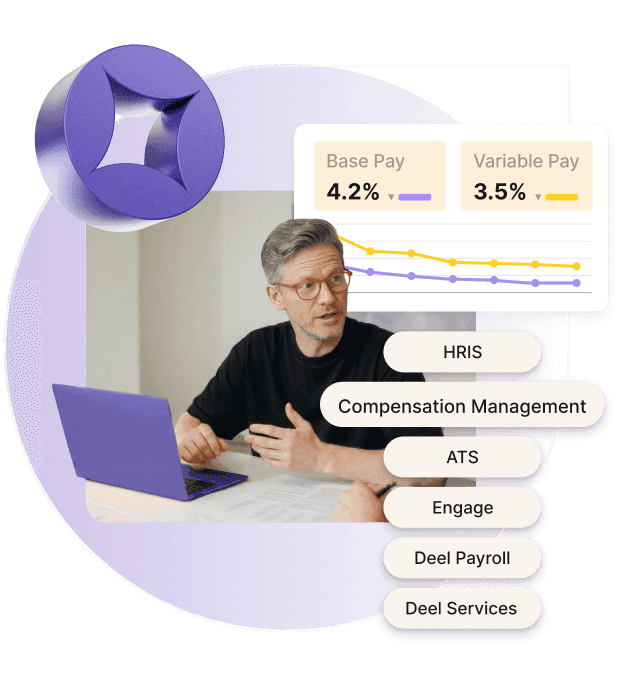
An unresolved standoff is still something you can prepare for. Deel tracks regulatory changes across the countries where you operate and keeps compensation infrastructure connected, so whenever Sweden's legislative picture does resolve, whether that's a bill finally reaching the Riksdag or a genuine EU-level change to the Directive, you're not starting from scratch.
Book a demo to see how Deel helps you stay ready for pay transparency requirements, even in countries where the law itself is still being decided.
Live Demo
Get a live walkthrough of the Deel platform
This content is for informational purposes only and does not constitute legal advice. Compensation laws and regulations change frequently, and this article notes specific sections requiring legal confirmation before publication. Businesses should consult qualified legal counsel for jurisdiction-specific guidance, particularly regarding the direct-effect discussion above.
Ellen Simmonds is a content marketing manager with a decade of experience in tech, leadership, startups, and the creative industries. A long-time remote worker, she's passionate about WFH productivity hacks and fostering company culture across globally distributed teams. She also writes and speaks on the ethical implementation of AI, advocating for transparency, fairness, and human oversight in emerging technologies to ensure innovation benefits both businesses and society.