
Article
13 min read
How AI Improves Global Team Collaboration: 6 Use Cases and Tools You Can Try Now
AI
Global HR

Author
Lorelei Trisca
Last Update
March 03, 2026
Table of Contents
The unique challenges of global team collaboration
How AI transforms collaboration for global teams: 5 examples
Real-world examples of AI collaboration tools helping global teams
Top tips for HR and business leaders to get started with AI
The future of AI in global collaboration beyond generative AI
Build and manage a global team with Deel AI
Key takeaways
- Global team collaboration comes with unique challenges related to time zone differences, language barriers, cultural misunderstandings, and knowledge gaps.
- AI features such as real-time translation, AI scheduling assistants, meeting automation, and knowledge management copilots are great additions for improving collaboration.
- Deel’s AI-powered global HR platform is perfect for handling compliance, payroll, and workforce management across 150+ countries, without the hassle.
Global collaboration has never been more critical, or more complex. Distributed teams juggle time zone mismatches, cultural differences, and communication silos that make alignment difficult. AI is quickly changing that.
Once overhyped, it’s now becoming a practical enabler of global teamwork, automating scheduling across regions, breaking down language barriers, and giving distributed teams real-time access to shared insights.
No wonder 92% of companies plan to increase their investments in AI over the next three years, even though only 1% of leaders feel their organizations are “mature” in using it. However, the same McKinsey study reveals that the barriers to scaling AI are not readiness on the part of employees but rather the lack of bold direction from leaders.
The opportunity is clear: AI can remove the friction of working across borders and help global teams collaborate as if they were in the same room.
This article explores the unique challenges global teams face. It also offers six concrete AI-powered use cases you can try today, from real-time translation to meeting intelligence, and shares tips to help HR and business leaders put these tools into practice.
The unique challenges of global team collaboration
Global teams are still facing the challenges that async work, multiple time zones, and frankly, a lack of organization bring.
One of the most frustrating challenges is dealing with the schedule conflicts that different time zones naturally come with. Whenever employees have to make meetings work across varying regions, they may have to compromise and even meet outside of their normal working hours to actually get to talk to each other. Not only does this cause disruption to their work-life balance, but it can also lead to deferred decisions and a cumulative build-up of inefficiencies.
Language and cultural differences are another major issue. You’ll be dealing with different communication styles that can result in misunderstanding.
Erin Meyers’ Culture Map identifies the cultural differences that impact your global workforce in relation to directness, providing feedback, and the type of communication we use. For example, some cultures prefer direct communication while others rely on context and nuance.
These problems will only deepen knowledge silos. Distributed teams tend to use a vast range of workforce management tools to store and share information. This makes it challenging to find relevant data when an employee needs it the most. Missing shared context also hurts workflows and inevitably results in potentially duplicate work or contradictory work.
Deel's Built-In HRIS

How AI transforms collaboration for global teams: 5 examples
Let’s see what your global team could look like once you try out AI through multiple workforce management and collaboration use cases:
AI-powered translation
AI translation relies on natural language processing models to translate conversations and documents across multiple languages. For human resources teams, this means no more language barriers when recruiting, onboarding, or simply communicating with employees.
Example: Teammates can share project updates or feedback in their preferred language, while AI relays that message in every individual’s preferred language. Some tools even identify cultural nuance and adapt translations based on regional idioms and sensitivities to avoid misunderstanding.
Meeting intelligence
Smarter meetings now look like this: everything transcribed in real time, automatically generated discussion summaries, and instantly assigned tasks to the right person.
Example: HR teams can use such tools to ensure employees have access to any meeting’s major talking points, supporting accountability and transparency. Consider integrating this with task management systems to send automatic reminders for action items.
AI scheduling assistants
Use these to go faster through a global calendar’s various time zones, work hours, and people’s varying preferences. This can be an effective resource to handle everything from interview scheduling to performance reviews to team meetings.
Example: Advanced AI scheduling assistants are easy to connect to communication tools you might already be using. This allows employees to determine and communicate important meeting dates through chatbots in your preferred communication space, like Slack or Microsoft Teams.
Knowledge management copilots
Bring in these copilots to go through large volumes of organizational data and get relevant information immediately.
Example: Employees can use knowledge management copilots to get answers about benefits, compliance, or company policies without having to wait for HR to get a response. Managers will also get more value out of the insights they have to better understand past decisions and lessen the load on the HR helpdesk.
Cultural or engagement insights
AI sentiment and emotion analyses pull insights from employee surveys, communication channels, and collaboration apps to observe employees’ tone or input over time.
Example: HR teams can use this to catch disengagement, stress, or conflict patterns early. This allows you to intervene before the employee mentally quits by providing just-in-time support, finding or redistributing the workload, and improving retention.
Real-world examples of AI collaboration tools helping global teams
Here are your options for using AI collaboration tools today:
Automatic note-taking apps
A note-taker like Flownote or Fireflies.ai shares meeting summaries and next steps. These features are great because you won’t have to manually write them down, but everyone will still have access to both the entire meeting transcript and its important notes.
Zoom AI Companion
Zoom’s AI Assistant is an integrated tool designed to boost productivity by helping users with meeting notes, summaries, follow-ups, and action items. It works alongside Zoom Meetings, Zoom Phone, and Zoom Contact Center, capturing conversations in real time, generating summaries, and creating tasks and next steps.
Slack’s AI features
Slack’s intelligent search across channels and automated summarization of conversations make it easier for teams to catch up without missing important context. Users select which channels they want to receive AI summaries from, so they never miss a beat on important discussions while they are away.
Deel
Deel is perfect for ensuring global compliance and workforce context integrated into collaboration.
Bart-Jan Leyts, Founder of Otamiser, reflects on how Deel helps them build a company culture across borders:
Culture is hard when you have a relatively small team across seven countries and different time zones. With Deel, we have one set of processes that support our culture, whether you’re in El Salvador, Italy, or Mexico.
—Bart-Jan Leyts,
Founder, Otamiser
Otamiser’s HR Manager, Phebe Vandamme, echoes the value offered by Deel:
I’m in Deel several times a week for payments, time-off approvals, you name it. It’s basically my HR command center.
—Phebe Vandamme,
HR Manager, Otamiser
But beyond Deel’s “standard” HR automation capabilities, our AI functionalities are helping HR teams, managers, and workers work smarter:
As Yunjung (Rina) Bae, Director of People at MarqVision, shares:
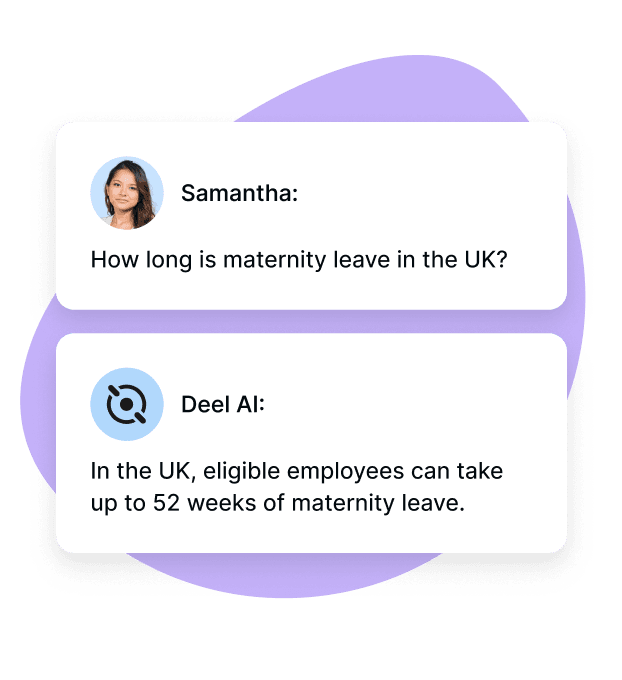
Our global team can turn to Deel AI for instant answers to their HR questions, anytime. It’s been a huge time-saver for our People team, saving us a lot of time.
—Yunjung (Rina) Bae,
Director of People, MarqVision
Deel AI
Using ChatGPT for scheduling support
While ChatGPT isn’t a full scheduling assistant on its own, it can still streamline the process of planning meetings across global teams. If you provide participants’ time zones, working hours, and availability, ChatGPT can propose optimal time slots that minimize early mornings and late nights for attendees.
With recent integrations into tools like Google Calendar and Gmail (available on certain ChatGPT plans), it can even reference your own calendar to suggest times or draft invites, saving you from manual back-and-forth.
Example prompt: Given these team members’ time zones and availability (list them), propose three meeting slots that maximize attendance while minimizing after-hours participation. Prioritize key stakeholders’ availability first.
Top tips for HR and business leaders to get started with AI
Now let’s put it all into practice with these practical tips:
- Start with low-friction AI use cases. Use AI for small tasks at first, like meeting summaries, automated transcription, and real-time translation. These are great ways to quickly show tangible benefits (like saving time and reducing misunderstandings) so you can get your whole team on board.
- Communicate openly about AI as an enabler, not a replacement. People will inevitably be worried about AI coming in to steal their jobs. Stay transparent and explain how you’ll use AI to support your employees by helping them avoid repetitive tasks and improving communication.
- Ensure governance and compliance. Adopt robust policies to protect employee privacy and comply with legal regulations. This includes managing data security and regularly auditing AI tools to keep things fair.
- Measure impact. Track key metrics related to meeting hours, onboarding processes, and employee engagement scores to see whether these AI initiatives were effective for you.
The future of AI in global collaboration beyond generative AI
So what does the future of AI in global collaboration look like? For starters, we’re (already) going far beyond generative chatbots. Proactive copilots can now recommend actions, and agentic AI is capable of autonomously handling certain tasks. These AI agents are evolving and will gradually learn to both assist teams by providing insights and actively drive workflows forward (maybe even make their own decisions).
In this context, an integration of agentic AI with HR systems to personalize collaboration becomes a must. Think of it as a way to create a bridge for cultural intelligence to help global teams work despite their differences.
It’s still worth noting that AI won’t replace human collaboration. Instead, think of it as a way to remove the friction. Companies that embrace AI in team collaboration will be the first to build stronger, faster, more resilient global teams.
Build and manage a global team with Deel AI
With Deel AI, you can now get quick HR answers that comply with local laws, allowing for smarter, faster decision-making around the clock. The platform also helps reduce repetitive questions and administrative tasks as team members can get clear, instant answers related to payslips, time off, or labor laws.
Explore how Deel’s AI-powered platform can help you:
- Bring together people operations from hiring to offboarding
- Stay compliant in different regions
- Get real-time insights and simplified reporting
- Support everyone in your team
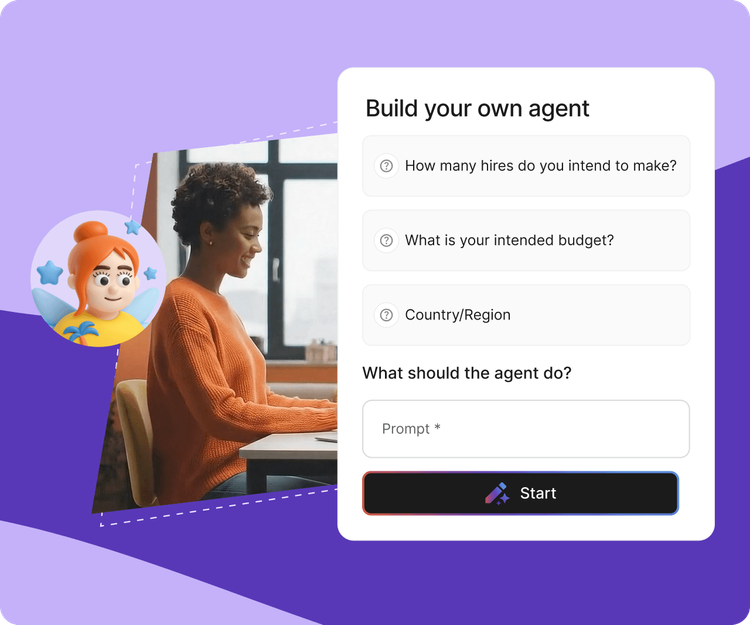
Our latest release, Deel AI Workforce, is an innovative product that allows HR and payroll teams to launch and manage their own AI agents, or onboard those already created by Deel. You can use these agents to automate routine tasks and provide useful insights from your existing people data and workflows.
Get in touch to learn more about global HR software and our brand-new AI capabilities.
FAQs
How does AI improve collaboration in global teams?
AI helps make it easier for everyone in your company to work together. AI translation tools allow team members to communicate regardless of their native language. Scheduling assistants find the best meeting times. Knowledge retention also gets its fair share of help as AI-assisted tools capture minutes, summarize discussions, and track follow-up actions so everyone stays informed.
What AI tools are best for remote collaboration?
Think classics like Microsoft Teams, Zoom, and Slack. You can use platforms already in your toolkit, like Teams and Zoom, for AI-powered transcription, meeting summaries, and task tracking. Slack also uses AI to improve search within conversations and generate concise summaries of busy chat channels. Deel is also a must to ensure compliance for global teams and their specific needs.
Can AI help overcome cultural and language barriers?
Yes. That’s one of the main reasons why you’ll want to use AI in the first place. Real-time translation breaks down language barriers, while sentiment analysis helps you understand how your team is feeling so you can prevent cultural misalignment or disengagement.
What are the risks of using AI for collaboration?
While AI has many useful scenarios, you should prepare to face risks like privacy concerns and potential overdependence on these new systems. To prevent them, set up a strong data governance policy from the start and ensure someone manages all AI-reliant processes so you don’t lose the human input.
How can HR teams use AI to support remote collaboration?
HR teams can use AI to provide faster, personalized onboarding processes, improve employee sentiment and engagement, and create smoother asynchronous communication flows. In fact, you can integrate artificial intelligence support at every stage of the employee lifecycle.
Lorelei Trisca is a content marketing manager passionate about everything AI and the future of work. She is always on the hunt for the latest HR trends, fresh statistics, and academic and real-life best practices. She aims to spread the word about creating better employee experiences and helping others grow in their careers.


