Article
7 min read
The Complete Guide to Choosing an All-In-One Benefits System
Global HR

Author
Shannon Ongaro
Last Update
October 19, 2026

Table of Contents
Understanding all-in-one benefits systems
Key features to look for in a benefits system
Types of all-in-one benefits platforms
How to assess your company's needs for benefits management
Steps to evaluate and select the right benefits system
Comparing leading all-in-one benefits systems
Integrating benefits systems with your existing HR and payroll tools
Managing costs and budget planning with benefits software
Ensuring compliance and security in benefits administration
Scaling benefits as your company grows
Enhancing employee experience through benefits platforms
Explore Deel's all-in-one benefits solutions
Key takeaways
An all-in-one benefits system replaces fragmented tools with a single source of truth for HR, payroll, and benefits.
Prioritize platforms with strong integrations, scalable plan design, and automated multi-jurisdiction compliance.
Deel combines local and global payroll, localized benefits, and built-in compliance in one system to support fast-growing teams anywhere.
Choosing an all-in-one employee benefits system is one of the most strategic decisions a growing company can make. The right platform consolidates payroll, benefits administration, compliance, and onboarding into a single interface, eliminating data silos and streamlining workflows for HR teams and employees alike.
As your workforce expands—whether locally or globally—a centralized benefits platform enables accurate budget planning, supports seamless scaling, and ensures regulatory compliance without the headaches of juggling multiple tools.
This guide walks you through everything you need to evaluate, compare, and select a benefits system that grows with your business and empowers your people.
Understanding all-in-one benefits systems
An all-in-one employee benefits system is a comprehensive platform that unifies payroll, benefits administration, compliance management, onboarding, and related HR functions under one roof. Rather than managing separate tools for each function, HR teams can access everything from a single dashboard, reducing manual data entry, minimizing errors, and creating a unified experience for employees.
These centralized benefits platforms differ significantly from standalone benefits solutions. While standalone tools focus exclusively on benefits enrollment and administration, all-in-one HR suites integrate benefits with IT solutions, payroll, and finance systems for unified employee management.
This integration is especially valuable for growing companies that need to maintain data accuracy across departments, automate workflows, and support strategic decision-making with real-time insights.
The table below highlights the key differences:
| Feature | All-In-One System | Standalone Benefits Platform |
|---|---|---|
| Feature Coverage | Payroll, benefits, compliance, onboarding, reporting | Benefits enrollment and administration only |
| Ease of Integration | Native connections across HR, finance, and IT | Requires third-party integrations with payroll and HRIS |
| Compliance Support | Automated updates, audit trails, multi-jurisdiction tracking | Benefits-specific compliance only |
| Suitability for Scaling Teams | Highly scalable, supports rapid growth and international expansion | Best for companies with mature HR stacks and specialized needs |
For lean or fast-scaling teams, all-in-one systems reduce the complexity of managing multiple vendors and contracts, while standalone platforms may appeal to organizations with established HR infrastructure seeking deep benefits customization.
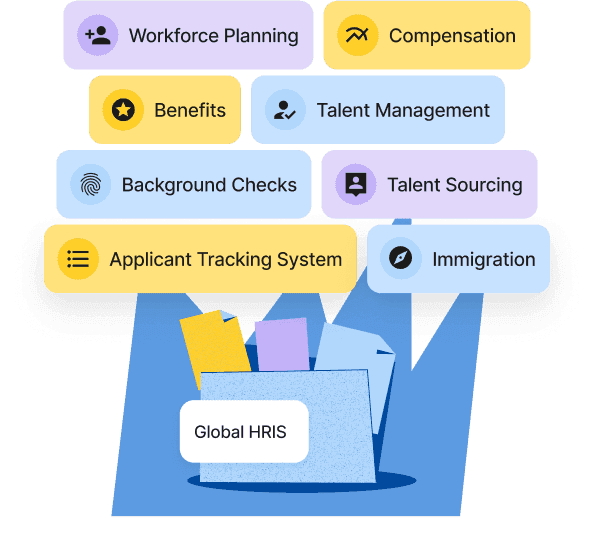
Deel HR
One place for simplified, smarter global HR
Key features to look for in a benefits system
The best benefits platforms share several core features that distinguish them from basic administrative tools. Prioritizing these capabilities ensures your system supports both current operations and future growth.
Integration capabilities are foundational. Seamless connection between your benefits platform and existing payroll, HRIS, and financial software eliminates duplicate data entry and ensures consistency across systems. Look for platforms that offer native integrations or robust APIs to connect with your tech stack.
User experience matters for both HR administrators and employees. Intuitive interfaces, mobile accessibility, and self-service portals reduce training time and empower employees to manage their own benefits enrollment, updates, and questions without constant HR intervention.
Compliance management automates the tracking and enforcement of legal and policy requirements for benefits administration. Leading platforms provide automated alerts for regulatory changes, customizable workflows for approvals, and audit trails that simplify reporting during reviews or investigations. This feature is critical as your company expands into new states or countries with varying labor laws.
Flexibility and scalability ensure your system can accommodate new employees, benefit plan changes, and geographic expansion without requiring a platform migration. Modular plan design, customizable workflows, and support for multiple currencies and languages are indicators of a truly scalable solution.
Cost control tools help HR and finance teams track spending, model plan changes, and identify billing errors before they impact budgets. Real-time premium calculations, side-by-side plan comparisons, and automated billing reconciliation contribute to more accurate budget forecasting and strategic planning.
Together, these features reduce administrative errors, save time, and improve employee engagement by making benefits more accessible and transparent.
Guide
A buyer’s guide to future-proof HRIS software
Types of all-in-one benefits platforms
Benefits management solutions generally fall into two categories: standalone benefits administration platforms and comprehensive all-in-one HR suites. Understanding the distinction helps you match the right system to your company's stage and operational needs.
Standalone benefits administration platforms specialize exclusively in benefits enrollment, carrier integrations, and compliance tracking. They offer deep functionality for managing complex benefit structures, flexible plan designs, and detailed reporting. These platforms work well for companies with mature HR technology stacks that already have separate payroll, HRIS, and performance management systems in place. Integration is typically modular, requiring APIs or middleware to connect with other tools.
Comprehensive all-in-one HR suites integrate benefits administration with payroll, onboarding, time tracking, compliance, and employee data management. These platforms are designed for companies that want to consolidate vendors, reduce manual handoffs, and maintain a single source of truth for employee information. They're particularly effective for lean HR teams managing rapid hiring or international expansion, as they eliminate the need to reconcile data across multiple systems.
The table below summarizes the key differences:
| Platform Type | Core Focus | Ideal Use Case | Integration Needs |
|---|---|---|---|
| Standalone Benefits Platform | Benefits features, carrier connections, plan customization | Companies with established HR stacks seeking specialized benefits tools | Requires API or middleware to connect with payroll and HRIS |
| All-In-One HR Suite | Integrated payroll, benefits, compliance, onboarding | Lean or scaling teams consolidating processes and vendors | Native integrations across HR, finance, and IT functions |
Choosing between these types depends on your current infrastructure, growth trajectory, and the level of integration your team needs to operate efficiently.
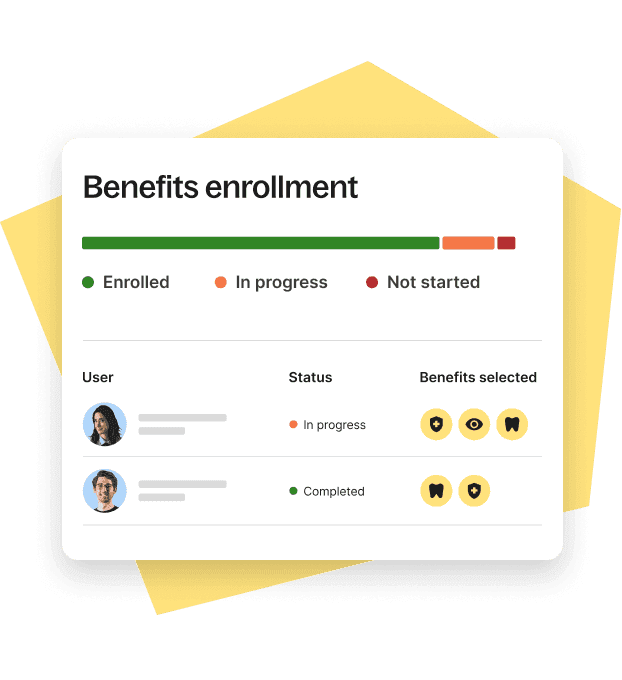
Benefits Administration
Fast, flexible global benefits
How to assess your company's needs for benefits management
Before evaluating platforms, it's essential to understand your organization's specific requirements. A thorough needs assessment ensures you select a system that addresses current pain points and supports future growth.
Start by evaluating your workforce size and hiring plans. If you're planning to double headcount in the next year, scalability becomes a top priority. Scalable benefits administration refers to a system's ability to flexibly accommodate new employees, changing plans, and additional locations without requiring major upgrades or migrations.
Next, review your existing HR systems. List the tools you currently use for payroll, HRIS, time tracking, and performance management. Understanding your tech stack helps you identify integration requirements and avoid platforms that create new data silos.
Consider your geographic presence and expansion plans. If you're hiring in multiple states or countries, you'll need a platform that supports multi-jurisdiction compliance, localized benefits offerings, and currency flexibility.
Assess your regulatory exposure. Companies in highly regulated industries or those offering complex benefits like health savings accounts, flexible spending accounts, or international benefits must prioritize robust compliance management features.
Finally, gather input from key stakeholders across HR, finance, IT, and legal. Each department has unique needs—finance may prioritize cost tracking, IT may focus on security and integration, and legal may emphasize compliance and audit readiness. A cross-functional assessment ensures your final selection meets the needs of the entire organization.
Use a simple checklist to guide your internal review:
Current workforce size and 12-month hiring forecast
Existing HR, payroll, and finance systems
Geographic locations and expansion plans
Industry-specific compliance requirements
Stakeholder priorities from HR, finance, IT, and legal
This structured approach ensures your evaluation process is both practical and future-proof.
Steps to evaluate and select the right benefits system
Selecting the right benefits system requires a methodical approach that balances feature evaluation, stakeholder input, and practical testing. Follow these steps to guide your decision-making process:
Conduct a comprehensive needs assessment. Use the criteria outlined in the previous section to document your requirements, priorities, and constraints.
Research potential solutions. Identify platforms that align with your company size, industry, and growth stage. Review third-party comparisons, read case studies, and consult peer recommendations.
Request demos from shortlisted vendors. A demo is a live or recorded system walkthrough that allows stakeholders to experience the platform's features, interface, and workflows firsthand. Schedule demos with HR admins, finance leaders, and IT teams to gather diverse perspectives.
Evaluate integration capabilities. Verify that each platform can connect with your existing payroll, HRIS, and accounting tools. Ask vendors about API availability, data sync frequency, and support for custom integrations.
Review pricing and contract terms. Compare subscription models, per-employee pricing, implementation fees, and support costs. Ensure the pricing structure is transparent and aligns with your budget constraints.
Collect feedback from end users. Involve HR administrators and employees in the evaluation process. Test enrollment workflows, mobile accessibility, and support resources to ensure the platform delivers a positive experience for all users.
Make a decision and plan implementation. Once you've gathered feedback and compared options, select the platform that best meets your needs. Work with your vendor to establish a clear implementation timeline, data migration plan, and training schedule.
This structured process ensures you make a confident, well-informed decision that supports both immediate needs and long-term growth.
Free guide
Scale your global benefits strategy
Comparing leading all-in-one benefits systems
Several platforms have emerged as leaders in the all-in-one benefits space, each offering distinct strengths for different company profiles. Understanding their core capabilities helps you identify the best fit for your organization.

Deel is a unified global HR, Payroll, and Compliance platform for every way companies manage and pay teams. Deel’s benefits software helps companies manage benefits for both local employees and international teams from a single system.
Rippling combines HR, IT, and finance, automating benefits deductions that flow directly into payroll. This approach can work for companies managing complex tech stacks or scaling rapidly across multiple departments.
Gusto provides HR support without enterprise complexity. Its interface and support make it a strong choice for small to mid-sized companies seeking an accessible solution.
BambooHR offers compliance management features for HIPAA, COBRA, and other regulations, along with employee self-service tools that reduce HR workload. It's well-suited for companies prioritizing ease of use and regulatory adherence.
Paylocity integrates HR, payroll, and benefits with analytics and reporting capabilities, making it a solid option for data-driven HR teams.
Workday customizes benefits offerings per country to comply with local laws and policies, making it a powerful choice for global enterprises managing complex international workforces.
Ease and Employee Navigator focus on benefits administration with deep carrier integrations, ideal for companies with established HR systems seeking specialized benefits tools.
The table below summarizes key platform attributes:
| Platform | Primary Features | Integration Strength | Compliance Support | Best For |
|---|---|---|---|---|
| Deel | Local and global payroll and benefits; localized plans; immigration and compliance tools | Native integrations, entities, and engines across HRIS/payroll; global payments | Multi-country compliance and audit trails, built-in alerts, in-house experts | Companies of all sizes hiring locally or globally seeking a single system |
| Rippling | HR, IT, finance integration; automated payroll deductions | Native integrations across systems | Multi-jurisdiction compliance tracking | Fast-scaling companies with complex tech stacks |
| Gusto | Intuitive HR and payroll; employee self-service | Strong payroll integrations | Automated tax filings and compliance alerts | Small to mid-sized businesses prioritizing simplicity |
| BambooHR | Employee database, onboarding, compliance | Modular integrations via API | HIPAA, COBRA, ACA compliance | Companies focused on ease of use and regulatory adherence |
| Paylocity | Payroll, benefits, analytics | Robust HRIS integrations | Compliance reporting and audit trails | Data-driven HR teams |
| Workday | Global HR, localized benefits | Enterprise-grade integrations | Country-specific compliance | Global enterprises with international workforces |
| Ease | Deep benefits features, carrier connections | Flexible API integrations | Benefits-specific compliance | Companies with mature HR stacks |
This comparison provides a starting point for deeper research and vendor conversations tailored to your specific requirements.
Live Demo
Get a live walkthrough of the Deel platform
Integrating benefits systems with your existing HR and payroll tools
Integration is the backbone of effective benefits administration. Seamless connection between your benefits platform and existing HR, payroll, and financial systems reduces data duplication, ensures consistency, and improves reporting accuracy.
Learn more: HRIS Integration with Global Payroll: Best Practices
When evaluating integration capabilities, start by taking inventory of your current systems. Document the tools you use for payroll processing, employee data management, time tracking, and accounting. Identify which systems need to exchange data with your benefits platform and what information must flow between them—such as enrollment changes, premium deductions, and employee status updates.
Next, verify each platform's integration options. Native integrations are ideal, as they're built and maintained by the vendor and typically offer the most reliable data sync. If native integrations aren't available, assess the platform's API capabilities and whether middleware or third-party integration tools are required.
Involve your IT team early in the evaluation process. They can assess technical compatibility, security protocols, and the level of support required to maintain integrations over time. Key questions to ask include:
How frequently does data sync between systems?
Can the integration handle real-time updates or only batch processing?
What happens if the integration fails—are there automated alerts and fallback processes?
Does the vendor provide ongoing support for integration maintenance and troubleshooting?
Managing costs and budget planning with benefits software
For growing companies, controlling benefits costs while maintaining competitive offerings is a constant challenge. Modern benefits platforms provide powerful cost management tools that help HR and finance leaders track spending, forecast expenses, and optimize plan designs.
Cost management tools within benefits software identify cost drivers, catch billing errors, and enable HR teams to model plan changes before finalizing decisions. Features like real-time premium calculations allow you to see the financial impact of adding new employees or adjusting coverage levels instantly. Healthcare cost projections help forecast annual expenses based on enrollment trends and claims data, while automated billing reconciliation flags discrepancies between carrier invoices and your records.
Side-by-side plan comparisons let you evaluate the cost and coverage trade-offs of different benefit options, making it easier to design packages that balance employee value with budget constraints. Some platforms also offer decision support tools that help employees understand the financial implications of their choices, reducing costly misunderstandings and improving satisfaction.
The table below illustrates common budgeting features and their impact:
| Feature | Description | Impact on Budget Planning |
|---|---|---|
| Real-Time Premium Calculations | Instant cost updates as enrollment changes | Accurate forecasting and immediate visibility into cost changes |
| Cost Projections | Predictive modeling based on claims and trends | Improved annual budget accuracy |
| Automated Billing Reconciliation | Flags discrepancies between invoices and records | Reduces overpayments and billing errors |
| Plan Comparison Tools | Side-by-side cost and coverage analysis | Supports data-driven plan design decisions |
| Employee Decision Support | Cost calculators and coverage explainers | Reduces misunderstandings and improves enrollment accuracy |
By leveraging these features, HR and finance teams can make more strategic decisions, optimize spending, and maintain transparency with leadership and employees.

Case Study
We couldn't find a global HRIS. So we built our own.
Ensuring compliance and security in benefits administration
Compliance management and data security are non-negotiable in benefits administration. As your company grows and expands into new jurisdictions, staying current with evolving labor laws, tax regulations, and industry standards becomes increasingly complex.
Modern benefits platforms address this challenge through automated compliance features. Automated alerts notify HR teams of regulatory changes that impact benefits offerings, while customizable workflows ensure approvals and documentation follow company policies and legal requirements. Certification management tracks employee and vendor credentials, ensuring that all parties meet necessary qualifications. Audit trails provide detailed records of all system activity, making it easy to demonstrate compliance during reviews or investigations.
Security is equally critical. Benefits platforms handle sensitive personal and financial data, making encryption, access controls, and regular security audits essential. Look for platforms that offer:
End-to-end encryption for data in transit and at rest
Role-based access controls to limit data visibility
Multi-factor authentication for user logins
Regular third-party security audits and certifications
Automated backups and disaster recovery protocols
The concept of audit readiness is particularly important for growing companies. Seamless recordkeeping, automated documentation, and clear reporting reduce legal risk and make audits far less disruptive. When your benefits data is accurate, complete, and easily accessible, you can respond to regulatory inquiries quickly and confidently.
Scaling benefits as your company grows
As your workforce expands, your benefits system must keep pace without creating operational bottlenecks. Scalable benefits software accommodates headcount increases, adds new locations, supports country-specific benefits, and adapts to policy updates without requiring major system overhauls.
Key features that support scaling include modular plan design, which allows you to add or modify benefit offerings as your company enters new markets or introduces new employee segments. Self-serve onboarding enables new hires to complete enrollment independently, reducing HR workload and accelerating time-to-productivity. Localized offerings ensure compliance with regional labor laws and cultural expectations—for example, Workday customizes benefits offerings per country to comply with local laws and policies.
Consider these scaling scenarios and the system features they require:
Rapid headcount growth: Automated enrollment workflows, self-service portals, and bulk data imports ensure new hires are onboarded efficiently.
Geographic expansion: Multi-jurisdiction compliance tracking, localized plan templates, and currency support enable seamless expansion into new regions.
International hiring: Country-specific benefits libraries, global payroll integration, and multilingual interfaces support diverse workforces.
Plan diversification: Modular plan architecture and flexible eligibility rules allow you to offer different benefits to different employee groups without system limitations.
By prioritizing scalability from the start, you avoid costly migrations and ensure your benefits system remains a strategic asset as your company grows.
Guide
Expand your global HR strategy
Enhancing employee experience through benefits platforms
A well-designed benefits platform does more than streamline HR operations—it significantly impacts employee engagement, satisfaction, and retention. Employee experience in the context of benefits platforms refers to the ease, clarity, and satisfaction with which employees access and use their benefits.
Modern platforms prioritize user experience through intuitive enrollment processes that guide employees step-by-step through plan selection. 24/7 access via web and mobile apps allows employees to review coverage, update dependents, and submit claims on their own schedule. Visual plan comparisons help employees understand the trade-offs between different options, while communication tools deliver timely reminders, policy updates, and educational content.
Status tracking features let employees monitor the progress of claims, reimbursements, and other requests in real time, reducing anxiety and support inquiries. Employee self-serve functions reduce workload for HR departments while empowering employees to take ownership of their benefits decisions.
Analytics tools provide HR teams with insights into enrollment trends, plan utilization, and employee engagement, enabling continuous improvement of benefits offerings. Communication features like targeted messaging, video tutorials, and FAQs ensure employees understand their options and feel supported throughout the benefits lifecycle.
Consider these use cases:
Open enrollment: A centralized portal with interactive plan comparisons and cost calculators helps employees make informed decisions quickly, reducing enrollment errors and support requests.
Life event changes: Self-service tools allow employees to update coverage after marriage, childbirth, or other qualifying events without waiting for HR assistance.
Benefits education: On-demand video tutorials and decision support tools help employees understand complex topics like HSAs, FSAs, and retirement contributions.
By investing in platforms that prioritize employee experience, companies see higher engagement, better plan utilization, and improved retention—outcomes that directly impact the bottom line.
Explore Deel's all-in-one benefits solutions
Choosing the right all-in-one benefits system is a strategic decision that impacts every aspect of your HR operations, from compliance and cost management to employee satisfaction and scalability. The platforms and features outlined in this guide provide a solid foundation for evaluating your options and making an informed choice.
Deel offers a comprehensive, globally compliant HR platform that uniquely integrates payroll, benefits, compliance, and immigration into a single automated system. Designed specifically for growing companies scaling international teams, Deel's benefits solutions provide end-to-end automation, seamless integrations with existing HRIS and payroll tools, and practical guidance for HR leaders and CFOs navigating complex growth stages.
Whether you're expanding domestically or building a global workforce, Deel's centralized platform eliminates data silos, reduces administrative burden, and ensures compliance across jurisdictions. From real-time cost tracking to employee self-service portals, Deel empowers your team to manage benefits with transparency and ease.
Ready to see how Deel can transform your benefits administration? Book a demo to learn more about how our all-in-one platform supports your company's growth and simplifies global benefits management.
Leading Global Hiring Platform
The world’s #1 platform for global employment

FAQs
What should a growing company prioritize when choosing a benefits system?
Growing companies should prioritize scalability, seamless integration with current HR tools, ease of use, and strong compliance management to support future workforce changes.
How can benefits software support budget planning and cost management?
Benefits software provides real-time cost analyses, helps spot billing errors, and allows HR leaders to model plan changes, making accurate budget forecasting much easier.
What role does compliance play in selecting a benefits platform?
Compliance features ensure your benefits remain aligned with labor laws and industry standards, helping prevent costly regulatory issues as your company expands.
How do benefits systems improve employee engagement and satisfaction?
Well-designed systems offer self-service portals, clear plan comparisons, and accessible support, which increase engagement and make employees feel valued.
What integration capabilities are essential for seamless HR operations?
Seamless data sync with payroll, HRIS, and accounting tools reduces manual work, improves reporting accuracy, and makes overall HR operations more efficient.
Shannon Ongaro is a content marketing manager and trained journalist with over a decade of experience producing content that supports franchisees, small businesses, and global enterprises. Over the years, she’s covered topics such as payroll, HR tech, workplace culture, and more. At Deel, Shannon specializes in thought leadership and global payroll content.