Article
4 min read
HR Needs for Startups: What to Build by Stage
Global HR

Author
Ellen Simmonds
Last Update
August 21, 2026

Table of Contents
Must-have HR essentials: what's legally required
Should-have HR practices: building a strong team culture
Nice-to-have HR programs: what scales as you grow
How to know what your startup needs, by company stage
Quick self-assessment: is your HR stack keeping up?
How Deel supports HR at every stage
Key takeaways
HR needs shift by company stage, not by company age, so the same checklist doesn't apply to a five-person team as to a 150-person team.
Compliance protects a company legally, while culture and growth investments protect it from losing the people it hires.
Deel grows alongside each stage, so startups can add payroll, culture, and scaling tools without switching platforms as they grow.
New and micro businesses have plenty on their plates trying to get their business off the ground. But as soon as a company employs its first hire, it crosses the threshold to become an employer, opening an entirely different set of legal responsibilities.
Beyond what’s mandatory, an HR team (even if it's a team of one or the same person straddling roles) may also focus on the people-focused programs and practices they’d like to implement in the near future. This guide divides all of these considerations into must-have, should-have, and nice-to-have HR essentials for startups and SMEs, based on your growth stage. We’ll also explore the technology that could support your HR needs as you scale.
Must-have HR essentials: what's legally required
Certain HR functions aren't optional once a company hires its first employee, and the specifics shift by country. Founders hiring only in their home market face one set of rules; founders hiring across borders face several sets at once.
Compliant employment contracts and offer letters. In the US, the Fair Labor Standards Act governs minimum wage, overtime, and worker classification from the first hire. Brazil takes a different approach entirely: contracts don't need to be written to be valid, but every employee must be registered through the Carteira de Trabalho system before their start date, and missing that registration triggers penalties regardless of what the contract says.
Employee handbook with core policies. No single law mandates a handbook, but it's the practical vehicle for documenting policies that other laws require. In the UK, a handbook often absorbs the written statement of employment particulars that the Employment Rights Act 1996 requires on day one, covering pay, hours, and disciplinary procedures.
Payroll processing and tax withholding. US employers must withhold federal income tax, Social Security, and Medicare from every paycheck, with IRS penalties starting the day after a missed deposit. In other countries, withholding rules, filing deadlines, and social contribution rates vary; getting them wrong in a new market creates liability with a foreign tax authority rather than a familiar domestic one.
I-9 verification or equivalent employment eligibility. US employers must verify a new hire's identity and work authorization within three business days of their start date, per USCIS rules. Most countries run an equivalent check with its own timeline, and in the UK, failing to complete a right-to-work check before employment begins removes the employer's statutory defense against a civil penalty entirely.
Anti-discrimination and harassment policies. In the US, Title VII and the ADA apply once a company reaches 15 employees. India sets a sharper trigger: any workplace with 10 or more employees must form an Internal Committee under the POSH Act specifically to handle sexual harassment complaints, and the committee must include an external member from outside the organization.
Basic time tracking and attendance records. US law requires accurate records of hours worked for non-exempt employees, and those records become the primary evidence in a wage dispute. Germany raised the bar further in 2022, when its Federal Labour Court ruled that every employer, regardless of size, must record the start, end, and duration of every employee's working day, not just overtime.
Confidentiality and IP agreements. These protect trade secrets and assign ownership of work products to the company. Enforceability varies significantly by jurisdiction, and a clause that holds up in one contract may need rewriting to hold up somewhere else.
Emergency contact information. This is rarely a standalone legal requirement, but it supports the general duty most countries place on employers to maintain a safe workplace.
Why Deel? A founder hiring their first employee in just one country already has plenty to track. But when you multiply these responsibilities across several jurisdictions, a solution that keeps you compliant while removing any friction becomes essential. Deel’s platform offers a steady foundation that automates payroll, compliance contracts, and eligibility verification across 150+ countries, so startups can expand without legal guesswork.
Deel HR
One place for simplified, smarter global HR
Should-have HR practices: building a strong team culture
Wage and salary workers remain with their current employer for a median of 3.9 years. But startups and SMEs may need to work harder to retain their talent, when competing for candidates against established companies.
A strong focus on company culture can be a deciding factor for talent. You can build this by focusing on the following should-have HR practices.
Clear job descriptions and role expectations. A defined role reduces confusion during the first weeks of employment and gives managers a concrete reference point for performance conversations later.
Structured onboarding workflow. Some 29% of employees have quit a job within the first 90 days, highlighting the importance of getting onboarding right. A repeatable process for the first 30, 60, and 90 days helps new hires settle in and reach full productivity faster, while reducing the early-tenure turnover that hits companies hardest.
Regular performance conversations (not just reviews). Ongoing feedback catches problems while they're still small and gives employees a clear sense of where they stand, rather than saving every comment for one annual conversation.
Learning and development opportunities. SHRM's 2025 Employee Benefits Survey found professional development ranked "very" or "extremely" important by 65% of employers, holding steady year over year. Access to training sends a clear signal to employees that the company is investing in their future, not just their current output.
Career growth conversations. Employees who can't see a path forward tend to look for one somewhere else. Regular conversations about growth keep that path visible.
Transparent compensation structure. A clear, consistent approach to pay reduces disputes and builds trust.
Written remote/flexible work policies. Formalizing expectations around remote or hybrid work removes ambiguity for both the employee and the manager, and gives the company a consistent standard to apply across the team.
Basic benefits package. Even a modest benefits offering signals stability and helps a young company compete for talent against larger employers with deeper pockets.
Exit interview process. Departing employees often share the most candid feedback a company will ever get. A structured exit interview turns that feedback into something the business can act on.
Inclusive hiring practices. Broadening where and how a company sources candidates widens the talent pool and reduces the blind spots that come from hiring through the same narrow network every time.
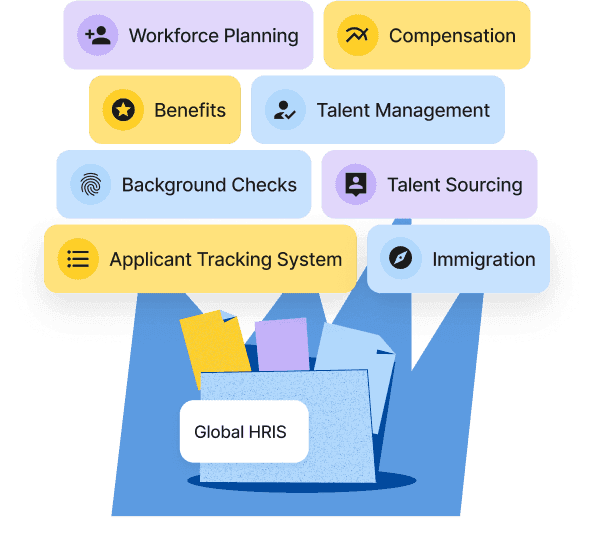
Why Deel? Deel's Engage module gives startups performance management, learning and development, and compensation tools under one hood, making it easy for growing teams to invest in people.
Deel HR
Foster a culture of continuous development
Nice-to-have HR programs: what scales as you grow
Nice-to-have HR programs aren’t urgent in the way payroll or anti-discrimination policies are, and they're not usually the reason someone accepts a job offer. But they're often the reason someone stays once the offer's been accepted and the novelty has worn off. And from the employer’s perspective, they also help organizations to grow people to their full potential.
Advanced talent analytics and insights. Data on hiring trends, performance patterns, and team composition helps leadership make decisions based on evidence rather than instinct.
Succession planning framework. A formal plan outlines who steps into key roles to protect the company against the disruption of losing a critical employee unexpectedly.
Comprehensive wellness programs. These extend beyond a basic benefits package to cover mental health resources, fitness support, and preventative care.
Employee recognition and rewards programs. Structured recognition reinforces the behavior a company wants to see and gives managers a consistent way to acknowledge good work.
Internal mobility/talent marketplace. Giving employees a clear path to move between teams or roles keeps institutional knowledge in-house and gives ambitious employees a reason to stay rather than leave.
Advanced learning and development platforms. Structured mentoring and platform-based learning builds capability the company can draw on later.
Tuition reimbursement programs. Covering the cost of further education helps employees develop skills the company benefits from directly, while signaling long-term investment in their career.
Relocation assistance packages. Support for employees moving for a role removes a practical barrier that might otherwise rule out strong candidates.
Parental leave enhancements. Going beyond the legal minimum for parental leave can retain experienced employees through a major life transition.
Volunteer time off. Paid time set aside for community involvement supports employee wellbeing and reflects well on company culture.
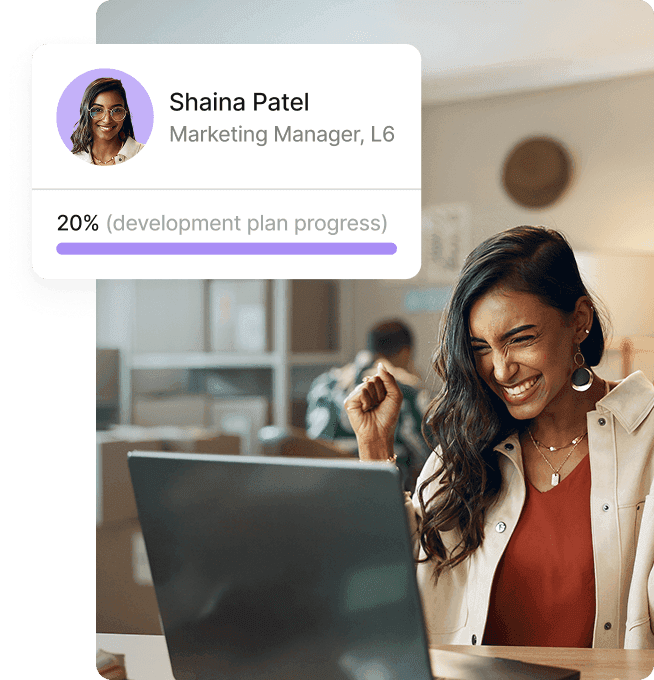
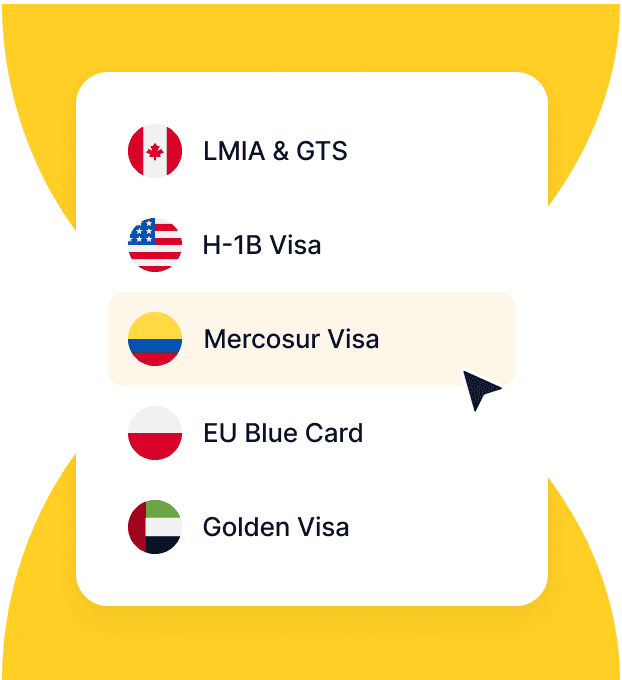
Why Deel? Deel's Workforce Planning and advanced analytics help scaling companies forecast headcount, stay within budget, and make confident hiring decisions. Deel Mobility and Benefits Marketplace expand the perks a company can offer as it grows.
Deel Mobility
Get worldwide visas without the legwork
Free guide
Scale your global benefits strategy
How to know what your startup needs, by company stage
The right HR priorities depend less on how long a company has existed and more on how many people it employs. Find your stage below.
Pre-launch to 10 people
Focus on the following must-haves at this stage:
Compliant payroll and employment contracts before the first hire starts
A basic handbook covering core policies
Anti-discrimination and time-tracking basics
Reality check: Skipping this stage is a legal and compliance risk.
10-50 people
Double check your must-haves are in place and layer some of the following should-haves on top:
Payroll and contracts consolidated away from spreadsheets and manual processes
A structured onboarding workflow as hiring accelerates
A clear way to talk about compensation and career growth
Reality check: This is where most startups lose good people, sometimes due to lower pay than competitors, but often due to lack of role clarity too.
50-150 people
This is the stage where your nice-to-haves really start coming into focus. HR tools that consolidate your core tasks are the priority here, freeing your team’s time while providing your employees with vital support in both their personal and professional lives.
Compliance support across multiple countries or remote work jurisdictions
Performance management tools that scale beyond informal check-ins
Systems that reduce manual admin for approvals, time off, and reviews
Reality check: This is your inflection point. Invest in tools now, or spend next year hiring an HR team instead of engineers.
150+ people
Large SMEs should focus on all categories of HR needs at once, consolidating must-haves, strengthening should-haves, and adding nice-to-haves strategically. You’ll need:
A single platform to replace fragmented point solutions
Formal succession planning and leadership structures
Benefits and perks that function as a retention lever
Reality check: As you start hitting enterprise-level challenges, unified platforms start saving money and operational overhead.
Quick self-assessment: is your HR stack keeping up?
Stage guidelines give a starting point, but the honest answer to "what do we need" often comes down to a handful of direct questions. Run through these with your team:
Do we have compliant payroll and employment contracts in place? → If no, start with the must-haves.
Are managers spending more than five hours a week on admin, like approvals, time off, and reviews? → If yes, it's time for should-have tools.
Are we losing people we want to keep, and do they cite a lack of growth or opportunity? → If so, you're skipping should-have investments.
Are we managing multiple countries or remote teams? → If so, scale complexity is entering the equation faster than headcount alone suggests.
Guide
Are you running a startup and feeling overwhelmed?
How Deel supports HR at every stage
The growth stage of your company heavily influences your HR needs. Deel is a global HR platform that grows with you at each stage, handling payroll, contracts, benefits, and compliance for teams in 150+ countries, all from one system. Here’s how it works.
If you're locking down compliance for your first hires, Deel automates payroll, contracts, and eligibility verification, so legal guesswork never slows down your first hire.
If you're building the culture infrastructure to retain your team, Engage brings performance management, learning and development, and compensation tools into one platform, so growing teams can invest in people without adding headcount to HR.
If you're scaling past the point where spreadsheets and manual processes hold up, Workforce Planning and advanced analytics help you forecast headcount and make confident hiring decisions within budget.
If retention and perks are a key hiring lever, Deel Mobility and the Benefits Marketplace expand what you can offer as the company matures.
Ready to see it in action? Book a demo and find out how Deel supports startups from first hire to scale.
Live Demo
Get a live walkthrough of the Deel platform
FAQs
What HR functions are legally required for a startup?
Every company needs compliant employment contracts, payroll processing, and employment eligibility verification from day one. Anti-discrimination policies and basic time tracking round out the legal minimum. Skipping these creates exposure that costs more to fix later than it would have cost to set up correctly.
When should a startup hire its first HR person?
Most founders handle HR informally until they reach 10 to 50 employees, when onboarding starts to feel chaotic and compliance needs outgrow a spreadsheet. The right timing depends on hiring pace and whether the company operates across multiple states or countries, which adds complexity earlier than headcount alone suggests.
What's the difference between HR compliance and culture?
Compliance covers the legal minimum: contracts, payroll, tax withholding, and anti-discrimination policies. Culture covers what keeps people engaged and retained, including onboarding, performance conversations, and career growth. Startups need both, but compliance comes first because it protects the company from legal risk.
Do early-stage startups need an employee handbook?
Yes. An employee handbook doesn't need to be long, but it should cover core policies like anti-discrimination, confidentiality, and time off. Waiting until a dispute arises to write these policies down puts the company at a disadvantage.
What HR tools should a growing startup invest in first?
Startups between 10 and 50 employees typically benefit most from structured onboarding, clear compensation frameworks, and performance management tools before adding advanced analytics or wellness programs. Layering in nice-to-haves too early can distract from the culture foundations that reduce early turnover.
How does hiring across multiple countries change HR requirements?
Cross-border hiring adds compliance complexity that a domestic HR setup doesn't anticipate, including local employment law, tax filing, and benefits administration. Companies managing distributed teams often need this infrastructure earlier than headcount alone would suggest.
Ellen Simmonds is a content marketing manager with a decade of experience in tech, leadership, startups, and the creative industries. A long-time remote worker, she's passionate about WFH productivity hacks and fostering company culture across globally distributed teams. She also writes and speaks on the ethical implementation of AI, advocating for transparency, fairness, and human oversight in emerging technologies to ensure innovation benefits both businesses and society.