Article
5 min read
Nine in Ten UK Companies Regret Their Redundancies: Here’s How to End the Regret Cycle
Global HR

Author
Matt Monette
Last Update
April 29, 2026

About the author
Matt Monette is the Director, Solutions Consulting, Global Payroll at Deel. He has worked at hyper growth SaaS companies most of his career. Most recently, leading Shopify's UK expansion in London to being the VP of Sales at a late stage startup.
Nine out of ten HR leaders now say their organisation regrets the redundancies it made over the past year, and many didn’t see it coming. The immediate cost saving looked clean on a spreadsheet, but the reality is that institutional knowledge is lost, projects and priorities are pushed back, and teams are left feeling the strain.
The same companies that are regretting those cuts are also quietly rebuilding, rehiring, and paying again for what they already had. The redundancy regret cycle is real, and it's expensive.
This isn’t specific to one region; the research was conducted across the UK, the US, Canada, Switzerland, France, Brazil, and Australia. The problem is chronic, global, and costing organizations their reputation as well as financially.
How the cycle works
The pattern starts when economic pressure mounts, and leadership looks for ways to reduce costs quickly. As the largest line item on most budgets, headcount becomes the target. Redundancies follow, with some roles cut entirely. Others are restructured, and a few are flagged as "AI replaceable."
After a few months, the gaps start showing. Projects slow. Institutional knowledge walks out the door with the people who held it. Customer relationships that lived in someone's head disappear. The teams left behind absorb the work until they can't, leading to bottlenecks and burnout.
So the company starts hiring again, and pays premium rates for talent in a tighter market. They spend months onboarding, and end up roughly where they started, except with lower morale, higher costs, and a workforce that watched the whole thing happen.
According to the survey, 73% of companies didn't break even after making redundancies. Just 27% came out financially ahead. And half of those who made AI-related cuts rehired for the same roles within six months.
When redundancy season starts, most HR leaders recognise the pattern and prepare both for the immediate strain on their people teams and for the almost inevitable fallout down the line.
Deel HR
Smarter end-to-end workforce planning
Why it keeps happening anyway
If the outcomes are this predictable, why does the cycle persist?
Part of the answer is that the true cost of a redundancy rarely shows up at the right time. The immediate saving is attractive, particularly as leaders eye up the potential of AI to replace entry and mid-level roles. The downstream costs — knowledge loss, rehiring fees, lower productivity, cultural damage — are harder to quantify and slower to materialise. By the time they do, the decisions that caused them are often forgotten.
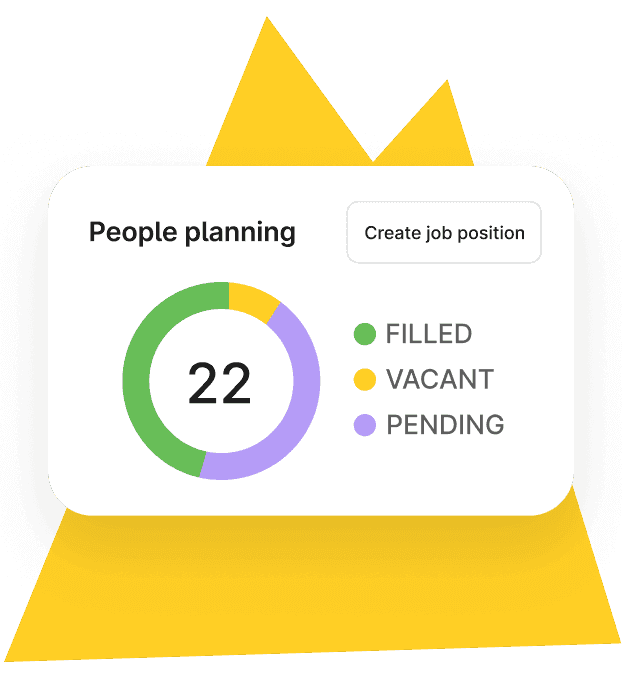
But there's a second, less discussed reason: most organisations don't have the workforce visibility to make better decisions in the moment. When leaders are under pressure to act quickly, they work with the data they have. And often, that data shows headcount by location, cost by team, and role titles — not capability, not redeployability, not which skills sit adjacent to the ones being eliminated. So they cut the obvious targets and miss the alternatives.
The alternative most companies overlook
Here's what the same survey found: 51% of HR leaders now believe up to a quarter of the roles they cut could have been redeployed into different functions. Another 28% believe as many as half could have survived with the right support. That's not a small number. That's a structural failure in how companies understand their own workforce.
Redeployment isn't a soft option or a way to avoid hard decisions. Done well, it's a faster, cheaper, and less disruptive path to the same outcome: a workforce shaped around what the business actually needs next.
But it requires something most organisations lack at the moment they need it most — a clear, real-time picture of who they have, what those people can do, and where they could add value if the context changed.
Free guide
Your Blueprint for Global Workforce Planning
What global organisations need to do differently
The redundancy regret cycle isn't inevitable. But breaking it requires a shift in how leaders approach workforce decisions, before the pressure arrives.
- Map capability, not just cost. When restructuring decisions are driven purely by headcount and salary data, the wrong roles get cut. Building a clearer picture of skills, tenure, and cross-functional potential gives leaders more options, and often reveals that redeployment is both viable and cheaper than redundancy.
- Model the real cost of cutting. The direct cost of a redundancy payment is the starting point, not the full picture. Factor in the cost of lost productivity, knowledge transfer, manager time, and rehiring. In most cases, the break-even calculation changes significantly.
- Helpful resource: Getting Ahead of UK Employment Rights Bill Changes: Day One Dismissal
- Make redeployment a live process, not a last resort. The companies that avoid the regret cycle don't scramble to redeploy people when redundancies loom — they have continuous visibility into where skills are needed and where people could grow into new roles. That requires infrastructure, not just intention.
- Helpful resource: Reskilling and Upskilling Initiatives in Global Workforce Development
- Protect your employer brand through how you act, not just what you say. Workers are watching how their colleagues are treated. The way a company handles redundancies — the consistency, the communication, the support — shapes what the remaining workforce believes about their own future there. Getting the process right matters as much as getting the decision right.
- Helpful resource: Employee Offboarding: The Key to Strengthening Company Culture
The global complexity no one talks about
For companies operating across multiple countries, the regret cycle has an additional layer: compliance.
When you're making redundancies in five, ten, or fifteen markets simultaneously, the legal requirements vary enormously: notice periods, consultation obligations, severance calculations, and documentation. Getting any of these wrong creates legal exposure that can outlast the restructuring itself.
And when the same companies start rehiring, often in the same markets, they face a different set of compliance questions: classification, contracts, local employment law, benefits parity. Most organisations running multi-country restructuring are managing this across disconnected local vendors and fragmented systems. That's where avoidable mistakes happen.
A global people platform changes that equation. When you can see your entire workforce in one place — costs, contracts, compliance status, and capability — you make better decisions before a crisis, and execute more cleanly when restructuring is genuinely unavoidable.
Breaking the cycle starts with better data
The companies that will avoid the next wave of redundancy regret aren't necessarily the ones with the lowest headcount or the most aggressive AI adoption. They're the ones that can answer, in real time: who do we have, what can they do, and what does it actually cost to lose them?
That's not a question most organisations can answer today, but it's the one that determines whether restructuring creates value, or just defers it.
If you’re interested in solutions designed to make your workforce data more accessible, give you a source of truth, and help you generate insights any leader can understand, book your 30-minute Deel demo.
Live Demo
Get a live walkthrough of the Deel platform

Matt Monette is the Director, Solutions Consulting, Global Payroll at Deel. He has worked at hyper growth SaaS companies most of his career. Most recently, leading Shopify's UK expansion in London to being the VP of Sales at a late stage startup.