Article
6 min read
Refresh Your Employee Performance Management Strategy for 2026
Global HR

Author
Ellen Simmonds
Last Update
August 21, 2026
Table of Contents
What’s changed in performance management?
Where do legacy performance systems fall short?
What does modern performance management require?
How can you measure your team’s performance?
How do companies apply these performance management principles?
How does Deel support modern performance management?
Start modernizing your performance strategy with Deel
Key takeaways
Legacy performance systems built around annual reviews and single-manager ratings can't keep pace with distributed teams and outcome-based work.
Modern performance management requires five principles working together: real-time feedback, multi-source input, transparent goals, structured data, and integrated systems.
Deel connects performance management directly to people data, payroll, and compensation, so decisions draw on current information instead of outdated reviews.
The working world has changed beyond recognition over the last 15 years, with distributed teams and results-only work environments both firm fixtures of the new landscape. But performance management, the very process that measures how workers contribute, has barely changed.
Legacy performance management systems are riddled with blind spots, built around a single manager’s rating delivered just once a year. Alongside the challenges caused by outdated technology, individual and team goals have often been opaque, while feedback typically arrives too late for employees to act on. All of these blind spots have resulted in a lack of consistency, feedback bias, and slow development.
This guide explores how the latest incarnation of performance management fixes what's broken, and how to build a strategy that keeps pace with how your teams work today.
What’s changed in performance management?
Four forces are reshaping performance management in 2026: distributed work, a shift from tracking activity to tracking outcomes, continuous feedback replacing annual cycles, and closer ties between performance data and pay. Each exposes how legacy systems, built for a single office and one annual meeting, are out of step with how companies operate today.
Deel HR
Unlock your team's full potential
Distributed work is permanent
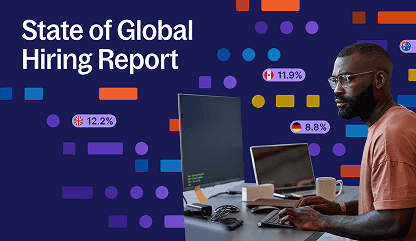
Distributed work is a staple of the modern workplace, not a pandemic-era experiment expected to fade. Deel's State of Global Hiring Report looked at startups founded between 2020 and 2025 that raised at least $100 million in funding. These companies hired more than 1,400 cross-border employees as employees of record in 2025 alone. Specific hiring corridors show how fast this shift is moving. Canada-to-India hiring grew 82.1% between 2024 and 2025, and Canada-to-UK hiring grew 56.5% over the same period. Australia-to-India hiring grew 61.5% across the same year.
Annual in-person calibration sessions can't keep pace with teams spread this wide. Remote and hybrid employees need feedback systems that work asynchronously and stay accessible around the clock, not a single meeting scheduled once a year. Single-manager ratings worsen the problem: one manager can't see the full picture when contributions span multiple teams and time zones.
Insights
State of Global Hiring Report (2026)
Outcomes replace activity as the measure of performance
Tracking the hours each employee logs tells you nothing about the value someone created. Spreadsheets built around activity are giving way to systems that tie evaluation directly to business results and completed goals. A software engineer who ships a feature that moves a key metric now outperforms one who simply logged the most hours at a desk.
This shift only works when goals cascade transparently from company strategy down to each employee's work. To make this effective, people need to understand which result they own and how it connects to what the company aims to achieve.
Continuous feedback replaces the annual cycle
Annual performance management cycles hide problems for months, so an employee can drift off track in February and nobody addresses it until December. Waiting that long turns a fixable issue into a documented failure, with no chance for the employee to change course before it counts against them.
In contrast, frequent check-ins can catch performance drift while there's still time to correct it. Yet, 49% of all companies still run performance reviews on an annual or semiannual cycle, according to SHRM. This structure carries a real cost. SHRM found that one in five women and one in four men, including 34% of Millennials, have felt emotionally overwhelmed by these formal assessments.
Performance data now influences compensation decisions
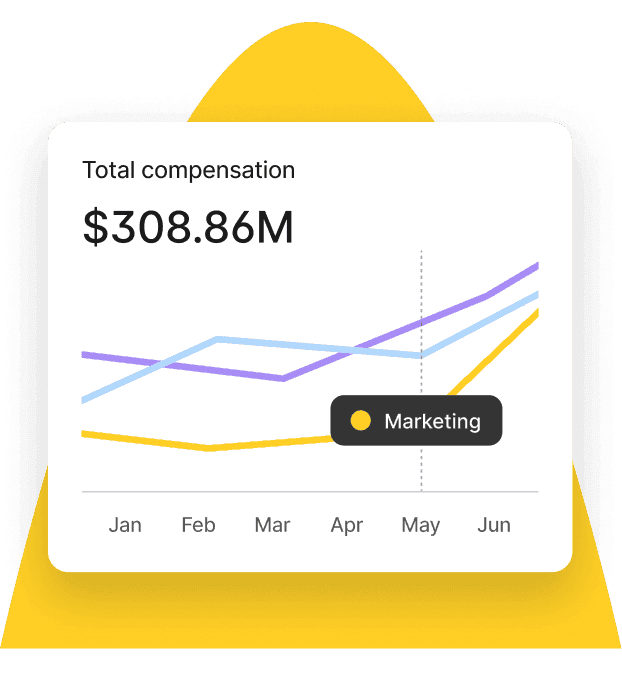
Salary decisions and equity adjustments now depend on the same performance data HR teams collect throughout the year, along with the timing of a promotion. Mercer's 2026 compensation research found that 89% of organizations cited individual performance as a key driver of pay increases this year.
Yet, most companies still keep performance and compensation systems separate, run by different teams with different data. This results in raises or promotion decisions made without current performance data. And from a compliance standpoint, these decisions are much harder to defend if anyone challenges it on fairness grounds.
Compensation with Deel HR
Streamline global compensation workflows
Where do legacy performance systems fall short?
Legacy performance systems break down in seven predictable places, each having a knock-on effect to the rest.
Once-yearly reviews miss mid-year evolution. An employee who struggled in March but turned things around by June gets no immediate credit for the recovery, because nobody documented it until the review window opened months later.
Single-manager ratings lack multi-perspective input. A manager writes a review based on a handful of one-on-ones, while the peers and project leads who saw the employee's cross-functional work don’t have the chance to share their input.
Goal progress has no real-time visibility. A target set in January can drift off track by April with nobody noticing, since the only formal checkpoint was eleven months away.
Frameworks vary across teams and regions. One department scores employees on a five-point scale while another uses pass or fail. By the time data reaches HR, it’s impossible to compare the ratings.
Feedback stays trapped in documents. A manager's detailed notes from a one-on-one never connect to a development plan or a compensation decision, and six months later nobody can find them.
Compensation decisions run on outdated performance data. A raise conversation in November often draws on a review written the previous January, so an employee's most recent contributions don’t factor into the number they receive.
Bias gets baked into manual processes. SHRM research found that 60% of HR professionals say managers lack the data-driven insights they need to evaluate performance fairly, and many are insufficiently prepared to conduct reviews in the first place.
Each of these shortcomings slow development and create fairness problems among your organizational ranks. But from a company point of view, they also expose you to legal risk, and make it hard to retain your top performers.
Free guide
Make every performance review a growth conversation
What does modern performance management require?
Five principles hold up regardless of which framework a company builds around them. Bake these into your performance management systems to improve and support your OKRs, competency models, and traditional goal-based reviews.
Real-time feedback loops. Continuous check-ins, peer input, and visible goal tracking replace the single document filed away once a year. Employees and managers can course-correct in the moment instead of waiting months to find out something went off track.
Multi-source input. A complete picture of someone's performance draws on peer feedback, cross-functional input, self-assessment, and project data, not a single manager's rating. This approach reduces manager bias and catches blind spots that one person alone would miss.
Transparent goal-setting tethered to strategy. Employees need to see exactly how their work cascades from company goals down to their own targets. Their clarity reduces misalignment and makes evaluation straightforward, since everyone measures progress against the same shared reference point.
Structured data, not subjective narratives. Frameworks, rubrics, and rating scales anchor a review in something consistent, rather than leaving it to open-ended manager interpretation. Gartner research on performance management strategy found that 90% of organizations already have formal policies for setting performance expectations, but fewer maintain the same rigor for how they score and compare performance day to day.
Integrated systems that talk to each other. Performance data needs to flow directly into compensation, payroll, development planning, and succession planning. Any manual work between these systems, such as copy-pasting from spreadsheets, introduces delay and error when your decision processes need to move fast.
Together, these five principles turn performance management from a once-a-year event into infrastructure that runs continuously in the background.

Deel HR
The Essential Guide to Modern Talent Management
How can you measure your team’s performance?
Measuring team performance accurately requires two things working together: structured data tells you what to measure, and multi-source input tells you who should be measuring it.
Start with structured data
A rating scale, a competency rubric, or a defined set of metrics gives every evaluation a consistent basis for comparison. Instead of a manager writing an open-ended paragraph about how someone is doing, a structured framework asks the same specific questions about every employee: did they hit their goals, how did they collaborate, where did they grow? Consistency makes it possible to compare performance across a team fairly, and it's what most legacy systems skip in favor of free-form manager narratives.
Widen who contributes to that data
While a manager’s point of view is an important contribution, peer feedback also captures collaboration and day-to-day contributions experienced by the wider team. Self-assessment flags also context a manager might miss entirely, like a project that ran over budget for reasons outside the employee's control. Additionally, project data, like goals completed or metrics moved, adds an objective layer that doesn't depend on anyone's memory of how the quarter went.
How do companies apply these performance management principles?
The core performance management principles look different depending on the company. But the underlying mechanics repeat across these three illustrative examples from a range of industries.
Example 1: A software company
A distributed SaaS company with teams spread across time zones adopted quarterly check-ins tied to their existing OKR framework, paired with peer feedback loops that fed into the same cycle. Managers could catch a goal veering off track mid-year instead of discovering it in December. Evaluations drew on more than one perspective, and the data fed directly into the next compensation cycle instead of sitting separately from it.
Example 2: A manufacturing company
A manufacturing firm combined manager input with cross-functional project feedback and scored everyone against structured competency rubrics instead of open-ended write-ups. Manager bias dropped once ratings had to reference the same defined criteria for every employee. Development paths became clearer, and by the time promotion or raise conversations came around, the evaluation data was already in a usable, comparable format.
Example 3: A global company
A global company operating across multiple regions built real-time goal tracking and structured feedback templates directly into their HR system, then connected that system to payroll. Evaluation stayed consistent across regions instead of drifting based on local manager habits. Compensation decisions stopped happening in a separate silo from performance data, and the time between identifying a development need and someone acting on it dropped significantly.
How does Deel support modern performance management?
Deel brings performance management and people data into one connected platform, rather than treating them as separate systems that happen to share a login.
Performance tools run on the same infrastructure as your people data. Feedback cycles, goal-setting, and evaluation templates draw directly on employee profiles and history, so reviews reflect real context instead of starting from a blank page every cycle.
Multi-source feedback collection brings peer input and cross-functional views into every evaluation. A rating no longer depends on what a single manager happened to see during the quarter.
Structured evaluation templates reduce bias and standardize frameworks across regions. Every team works from the same defined criteria, so a review written in one office holds up against a review written in another.
Goal cascading stays visible to teams and managers alike. Employees can see how their work connects to company priorities, instead of guessing at how their targets relate to the bigger picture.
Real-time check-in workflows replace the single annual document submission. Managers and employees can address performance drift as it happens, not months after it started.
Performance data integrates directly with payroll and compensation cycles. Decisions about raises, equity, and promotions draw on current data instead of a review written many months earlier.
The platform works across distributed and co-located teams alike, supporting OKRs, competency models, and hybrid frameworks for organizations operating across multiple regions.
Case study
Microblink consolidated its talent management within Deel HR and launched 360-degree review cycles with expectations and competencies built directly into the assessment flow. Petra Valjak, Head of People & Culture, found that her time required to review a direct report dropped from more than four hours to just 90 minutes. Peer review completion rose from 50% to 97%, and reviewers reported that the process itself felt straightforward to complete.
Start modernizing your performance strategy with Deel
Modern performance management doesn't require rebuilding everything at once. But you’ll get there faster with a structured, sequential approach.
Audit your current system against the five principles. Identify which gaps hurt the most before deciding where to start.
Start with one gap. If real-time feedback doesn't exist yet, launch a quarterly check-in first. If feedback already exists but isn't structured, add rubrics before changing anything else.
Connect evaluation to your business goals next. Goal misalignment feeds every other problem on this list, so fixing it early makes every later step easier.
Integrate with compensation decisions once data is flowing. Waiting until the earlier steps are solid means compensation decisions draw on data that's reliable, not data patched together under deadline pressure.
Ready to align your performance strategy with how work happens? Book a demo and explore how to modernize your system with Deel.
Live Demo
Get a live walkthrough of the Deel platform
FAQs
What is outcome-based performance evaluation?
Outcome-based performance evaluation measures employees against business results, project delivery, and completed goals rather than hours worked or tasks logged. It ties individual contributions directly to the value someone created, so a shipped feature that moves a key metric counts more than time spent at a desk.
What's the difference between continuous feedback and annual reviews?
Continuous feedback delivers check-ins throughout the year, catching performance drift while there's still time to correct it. Annual reviews compress twelve months into a single conversation, often held months after an issue started. The real difference comes down to timing: one acts in real time, the other looks backward.
What should a performance metrics framework include?
A performance metrics framework should combine structured rating scales or rubrics with goals tied to company strategy, applied consistently across every employee. It also needs input from more than one source, so evaluations reflect a complete, comparable picture of someone's actual work rather than one manager's version of it.
Why does multi-source performance data reduce bias?
Multi-source performance data reduces bias because no single manager sees an employee's full contribution. Peer feedback and self-assessment reveal perspectives a manager might miss entirely, and project data adds an objective layer nobody has to interpret. Together, the resulting evaluation reflects more than one person's view.
How often should performance check-ins happen?
Performance check-ins should happen quarterly at minimum, with many companies now moving to a monthly cadence for faster course correction. The right frequency depends on how quickly goals shift in a given role, but waiting a full year between check-ins leaves performance drift unaddressed for too long.
Ellen Simmonds is a content marketing manager with a decade of experience in tech, leadership, startups, and the creative industries. A long-time remote worker, she's passionate about WFH productivity hacks and fostering company culture across globally distributed teams. She also writes and speaks on the ethical implementation of AI, advocating for transparency, fairness, and human oversight in emerging technologies to ensure innovation benefits both businesses and society.