Article
4 min read
EU Pay Transparency Directive in France: What's Live, and What's Still Coming
Global HR

Author
Ellen Simmonds
Last Update
August 28, 2026

Key takeaways
The EU Pay Transparency Directive requires employers across member states to disclose pay ranges to candidates, give workers the right to compare their pay, and report gender pay gaps starting in 2027.
France missed the June 7, 2026 deadline, but its draft law would keep pay gap reporting at a 50-employee threshold instead of the Directive's 100, while replacing its decade-old Index Egapro system entirely.
Deel connects job classification and compensation data on one platform, so employers in France can prepare for a lower reporting threshold and a new indicator framework without rebuilding their compliance process from scratch.
This update reflects the situation in France as it stood at the time of publishing, August 2026. France's transposition of the Directive is still a draft law working through the legislative process, not a final, adopted text. Details described below may change before the law is enacted. Employers should watch for further developments rather than treat this as the final word.
France hasn't transposed the EU Pay Transparency Directive yet, but it's not starting from nothing either. France has run its own pay equity reporting system, the Index de l'égalité professionnelle (Index Egapro), since 2019. What's happening now isn't France building a new compliance framework from scratch. It’s a restructuring of the Index Egapro, in order to comply with the stricter Directive.
What Index Egapro already required, and why it's not enough anymore
Since 2019, French private employers with 50 or more employees have had to calculate an annual gender equality score using five indicators (four for companies under 250 employees), publish a composite score out of 100 by March 1 each year, and act on the result. Employers who score below a set threshold already face potential fines of up to 1% of total payroll under this existing regime.
France's overall gender pay gap sits around 11.8%, close to the EU average. Strip out differences in working time and seniority, and the adjusted gap narrows to about 3.8%. That adjusted figure is the one that matters going forward, since it's the number that gets compared against the Directive's 5% category-level threshold for triggering corrective action.
Index Egapro was ahead of its time in 2019. It's not equipped for what the Directive now requires: broader reporting indicators, individual information rights that didn't previously exist under French law, pre-employment transparency, and formal remediation duties tied to specific worker categories rather than a single company-wide score.
EU Compliance with Deel
EU Pay Transparency Directive: A Practical Playbook for HR
Where the French draft stands right now
The Ministry of Labour sent a preliminary draft bill to social partners for consultation on March 6, 2026, followed by a further consultation session on March 19 that produced requested amendments. On June 5, 2026, the government circulated a revised draft. The most substantial changes in that revision touched the definition of "work of equal value" and the employee categorization process. Notably, the revised draft dropped an earlier plan to fix the number of pay-gap indicators at seven, leaving the exact number and content to be set later by decree.
The revised text then went to the Conseil d'État, France's supreme administrative court, for review, with an expected path to the Council of Ministers around June 25, 2026. In a public interview on June 8, 2026, the Minister of Labour indicated the law is expected to enter into force progressively between late 2026 and January 1, 2028, contingent on Parliament adopting it by the end of 2026 or early 2027.
That's a genuinely slower timeline than most of the countries covered elsewhere in this series, and it's worth planning around rather than assuming the law lands all at once.
Where France goes further than the Directive
Even in draft form, a few provisions stand out as going beyond what the Directive itself requires.
The reporting threshold stays at 50 employees, not the Directive's floor of 100. France is simply keeping the scope it already had under Index Egapro rather than narrowing it, which brings more small and mid-sized employers into full scope than most other member states will require.
The CSE's role expands significantly. Where the Directive envisions a single joint pay assessment when an unjustified gap is found, the French draft builds a multi-stage remediation process requiring consultation with the Comité Social et Économique, France's works council equivalent, at multiple points rather than once.
Job categorization follows a deliberate hierarchy. Company-level collective bargaining takes precedence. An employer can only apply an industry-wide (branch) collective agreement after bargaining at the company level has failed, and even then that agreement has to be formalized through a unilateral employer decision rather than applied automatically. If both company-level bargaining and the branch agreement route fail, the employer can proceed by unilateral decision, subject to CSE consultation, valid for three years. For any organization managing job classification across multiple countries, this sequencing is specific enough to France that it can't be handled by a generic global process.
EU Compliance with Deel
Tackle pay transparency, all in one place
What the sanctions could look like
Under the proposed phased entry into force, employers with 250 or more employees (as well as those with 150 to 249 employees) will be required to submit their first gender pay gap report by June 7, 2027, and annually thereafter. Employers with 100 to 149 employees will report every three years starting in June 2031. For companies in the 50 to 99 range—reflecting France's lower threshold—reporting will also follow a phased schedule to be formally specified by decree.
The draft proposes administrative fines of up to 1% of total payroll, applied once per fiscal year, for major violations: failing to report, filing incorrect or incomplete declarations, or failing to negotiate or implement corrective measures. That rises to 2% for repeat breaches within a five-year window. Smaller violations, like failing to respond to an employee's information request or publishing a non-compliant job advertisement, carry a fixed fine of €450 per breach, also increasing for repeat offenses.
The June revisions added something new: a criminal penalty specifically for breaches of the French Labour Code's sex-discrimination provisions where the same employer commits the breach against multiple individuals. That carries up to two years' imprisonment for the legal representative or anyone with decision-making authority over remuneration, plus a €7,500 fine (which can reach up to €37,500 for legal entities) . Non-compliant employers may also face exclusion from public tenders.
Some obligations are expected to apply as soon as the law is enacted, ahead of the broader phased schedule: the ban on pay secrecy clauses and the requirement to include salary ranges in job advertisements.
Getting ahead of it
Two things are worth prioritizing now, even with the final text still in progress.
If your organization already reports under Index Egapro, start mapping your current five-indicator process against what the Directive's broader framework will likely require, so the transition isn't a rebuild from zero once the decree sets the final indicator list. And review job categorization now, particularly the sequencing between company-level bargaining, branch agreements, and unilateral decisions, since that structure is specific to France and won't be covered by a compensation framework built for other markets.

EU Compliance with Deel
EU Pay Transparency Directive Readiness Checklist
Stay ahead of the next update, in France and everywhere else
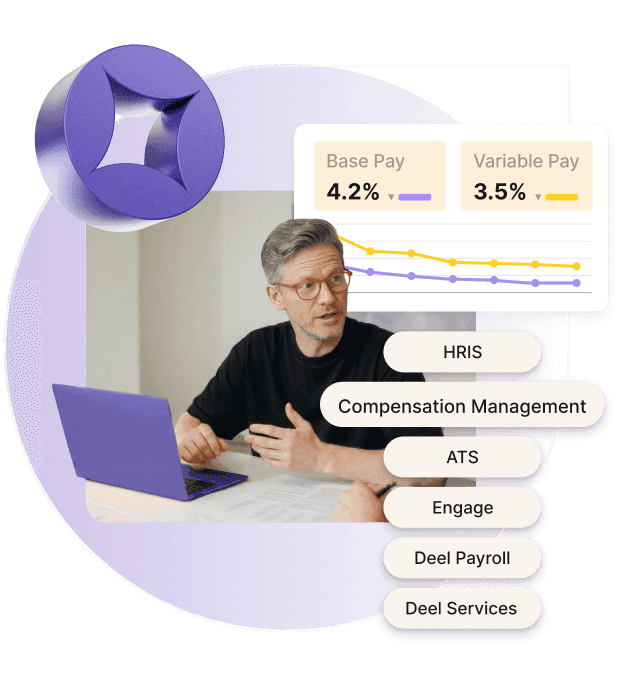
A draft law that keeps changing its indicator count and categorization rules is hard to prepare for with a static spreadsheet. Deel HR keeps job classification documented and adjustable as requirements shift, and Deel's Compensation Management module connects that structure to pay bands and reporting data, so when France's implementing decree finally sets the indicator list, your underlying data is already organized to produce it.
Book a demo to see how Deel helps you stay ready for pay transparency requirements that are still taking shape.
Live Demo
Get a live walkthrough of the Deel platform
This content is for informational purposes only and does not constitute legal advice. Compensation laws and regulations change frequently, and this article notes specific sections requiring legal confirmation before publication. Businesses should consult qualified legal counsel for jurisdiction-specific guidance.
Ellen Simmonds is a content marketing manager with a decade of experience in tech, leadership, startups, and the creative industries. A long-time remote worker, she's passionate about WFH productivity hacks and fostering company culture across globally distributed teams. She also writes and speaks on the ethical implementation of AI, advocating for transparency, fairness, and human oversight in emerging technologies to ensure innovation benefits both businesses and society.