
Article
14 min read
Gen Z Workplace Expectations: What Employers Need to Know
Global HR

Author
Ellie Merryweather
Last Update
April 09, 2026

Key takeaways
1. Gen Z will make up 30% of the global workforce by 2030, and they're already rewriting the rules on what employers need to offer.
2. Meeting their expectations for flexibility, meaning, mental health, and growth isn't a culture challenge, but an operational one.
3. Deel gives companies the infrastructure to deliver on all four, compliantly, across 150+ countries.
At the start of their careers, millennials entered a workforce built on hierarchy, loyalty, and geography. The white-collar jobs available were largely based on proximity to larger towns and cities, with limited work-from-home flexibility. Although the digital nomad trend grew in the early 2010s, those pursuing it faced a series of hurdles, ranging from a lack of visa assistance to cybersecurity concerns.
Now, the world of work looks vastly different.
As new graduates about to enter the workforce, they bring with them a different set of expectations. Organizations looking to attract, retain, and engage the new generation of the workforce need to understand what those expectations are and how they’ll shape the future of work.
How entering the workforce has changed
Context matters here. The workforce Gen Z is entering barely resembles the one millennials started in. Through a combination of changing workplace attitudes, the rise of remote/flexible work models, AI disruption, and next-generation HR technology, early careers now look completely different:
| Millennials entering the workforce (2000s–2010s) | Gen Z entering the workforce (2020s) | |
|---|---|---|
| Work location | Office-first; remote was a rare perk | Remote-first or hybrid on the rise. Some degree of flexibility is the baseline expectation |
| Career path | Linear ladder; join a company, climb the ranks | Portfolio career; multiple roles, freelance, side projects |
| Communication | Email-heavy, and meetings as the default | Async-first; Slack, video, and DMs over in-person meetings |
| Job search | LinkedIn and job boards; résumé-driven | TikTok, referrals, employer brand on social; vibe-driven |
| Employment type | Full-time permanent roles are seen as the goal | Open to EOR, contractor, and gig arrangements from day one |
| Benefits priorities | Salary, health insurance, 401(k) | Mental health support, flexibility, DEI commitments, purpose |
| Relationship with employers | Long-term loyalty; 2–3 year minimum expected | Shorter tenures normalized; loyalty must be earned |
| Technology at work | Adapted to workplace tools | Expects tools to match consumer-grade UX |
| Global mindset | Local or regional job market focus | Open to working across borders and time zones from day one |
| Feedback style | Annual performance reviews | Continuous, real-time feedback expected |
Complementary reading
AI has changed more than just the entry level. See how organizations are rebuilding middle management in the age of AI.
Who is Gen Z at work?
In simple terms, Gen Z were born roughly between 1997 and 2012, making them the first truly digital-native generation. They’re tech-savvy and adapt quickly to change. In return, they expect flexibility and are protective of their work-life balance.
Gen Z is entering the workforce at a time of uncertainty, with AI causing significant shifts in everything from career ladders to day-to-day responsibilities. Entry-level roles are shrinking as AI can handle basic tasks, yet AI trainer roles grew 283% cross-border in 2025, demonstrating the scale of the shift.
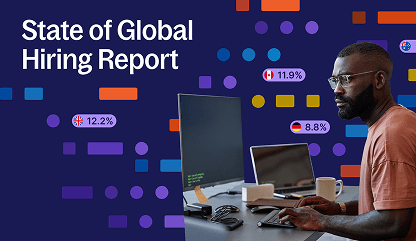
They’re also a more mobile workforce, with an average tenure of 1.1 years — significantly shorter than Millennials at 1.8, Gen X at 2.8, and Baby Boomers at 2.9. What’s driving this job-hopping isn’t disloyalty, but ambition. 41% of the Gen Z workforce always take their long-term goals into account when making decisions.
What Gen Z actually wants from employers
Exact needs and expectations vary by individual, but four main expectations across Gen Z emerge: flexibility, meaning, mental health, and growth. Here we’ll take you through each one, explain what it means for the future world of work, and give you some insights on how we prepare for the shift at Deel.
Flexibility
This isn’t news in the HR industry, as millennials and Gen Z alike have increasingly prioritized flexibility for the past few years — as confirmed in every Deloitte survey since 2023.
An organization’s first instinct might be to consider location as the main driver of flexibility. Gallup data shows that Gen Z is the least likely to want a full back-to-the-office mandate, but they’re also the least likely to appreciate a full WFH arrangement. Time in the office gives them the authentic, in-person experiences that they prioritize, making a hybrid arrangement the most attractive. What Gen Z really appreciates is the freedom to choose, depending on their workload and personal responsibilities.
But flexibility goes beyond location. For Gen Z, it means having control over their own time and having impact rewarded over presenteeism.
How to boost flexibility in the workplace:
- Shift from presence-based to outcomes-based performance management. Define what success looks like, then let people hit it on their own terms
- Build async-first workflows by default: documentation over verbal updates, recorded meetings, and communication tools that don't punish people for being in a different time zone
- Set clear boundaries (core collaboration hours, response time expectations, meeting-free blocks) and give autonomy within that structure
- Re-focus manager training, to not equate visibility with productivity
How Deel does it
Being remote-first and global isn’t just how we work. It’s the cornerstone of our culture. Our work-from-anywhere model offers maximum freedom, while our partnership with WeWork and annual travel stipend facilitates in-person connection.
Being a global company with teams in every timezone, asynchronous collaboration is key. Our teams are encouraged not to book unnecessary meetings (although water-cooler huddles are always welcome) and to keep schedules as flexible as possible. Any company-wide meetings, like an all-hands, are run once live, and then simulcast so no one has to attend during their off-hours.
Meaning
According to Deloitte’s 2025 Gen Z and Millennial Survey, meaning is one of the three defining factors for Gen Z job seekers when evaluating opportunities, along with money and well-being. And for a generation that averages just 1.1 years in a role before moving on, employers who can't deliver on this won't just struggle to attract Gen Z, they'll struggle to keep them.
How to focus on meaningful work
- Explicitly and regularly connect individual roles to company impact. Build that line of sight into onboarding, one-on-ones, and team rituals
- Hold leadership publicly accountable to stated values on DEI, sustainability, and ethics. Gen Z will notice the gap between what you say and what you do
- Give early-career workers real ownership: assign meaningful projects, not just support tasks
- Audit your employer brand the way Gen Z will. They research companies like they research products
How Deel does it
We’re our own first customer, and Deel runs on Deel. Any solutions we build directly impact our own workforce, allowing them to really get a feel for what we’re doing. We hire teams through our EOR solution, allowing us to hire the right people regardless of their location. Their onboarding and ongoing L&D happen through Engage, our talent management solution. And their entire world of work fits in the palm of their hands through the Deel mobile app.
Deel Employer of Record

Mental health
According to research from SHRM, 61% of Gen Z workers would strongly consider leaving their current job in favour of one that offers better mental health benefits. With Gen Z set to make up roughly 30% of the global workforce by 2030, that's not a statistic HR can afford to ignore. The organizations that treat mental health as a workforce strategy, not a wellness perk, will have a measurable retention advantage over those that don't.
How to protect employee well-being
- Train managers to proactively check in on workload and stress, not just escalate performance issues
- Audit how work is actually distributed — chronic overload is a structural problem, not a resilience problem
- Make mental health days as normalized as sick days in policy and in practice, not just on paper
- Build psychological safety into team culture so that raising mental health concerns doesn't feel like a career risk
How Deel does it
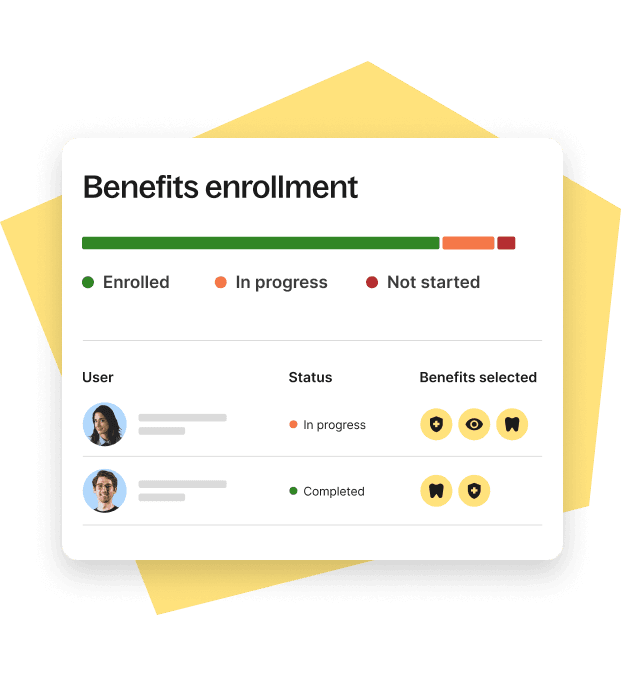
Practicing what we preach means using our own solutions to support our team's well-being. Deel employees get access to our global mental health benefit powered by Talkspace, alongside localized benefits packages that cover health insurance, paid leave, and flexible working arrangements, built to fit the needs of our team, no matter where in the world they're based. We also give our people multiple payment options and reliable, on-time payroll across 150+ countries, because financial security is well-being too. For a globally distributed team, there's no one-size-fits-all approach to support, which is why we adapt.
Benefits Administration
Growth
Growth doesn’t mean what it used to. While Gen Z prioritizes growth and cites it as a top 3 reason for choosing their current employer, only 6% aspire to a traditional leadership role. For this generation, growth is about skills, experiences, and impact — not org charts and corner offices. They want to get better at things, work on projects that matter, and build a portfolio of capabilities that gives them options.
How to promote growth
- Map out lateral growth paths explicitly — define routes for skill-building and cross-functional projects that don't require an open headcount above them
- Replace annual reviews with frequent, specific feedback built into weekly one-on-ones
- Invest in structured AI upskilling — 75% of Gen Z are already using AI to learn new skills independently. If your org isn't offering this, they'll notice
- Pair new hires with mentors in the first 90 days, with dedicated time carved out for development conversations, not just informal buddying
How Deel does it
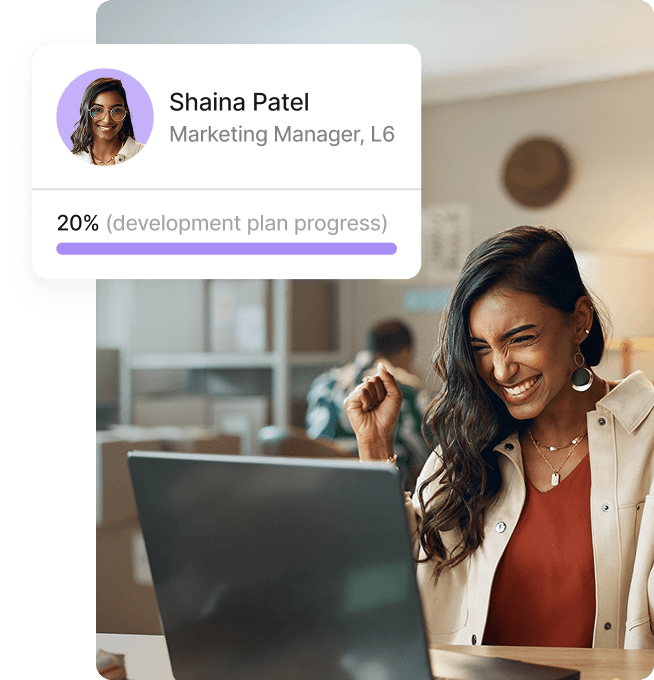
We use Engage, Deel HR’s talent management module, to give our people transparent career frameworks, clear development plans, and visibility into lateral and cross-functional growth paths — not just the next rung on a ladder. We also invest in continuous upskilling, including AI skills training, so our team stays ahead of where the market is heading.
Deel HR
Conscious unbossing tells us that any organization clinging to the corporate culture of the past will struggle to attract and retain the next generations of talent. As HR leaders, it’s our responsibility to respond to these challenges practically, which means being ready to think outside the box and re-imagine what age-old concepts like ‘leadership’ look like in the modern era.
—Alice Burks,
Director of People Success at Deel
Learn more from Alice about the trend of conscious unbossing and what it means for your talent management strategy.
The global opportunity: How Deel prepares your organization for the future world of work
Flexibility, meaning, mental health, and growth — Gen Z has made their expectations clear, and for a generation that sees the entire world as their job market, they have every reason to be selective. The companies that win with this generation won't just have the right culture. They'll have the right infrastructure to back it up across borders.
Deel gives you the infrastructure to do it, including flexible employment models, localized benefits including global mental health support, transparent career development tools, and compliant hiring in 150+ countries. For Gen Z, this is the new baseline.
If you’re ready to explore our solutions, book your 30-minute demo and future-proof your organization for the future world of work.
Live Demo
Get a live walkthrough of the Deel platform

Ellie Merryweather is a content marketing manager with a decade of experience in tech, leadership, startups, and the creative industries. A long-time remote worker, she's passionate about WFH productivity hacks and fostering company culture across globally distributed teams. She also writes and speaks on the ethical implementation of AI, advocating for transparency, fairness, and human oversight in emerging technologies to ensure innovation benefits both businesses and society.


