Article
3 min read
How to Build a Global Fringe Benefits Program Employees Value
Global HR
Employee Benefits

Author
Ellen Simmonds
Last Update
October 19, 2026

Key takeaways
Fringe benefits can strengthen a compensation package, but their tax treatment varies by benefit, location, value, and how employers provide them.
Employers can reduce their compliance risk by checking local tax rules and meeting the relevant reporting requirements. They should also reassess benefits when employees relocate.
Deel Benefits helps global employers design and manage benefits in 100+ countries while giving employees easier access and employers visibility into costs and adoption.
Employees increasingly expect their compensation package to support their individual priorities, and they're prepared to move to a different employer to find something better. In a Morgan Stanley study, 91% admit they’d consider switching jobs for benefits that better help them reach their goals. To retain those workers with itchy feet and attract new talent too, fringe benefits give employers another strategy when salary alone isn't enough.
But for employers, the challenge of upping their benefits game is deciding what to offer without creating unnecessary cost or compliance risk. A fringe benefit that’s tax-free in one country may have tax implications in another, while the way a benefit is funded or provided can also change its treatment.
To get to grips with all this complexity, our guide explores how to build a fringe benefits program employees value, while managing the tax and compliance requirements that come with offering benefits across different countries.
What counts as a fringe benefit?
Fringe benefits are a form of compensation employers provide on top of an employee’s regular salary. Common examples include:
Health and wellbeing benefits, such as health insurance or gym memberships
Financial benefits, such as retirement contributions or tuition assistance
Everyday perks, such as meals or employee discounts
Work-related benefits, such as company cars or mobile phones
These fringe benefits give employers another way to compete for talent and encourage employees to stay. They can also make a compensation package more valuable, particularly when employers choose benefits tailored to what their workforce really needs, which isn’t usually office pizza parties.
Benefits Administration
Fast, flexible global benefits
The tax implications of offering fringe benefits
Fringe benefits can affect how much tax is owed by both the employer and the employee. For each benefit, employers need to establish:
Whether it's taxable: Some employee benefits are fully exempt, while others become taxable once they exceed a local threshold or fail to meet specific conditions.
Who pays the tax: Depending on the local system, the tax liability may fall to the employee, the employer, or both.
How to value the benefit: Tax authorities may use fair market value, prescribed rates, or another statutory calculation rather than the amount the employer paid.
How to report and process it: Taxable benefits are part of payroll, with the employer responsible for withholding or paying the relevant taxes.
The details of the arrangement can change the tax outcome, even when two employees receive a benefit worth the same amount.
Example: A €100 monthly transport benefit in Germany
Germany allows tax-free employer contributions toward public transport when employers provide them on top of an employee's regular salary.
Suppose an employer contributes €100 per month: €100 × 12 = €1,200 per year
When that €1,200 is offered in addition to the employee's existing salary and meets the relevant conditions, it can qualify for the tax exemption. But funding the same benefit as salary alone changes its treatment because this particular exemption no longer applies. German rules provide other options in some circumstances, including a 25% flat-rate wage tax for qualifying public transport benefits.
Example: A $400 monthly commuter benefit in the US
In 2026, US employers can exclude up to $340 per month in qualifying transit passes and commuter highway vehicle benefits from an employee's wages.
For a qualifying monthly benefit worth $400: $400 − $340 exclusion = $60 taxable
The employer must include the $60 above the federal limit in the employee's wages.
Free guide
Scale your global benefits strategy
5 fringe benefits compliance mistakes to avoid
Fringe benefits should add value to an employee’s compensation package, not create an unexpected compliance bill for the business. Yet, the rules governing benefits can be surprisingly specific, with requirements changing based on the benefit offered and where the employee works.
1. Misclassifying taxable fringe benefits
Misclassification can happen when an employer assumes a benefit is exempt without checking the local rules, or continues applying an exemption after the arrangement changes. In the US, for example, the IRS states that fringe benefits are taxable unless legislation specifically excludes them. Underestimating their taxable value can also lead to penalties if the employer deposits too little employment tax.
2. Applying the same rules when an employee changes location
A fringe benefits policy may stay the same when an employee relocates, but the rules governing it can change. An employee moving to another country may become subject to different exemptions, valuation methods, or payroll requirements.
HR teams therefore need a process for reassessing benefits when an employee's working location changes. This is particularly important for distributed teams where employees may relocate or begin working across borders during their employment.
3. Missing payroll and reporting requirements
As part of benefits compliance, employers must also report and process a taxable benefit according to local requirements.
In the UK, for example, employers must generally report taxable expenses and benefits to HMRC and account for any Class 1A National Insurance due. Depending on how the benefit is handled, employers may report it through payroll or separately at the end of the tax year.
But from April 2027, the UK will begin phasing in mandatory real-time payrolling of certain benefits in kind, starting with company cars and employer-provided medical benefits.
4. Treating an allowance as a business expense
Business expenses and fringe benefits can receive different tax treatment, so employers need to establish what a payment is for before deciding how to process it.
This is particularly relevant to remote workers. An employer might reimburse an employee for equipment required to perform their role or provide a general homeworking allowance. Whether the payment qualifies for an expense exemption depends on local rules and the circumstances in which it is provided.
Employers should document what each payment covers and retain the evidence required by the relevant tax authority.
5. Failing to protect fringe benefit funds
Some fringe benefit programs bring additional responsibilities for the organizations administering them. Mishandling funds can carry consequences far beyond correcting a payroll entry.
A 2024 US Department of Labor case demonstrates the scale of that risk. A federal court ordered benefits administrator Axim Fringe Solutions Group, its owner, and others to restore more than $4.4 million in fringe benefits owed to employees of government service contractors. Department investigators found that fringe benefit plan funds had been used to pay employer expenses, delaying some health insurance premium payments. The judgment also permanently barred two individuals from serving as fiduciaries to ERISA-covered plans.
Fringe benefit examples around the world
A fringe benefit that receives favorable tax treatment in one country may create a tax liability in another. Even the way an employer provides the benefit can change its treatment. The table below compares common fringe benefits across four jurisdictions.
| Fringe benefit | US | UK | Germany | Australia |
|---|---|---|---|---|
| Meals and meal allowances | Some employer-provided meals can be tax-free. Cash meal allowances are generally taxable under IRS rules. | Workplace meals can be tax-free when they meet HMRC conditions. Cash allowances count as earnings. | Free or discounted employee meals have official taxable values, which Germany updates annually. | Food and drink provided to employees can create FBT depending on the circumstances, although exemptions can apply, including for certain property consumed on the employer’s premises. |
| Remote work benefits | Qualifying work expense reimbursements can be tax-free when they meet accountable plan rules. | Employers can pay up to £6 per week toward eligible homeworking costs without requiring evidence of the additional expense. | Germany specifically exempts private use of employer-owned IT and telecommunications equipment, including PCs, laptops and related equipment used at home. | Eligible work-related items, including portable electronic devices mainly used for employment, can be exempt from FBT. |
| Mobile phone | Employer-provided phones can be tax-free when supplied primarily for a substantial business reason. | One employer-provided phone or SIM can be tax-free when the employer holds the contract. | Private use of employer-owned phones can be tax-free. | A phone provided primarily for work can qualify for an FBT exemption |
| Public transport | Qualifying commuter benefits can be excluded from wages up to $340 per month in 2026. | Employer-funded season tickets generally create tax or National Insurance obligations. | Employer-funded public transport can be tax-free when provided in addition to salary. | Reimbursement of ordinary home-to-work transport costs can constitute an expense-payment fringe benefit; exemptions or reductions can apply. |
How to structure a fringe benefits program
A fringe benefits program needs to work for the people receiving it and the teams responsible for managing it. Use these five steps to build a program that employees value and your business can administer across different locations.
1. Set a benefits budget
The price of a benefit doesn't always reflect the cost to the business. Taxes, provider fees, and administration can increase the total, while headcount growth can turn an affordable perk into a significant recurring expense.
Model the annual cost at your current headcount and again using your hiring forecast. For global teams, calculate costs by country rather than assuming the same budget will buy employees an equivalent package everywhere.
Action point: Calculate the annual cost per employee for each shortlisted benefit, then model the total against your projected headcount for the next 12 months.
2. Understand what employees value
Benefits budgets have limits, so employers need to know which benefits trends employees would prioritize if they couldn't have everything. A survey asking whether someone likes a particular perk can easily produce a long list of “yes” responses without revealing which benefits they care about most.
Force a choice instead by comparing a hypothetical benefits budget with utilization data for your existing benefits to see where their preferences match employee behavior. For international teams, use Deel's Global Benefits Tool to explore the statutory, common, and competitive benefits offered across countries, then compare local market expectations with what your employees value.
Action point: Ask employees to allocate a hypothetical $1,000 benefits budget across your proposed options, then use their choices to build your shortlist.
3. Choose between fixed and flexible benefits
A fixed package gives everyone access to predetermined benefits, while a flexible benefits model lets employees direct some of their budget toward the options they prefer. Employers can also fund core benefits separately and offer flexibility around additional perks.
Use the employee research from step one to guide this decision. If preferences cluster around the same benefits, a fixed package may cover much of what employees want. Wide variation can make a flexible model more useful.
Action point: Review your employee preference data and decide which benefits, if any, everyone should receive. Use the remaining budget to determine how much individual choice you can offer.
4. Make benefits easy to access
Employees may value a benefit in principle but abandon it if claiming the money involves lengthy forms, unclear eligibility rules, or waiting weeks for reimbursement. Access should influence how you choose to deliver each benefit.
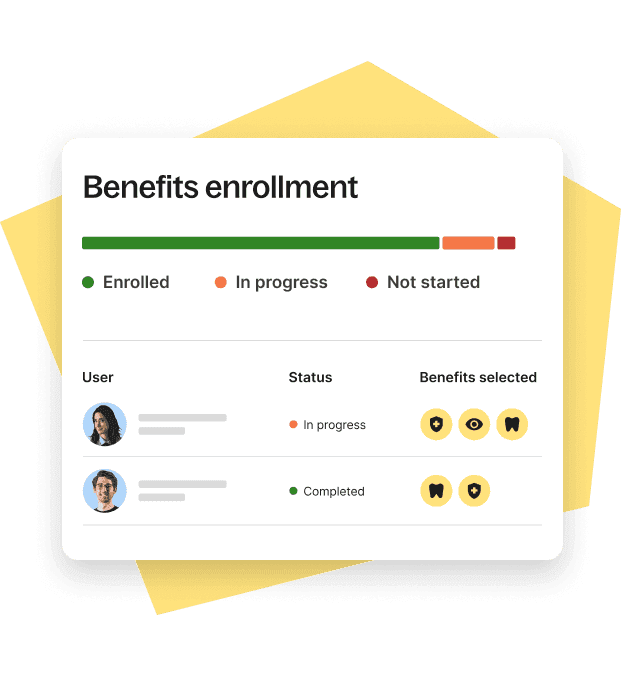
Map the employee experience for every benefit before launch. Check whether employees need to pay upfront and how easily they can find information about their coverage. Deel’s Benefits offers a seamless experience by giving employees one place to enroll, manage their elections, and access details about their benefits.
Action point: Test each benefit as an employee would use it. Remove unnecessary steps before rolling the program out to your workforce.
5. Check your benefits program is working
Utilization tells you what employees use, but the number needs context. Low participation could mean employees don't value the benefit, or it could point to poor awareness or a difficult claims process.
Set a baseline for each benefit and review performance against the budget you've allocated. Deel’s Benefits lets you see costs and adoption across countries, helping you identify where your benefits spend delivers value and where the program may need adjusting.
Action point: Schedule a review six months after launch and compare utilization with employee feedback before setting your next benefits budget.
Deel HR
One place for simplified, smarter global HR
Manage global fringe benefits with Deel
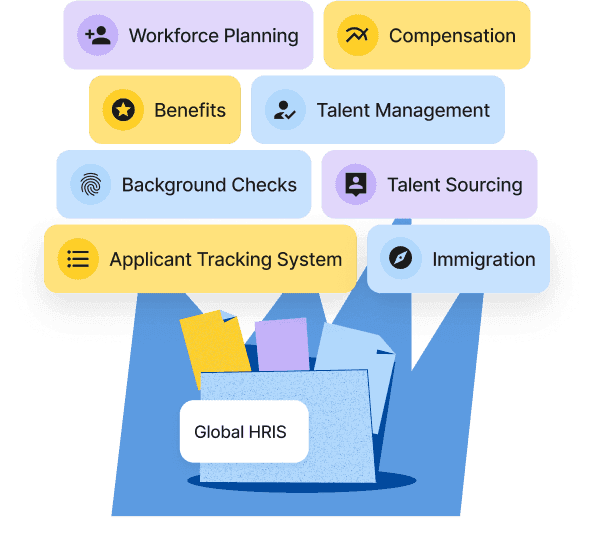
Building the right fringe benefits package gets harder when you employ people across multiple countries. Deel is a global people platform that brings HR, payroll, and benefits together, helping companies manage their international workforce through one system.
With Deel Benefits, you can design and manage benefits in 100+ countries, with local expertise that helps you understand what's compliant and competitive in each market. Employees can enroll and manage their benefits in one place, while enrollment data syncs with payroll to keep benefit deductions aligned with their choices.
You can also track benefit costs and adoption across countries, giving you the data to review your program as your workforce grows.
Ready to build a benefits program that works across borders? Book a demo with Deel to see how Deel can support your global benefits strategy.
Live Demo
Get a live walkthrough of the Deel platform
FAQs
What is an example of a fringe benefit?
An employer-provided mobile phone that an employee receives in addition to their regular salary is a common example of fringe benefits. Others can include health insurance, retirement contributions, meal allowances, public transport support, and employee discounts.
Are fringe benefits taxable?
Fringe benefits can be taxable, although the rules depend on the benefit and the country where the employee works. Some benefits qualify for full tax exemptions, while others have tax-free limits or become taxable when specific conditions aren't met. Employers should check local rules for every benefit they provide.
What is the difference between fringe benefits and employee benefits?
The difference between fringe benefits and employee benefits largely comes down to how the terms are used. Employee benefits is a broad term covering compensation outside salary, including statutory and employer-funded benefits. Fringe benefits typically refer to additional compensation or perks provided alongside regular pay.
Do independent contractors get fringe benefits?
Independent contractors can receive fringe benefits, but employers should consider the potential impact on worker classification. Providing contractors with benefits commonly associated with employment may contribute to a wider assessment of whether the working relationship has been classified correctly. Classification rules vary between countries.
Are fringe benefits part of an employment contract?
Fringe benefits can be part of an employment contract, but this depends on how the employer structures the benefit. Including a benefit as a contractual entitlement can affect an employer's ability to change or withdraw it later. Employers should make clear which benefits are contractual and which are discretionary.
Ellen Simmonds is a content marketing manager with a decade of experience in tech, leadership, startups, and the creative industries. A long-time remote worker, she's passionate about WFH productivity hacks and fostering company culture across globally distributed teams. She also writes and speaks on the ethical implementation of AI, advocating for transparency, fairness, and human oversight in emerging technologies to ensure innovation benefits both businesses and society.