Article
6 min read
Mental Health as an Employment Law Obligation: What Global Employers Must Provide in 2026
Global HR

Author
Ellen Simmonds
Last Update
September 24, 2026

Table of Contents
What employer mental health obligations actually cover
Australia: WHS psychosocial hazard regulations (enforced 2026)
United Kingdom: Employment Rights Act 2026 and employer stress obligations
European Union: ISO 45003 as regulatory expectation
Building a compliant multi-jurisdiction framework for distributed teams
What non-compliance costs: penalties, claims, and reputational risk
Stay compliant across borders with Deel HR
Key takeaways
Mental health protection is now an enforceable legal duty under Australian work health and safety (WHS) law, UK employment law, and EU occupational safety directives, not a voluntary wellness benefit.
Australia, the UK, and the EU each impose distinct psychosocial hazard obligations, requiring separate risk assessments, control measures, and documentation for distributed teams.
Deel HR helps distributed employers centralize HR workflows and employee feedback processes across jurisdictions as part of a broader compliance program.
The line between employer-sponsored wellness and enforceable legal duty has moved. In 2026, mental health obligations under Australian work health and safety law, UK employment law, and EU occupational health directives impose concrete requirements on employers, backed by enforcement agencies with active inspection programs and real penalties.
For CHROs leading distributed companies, these obligations vary by country. Psychosocial hazard regulations in Australia, stress-related duties under UK employment law, and the framework underlying ISO 45003 each demand separate compliance attention. Getting one right doesn't substitute for the others.
This guide maps current employer obligations in each jurisdiction, explains how distributed teams can comply, and outlines how to build a framework that holds across borders.
What employer mental health obligations actually cover
Employer mental health obligations don't require companies to fix employees' personal mental health. They require employers to identify and control the work-related factors that create or worsen psychological harm, which regulatory frameworks call psychosocial hazards.
Psychosocial hazards include excessive workload, poor job clarity, bullying and harassment, lack of support, and sustained exposure to emotionally demanding situations. Australian work health and safety (WHS) law, UK Health and Safety Executive (HSE) standards, and EU occupational safety frameworks all define these as formal risk categories, not soft concerns.
The shift in 2026 is from duty-of-care aspiration to active legal obligation. Employers must now demonstrate they assessed psychosocial risks, implemented controls, consulted workers, and reviewed those controls over time. For distributed teams with a wellbeing retention strategy, that work has to happen across every jurisdiction where you have headcount, with different regulatory bodies, different standards, and different enforcement timelines.
Guide
Expand your global HR strategy
Australia: WHS psychosocial hazard regulations (enforced 2026)
Australia's approach to psychosocial hazard regulation is the most operationally specific of the three jurisdictions covered here. The Safe Work Australia Model Code of Practice: Managing Psychosocial Hazards at Work provides the practical framework employers must follow under the WHS Model Regulations. Lawmakers amended those regulations in 2022 to add explicit psychosocial hazard requirements that states and territories have progressively adopted and enforced since.
SafeWork NSW, WorkSafe Victoria, and equivalent agencies have signaled active enforcement postures. The model code identifies over 14 categories of psychosocial hazard, including high job demands, low job control, poor support, and remote or isolated work. For distributed teams with employees working from home or in dispersed locations, the last category is directly applicable.
What Australian employers must do under the WHS psychosocial hazard framework
Australian employers must follow an "identify, control, review" cycle for psychosocial hazards. In practice, this means four active obligations:
Consult workers to identify which psychosocial hazards are present, through surveys, interviews, incident reports, or structured hazard-identification processes.
Implement controls to eliminate or minimize each identified hazard. Controls are hierarchical: redesigning work to remove the hazard is preferred over training or administrative policies.
Consult employees and, where applicable, their health and safety representatives, both when identifying risks and when implementing controls.
Employers must review controls regularly and whenever circumstances change, including when an employee reports a psychological injury or when work arrangements shift.
Penalties under the WHS Act for failing to meet these obligations are real and graduated. Category 1 breaches (gross negligence or reckless conduct exposing an individual to a risk of death or serious injury) carry maximum penalties exceeding AU$3 million for corporations and custodial sentences for individuals. Category 2 contraventions (failure to comply with a health and safety duty) carry fines of up to AU$1.5 million for corporations. Non-compliance is not a low-stakes position.
For global employers with Australian headcount, this framework applies to employees working remotely. The physical location of the work, whether in an office, at home, or abroad, doesn't change the psychosocial hazard obligations.
Right-to-disconnect and psychosocial hazards
Australia's WHS psychosocial hazard rules overlap with emerging right-to-disconnect obligations. If your distributed employees are expected to be contactable outside working hours, that expectation itself may constitute a psychosocial hazard requiring a documented control measure. See our guide to right-to-disconnect laws for global employers.
Deel HR
One place for simplified, smarter global HR
United Kingdom: Employment Rights Act 2026 and employer stress obligations
The UK's employer mental health obligations operate through overlapping frameworks. The HSE Management Standards for work-related stress set the benchmark: risk assessment evidence across six defined hazard categories (demands, control, support, relationships, role, and change) and documented action when the assessment identifies risks.
The Employment Rights Act 2026 (ERA 2026) extends and clarifies employer duties, including strengthened obligations around managing stress-related absence and additional consultation requirements when workforce changes risk sustained psychological pressure. The Equality Act 2010 adds a separate duty: where a mental health condition meets the threshold of a disability, employers must make reasonable adjustments, which often intersects directly with stress-management obligations.
What UK employers must demonstrate to the HSE
The HSE expects evidence of a structured risk-management process across the six Management Standards dimensions, using surveys (the HSE Indicator Tool is widely used), team discussions, or absence data analysis. Employers should also maintain records of how stress-related absences were managed, and evidence that managers can recognize early signs of stress and know the referral process.
The ERA 2026 obligations are distinct from the pre-existing HSE standards. The HSE framework sets the ongoing health and safety baseline. The Employment Rights Act adds employment-law obligations around how stress is managed during employment, including protections against detriment for workers who raise mental health concerns. For more on UK employer compliance, see Deel's DUAA compliance UK guide.
European Union: ISO 45003 as regulatory expectation
The EU occupational safety framework for psychosocial risk is grounded in Council Directive 89/391/EEC (the Framework Directive), which requires employers across all member states to conduct risk assessments and implement preventive measures, including for psychosocial risks. Member states have incorporated the directive into national law in different ways, so the specific enforcement mechanisms vary.
ISO 45003:2021 provides the internationally recognized standard for managing psychological health and safety at work. While voluntary at the international level, authorities in France, Germany, and the Netherlands use ISO 45003 as a benchmark for assessing whether employers have met their duty-of-care obligations under national occupational health and safety (OHS) law.
The EU-OSHA Healthy Workplaces Campaign 2026-2028 focuses specifically on psychosocial risks and coordinates enforcement activity and awareness efforts across member states. Employers with headcount in multiple EU countries should treat this campaign as a signal of increased regulatory attention, not just an awareness initiative.
Which EU jurisdictions lead enforcement of psychosocial risk rules
Three EU markets stand out for active enforcement activity on psychosocial risks:
France. French labor law requires employers to assess and prevent "risques psychosociaux," and DREETS enforces that duty. Collective agreements increasingly include psychosocial risk prevention plans.
Germany. The German Occupational Safety and Health Act (ArbSchG) requires risk assessment covering mental stress. The German Federal Institute for Occupational Safety and Health (BAuA) publishes active enforcement guidance.
Netherlands. Dutch Working Conditions legislation explicitly lists psychosocial workload (PSA) as a distinct hazard category, and the Netherlands Labour Authority (NLA) conducts targeted inspections.
Employers with employees in these jurisdictions must be able to demonstrate active psychosocial risk management, not just a general wellness program.
Compliance
Unlock Continuous Compliance™ with Deel
Building a compliant multi-jurisdiction framework for distributed teams
The three systems share four core requirements. Start with these, then add each jurisdiction's specific rules on top.
Risk assessment. All three frameworks require formal identification of psychosocial hazards, including remote-work-specific risks like isolation and digital overload.
Manager training. Every framework recognizes manager behavior as both a risk source and a control lever.
Reporting channels. Anonymous reporting mechanisms for psychosocial concerns create the evidence trail enforcement agencies expect in Australia, the UK, and across the EU.
Policy documentation. Written policies on psychosocial hazard management must be localized to each jurisdiction's specific regulatory language.
For more on managing benefits for global employees and navigating right-to-disconnect laws as part of a broader distributed-team compliance approach, Deel's resources cover both.
The table below summarizes where the three jurisdictions diverge:
| Jurisdiction | Risk framework | Primary enforcement body | Obligation trigger |
|---|---|---|---|
| Australia | WHS Model Regulations + Model Code | SafeWork agencies (state-level) | Active, state-by-state enforcement 2024-2026 |
| United Kingdom | HSE Management Standards + ERA 2026 | Health and Safety Executive | Ongoing HSE inspections; ERA 2026 from October 2026 |
| European Union | Framework Directive 89/391 + national law | National labour inspectorates | Varies; France, Germany, Netherlands most active |
What non-compliance costs: penalties, claims, and reputational risk
Enforcement agencies in Australia and the UK have demonstrated willingness to prosecute employers and issue improvement notices when employers fail to meet risk-assessment obligations.
In Australia, WHS prosecutions for psychological harm claims are increasing. Beyond prosecution, employers face workers' compensation claims, and psychological injury claims typically carry higher costs and longer durations than physical injury claims. In the UK, the HSE can issue formal improvement notices; failure to comply is a separate criminal offense. Employees who suffer psychiatric harm where an employer failed its duty of care can bring personal injury or constructive dismissal claims. In France and the Netherlands, labour inspectors can issue enforcement orders and fines for failures to manage psychosocial risks.
Beyond direct financial exposure, the reputational cost of a high-profile enforcement action, particularly for companies hiring globally, affects talent acquisition in markets where mental health obligations are increasingly visible to job seekers.
Guide
Stay compliant while expanding globally
Stay compliant across borders with Deel HR
Managing psychosocial hazard compliance across Australia, the UK, and the EU requires policy documentation, manager training records, consultation evidence, and ongoing review, all maintained by jurisdiction and visible to the teams responsible for compliance.
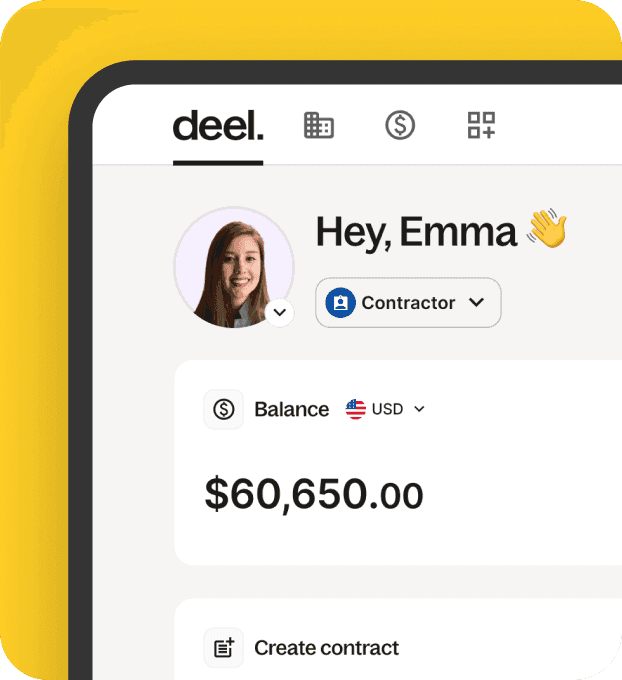
Deel HR brings workforce management and documentation onto a single platform for distributed teams. Engage, a module within Deel HR, supports employee experience workflows, including pulse surveys to gather employee feedback that can inform the organization's broader psychosocial-risk assessment process. The Anonymous Reporting module within Deel HR provides a confidential channel for workforce concerns that can support reporting processes, subject to applicable local requirements.
Because Deel HR is connected to the broader Deel platform, employers can adapt their workforce processes as requirements and workforce circumstances change, without reimplementing their core HR system.
Book a demo to see how Deel HR can support the workforce documentation and employee feedback processes used in your multi-jurisdiction compliance program..
Live Demo
Get a live walkthrough of the Deel platform
FAQs
Is employer mental health support a legal requirement or a voluntary employer policy?
In Australia, the UK, and across EU member states, managing psychosocial hazards is a legal obligation under occupational health and safety law, not a discretionary benefit.
What are psychosocial hazards under WHS law and which ones must employers control?
Psychosocial hazards are work-related factors that can cause psychological harm, including high job demands, low control, poor support, bullying, and remote or isolated work. Australia's WHS Model Code identifies over 14 categories that employers must assess and control.
Does the UK Employment Rights Act 2026 create new mental health duties for employers?
Yes. The ERA 2026 strengthens obligations around managing stress-related absence and adds consultation requirements for workforce changes with psychological risk implications, which are distinct from and additional to the pre-existing HSE Management Standards obligations.
Is ISO 45003 mandatory in the EU?
ISO 45003:2021 is a voluntary international standard, but authorities in France, Germany, and the Netherlands apply it as a practical benchmark for whether employers have met their occupational safety obligations under national law transposing the Framework Directive.
What must a global employer do if they have staff in Australia, the UK, and an EU country?
Each jurisdiction requires a separate compliance approach: an "identify, control, review" cycle under Australian WHS law; risk assessment evidence across the six HSE Management Standards dimensions in the UK; and psychosocial risk management aligned to the Framework Directive and applicable national requirements in the EU country.
What is the penalty for failing to manage psychosocial hazards in Australia?
Penalties under the WHS Act vary by category. Category 1 breaches (gross negligence or recklessness exposing someone to a risk of death or serious injury) carry maximum penalties exceeding AU$3 million for corporations. Category 2 breaches (failure to comply with a health and safety duty) carry fines of up to AU$1.5 million for corporations.
This article is provided for general informational purposes and should not be treated as legal or HR advice. Workplace health and safety obligations vary by jurisdiction and change frequently. Consult a qualified legal or compliance professional for guidance specific to your circumstances.
Ellen Simmonds is a content marketing manager with a decade of experience in tech, leadership, startups, and the creative industries. A long-time remote worker, she's passionate about WFH productivity hacks and fostering company culture across globally distributed teams. She also writes and speaks on the ethical implementation of AI, advocating for transparency, fairness, and human oversight in emerging technologies to ensure innovation benefits both businesses and society.