Article
6 min read
UK Vacancies Continue To Fall—Here’s What HR Should Do Now
Global HR

Author
Alan Price
Last Update
October 22, 2025

About the author
Alan Price is Head of Global Talent Acquisition at Deel, running teams across US, LATAM, EMEA, and APAC. An experienced international talent leader, Alan has led People & Talent Acquisition teams for some of the largest technology companies globally, including Uber and Google. Alan was also a founding member of micro-mobility company Dott, where he served as VP of People.
The latest ONS data shows UK job vacancies have reached a 38th consecutive quarterly decline, down to 728,000 in June to August 2025. This is down 14% from the level of a year ago, and 8.4% below their pre-pandemic level. Increased employment costs and global economic uncertainty have businesses hesitant to onboard new staff or replace those who leave.
For HR leaders, this signals a market shift: talent competition may ease, but the need for strategic workforce planning is greater than ever. Employers want to see ROI on every employee, and evolving technology trends can make hiring people with the right skills tough.
Talent strategies in response to a cooling labour market must be focused on retention, strengthening talent pipelines, and improving the employee experience.
Responding to a cooling labour market
While the labour market is cooling, talent challenges aren’t going away. Skills shortages, retention risks, and shifting employee expectations mean businesses should focus on four priorities:
Tightening and future-proofing talent pipelines
Making internal mobility a core strategy
Strengthening Employee Value Proposition (EVP)
Embracing flexible roles and workforce models
Priority 1: Tightening and future-proofing talent pipelines
In times of economic uncertainty, workforce flexibility is key to responding quickly to shifting priorities. Nurturing a talent pipeline might feel like the last thing HR should be spending their time on when labour markets cool, but there are some things it’s important to keep on top of:
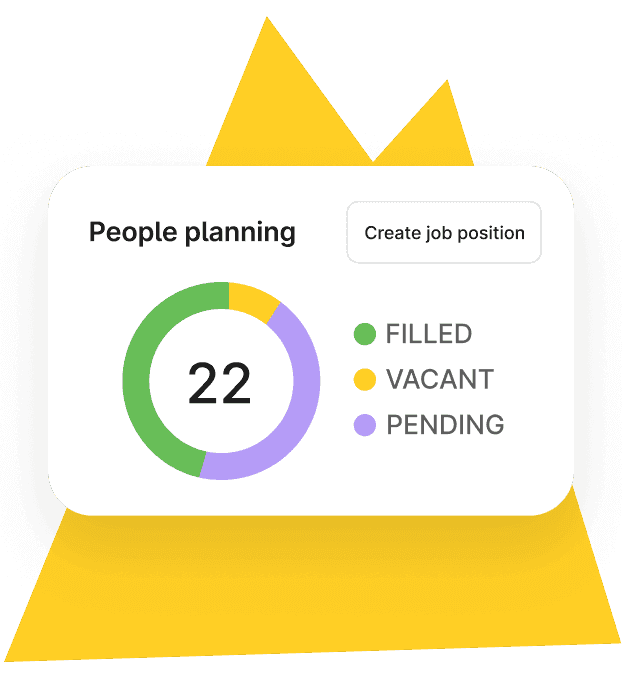
Scenario planning and forecasting future needs
Re-defining ideal candidate personas
Identifying, forecasting, and prioritising skills gaps
Building relationships with freelancers and talent pools
Planning succession for leadership roles
Investing in future-proofing your talent pipelines now will keep businesses agile when the market shifts again. It means you can quickly re-activate qualified candidates, backed by a strong employer brand that attracts the right people. This not only reduces future recruitment time and costs, but also ensures you’re hiring the best fit, not just the fastest available option.
Deel HR
Smarter end-to-end workforce planning
Priority 2: Making internal mobility a core strategy
Retain your best people by creating clear career pathways, both for upward and lateral mobility.
Making upward mobility a priority means more than just offering leadership roles to existing staff before looking externally. It also means preparing your teams for leadership and creating a culture of learning and growth. This can be done through ongoing activities, like a robust leadership development program, or through one-off events.
For example, Barclays boosted internal promotions by launching a four-day leadership learning event. The offsite featured experiential projects that examined how well middle and senior managers were able to lead themselves and others, proving who was ready for further promotion. Without launching a wide-scale offsite, organisations can increase leadership-readiness by running training sessions, or offering non-managers the chance to lead short-term projects to give them a taste of leadership.
Internal mobility can be bolstered with upskilling and reskilling strategies. Start by running a skills gap analysis to identify where your weaknesses are and assigning importance scores. With modern learning management software, upskilling and reskilling can be personalised and automated, without being a time drain.
Complementary reading
Priority 3: Strengthening employer branding
Despite the slower market, candidate expectations remain high. To attract the best talent, not just any available talent, businesses still need to actively boost their employer brand. How you achieve that depends on the kind of talent you’re aiming to attract. For example, National Express created a recruitment campaign, “A Route for Everyone,” to hire more female drivers, generating hundreds of applications directly to their careers site and saving over £60,000 on job board spend in five months.
Of course, it takes more than a sophisticated campaign to attract talent continuously and in a scalable way. Businesses must ensure that their compensation and benefits offerings match the expectations of the market and appeal to future generations of talent. In the UK right now, that means flexibility, work-life balance, higher pay, and job security.
Last, but certainly not least, employee experience is paramount to building a strong employer brand. Word of mouth is powerful, and employee retention doubles as a recruitment strategy. Now is the time to turn your pulse surveys and feedback cycles into action.
Priority 4: Embracing flexible roles and workforce models
Speaking of benefits that meet market expectations, flexibility deserves to be singled out for a number of reasons. The first is that it’s one of the most in-demand benefits for UK jobseekers, with one survey reporting that 52% of UK jobseekers will only consider roles with flexibility as standard.
It’s also important to note that upcoming changes to the Employment Rights Bill will cement flexible work as the norm, not just the exception. Employers will have to take extra steps to justify refusing employee requests for flexible work, which will be a right from day one.
Remote and hybrid work are two of the more popular ways to offer employees flexibility, but they’re not the only options. Flexibility can come in the form of flexitime, floating holidays, on-demand payroll, compressed workweeks, and asynchronous work. Exploring flexible roles, such as part-time and short-term contracts, allows you to benefit from specialised skills without having to add to your permanent headcount.
Preparing for the next market cycle
Labour markets are cyclical. The HR leaders who invest in pipelines, mobility, employer branding, and flexibility today will be best placed when vacancies rebound tomorrow. By building stronger, more resilient teams, businesses in the UK will be better prepared for whatever changes come their way.
Deel is the perfect partner for that agility. With Deel, you can forecast skills gaps and run scenario planning, deploy upskilling strategies, manage flexible contracts, and turn employee feedback into actionable next steps – all in one streamlined platform. Book a 30-minute demo to see how Deel can keep you prepared for the future.
Live Demo
Get a live walkthrough of the Deel platform
Alan Price serves as the Director of Talent Acquisition at Deel, overseeing talent acquisition teams in the US, LATAM, EMEA, and APAC regions. Before joining Deel, Alan was a founding member of the micro-mobility company Dott, where he held the position of Vice President of People. Prior to his role at Dott, he held senior positions at Uber and Google.