Article
8 min read
Deploy Data Center Specialists Fast: Hire Site Workers Globally, in Days, Not Months
Employer of record
Global hiring
Global HR

Author
Jemima Owen-Jones
Last Update
August 04, 2026

Table of Contents
Why data center buildouts demand a different hiring approach
The three structural blockers slowing enterprise HR teams
What Employer of Record with field services capability changes
How Deel Field Services addresses each blocker
Role-by-role compliance considerations for data center staffing
Geographic coverage across key data center markets
Why a field EOR is structurally lower-risk than alternatives
What to look for in an EOR provider for field-based data center roles
How quickly can deployment actually happen?
Deploy data center specialists fast with Deel Field Services
Key takeaways
The global data center buildout boom (valued at $383.82 billion in 2025 and projected to reach $902.19 billion by 2033) is creating intense pressure on enterprise HR teams to deploy specialized site workers faster than traditional staffing pipelines allow.
Entity setup in a new country takes two to twelve months, but Field EOR providers built for on-site roles can have workers employed and on the ground in days.
Deel Field Services acts as the legal employer for field and on-site teams across key global markets, handling payroll, compliance, immigration support, and site-specific employment without requiring companies to establish local entities.
This article is provided for general informational purposes and should not be treated as legal or HR advice. Employment laws and entity setup requirements vary by jurisdiction. Consult a qualified legal or employment professional for guidance specific to your situation.
Hyperscalers racing to open data centers across Southeast Asia, the Middle East, Northern Europe, and Latin America face a costly reality: the skilled specialists they need—electricians, cooling engineers, network operations technicians, physical security experts—must be on the ground before competitors file their first permit application.
Yet the standard employment playbook—incorporate a local entity, navigate the employment law, hire locally—takes months projects simply don't have.
The gap between infrastructure velocity and traditional hiring timelines isn't a new problem.
After working with 40,000+ global companies (including hyperscalers scaling infrastructure worldwide), we've learned at Deel that this mismatch isn't just a hiring challenge—it's a structural blocker that slows critical deployments.
The good news: it's entirely avoidable. This article breaks down the three reasons data center staffing resists standard timelines, identifies the structural blockers creating delays, and shows how Employer of Record (EOR) with field services capability eliminates each of them by design.
Why data center buildouts demand a different hiring approach
The scale of the current AI infrastructure buildout is difficult to overstate. The global data center market was valued at $383.82 billion in 2025 and is projected to reach $902.19 billion by 2033, growing at a compound annual rate of 11.3%, according to Grand View Research.
The AI-specific segment is moving even faster: the AI data center market is projected to grow from $180.6 billion in 2026 to $810.6 billion by 2033, at a CAGR of 23.9%.
Hyperscalers are responding with historic levels of capital. In 2024, Alphabet, Microsoft, Amazon, and Meta invested nearly $200 billion in combined CapEx on data center infrastructure, a figure expected to climb by over 40% in 2025. Microsoft alone dedicated $80 billion in FY2025 to expanding AI-optimized capacity.
The geographic footprint of that investment is global by necessity. Power availability, land cost, regulatory environment, and latency requirements are pushing new builds into markets where many enterprise HR teams have little or no prior employment infrastructure.
Asia Pacific is expected to register the highest CAGR for AI data center growth through 2032, driven by government AI initiatives in Malaysia, Japan, South Korea, India, and Southeast Asia.
The Middle East is emerging as a critical hub, with France committing EUR 109 billion in AI investment including a 1-gigawatt facility backed by UAE financing.
Northern European countries, with their stable grids, cooler climates, and renewable energy infrastructure, continue to draw hyperscaler campuses.
Each new geography introduces a new compliance environment, which under a legacy HR model requires establishing a new local entity.
Field Services
Deploy onsite workers compliantly in days

The three structural blockers slowing enterprise HR teams
When an enterprise HR leader receives a brief to staff a new data center site in a country where the company has no existing entity, three blockers emerge in sequence.
1. Entity setup requires extended timelines
Establishing a legal entity in a foreign jurisdiction is not a formality. The process typically involves registering the business, appointing local directors or representatives, opening a corporate bank account, registering for tax, and meeting any sector-specific licensing requirements.
Timelines vary meaningfully by country: two to three months is typical for markets like Australia, Ireland, or the UAE. Brazil or Uruguay typically take three to four months, and up to six to eight months in more complex jurisdictions like the Philippines.
For a data center project on a six-week go-live schedule, those timelines are simply not compatible. The entity is not an option when the site is already under construction.
2. Jurisdictional employment law is specialist work
Even where a company has an entity, the question of what that entity is legally required to provide (minimum wages, statutory leave, social insurance contributions, termination protections, and health and safety requirements for site-based roles) varies materially between countries.
The compliance picture for a field-based workforce that moves across borders is substantially more complex than for a static office workforce.
Deploying a mobile workforce across borders without the right legal employer structure exposes the business to payroll compliance failures, work authorization gaps, and employment law violations in every jurisdiction teams enter.
The companies that encounter this problem rarely discover it proactively. It typically surfaces when a worker is on-site without authorization, or a tax withholding dispute emerges in a country where obligations were not recognized.
For data center roles specifically, the compliance exposure extends beyond standard employment law. Electricians, cooling engineers, and heavy equipment operators typically require documentation of licenses and certifications as part of onboarding.
Health and safety frameworks differ by country and, in many cases, by industry sector. Physical security personnel may be subject to additional background check or licensing requirements specific to critical infrastructure.
3. Visa and work authorization lag adds weeks to every cross-border deployment
Many of the specialist roles data center projects require cannot be filled locally on short notice. The global market for qualified engineers, operators, and technicians is rising far faster than most markets can produce them. That means deploying workers internationally, which means navigating visa and work authorization.
Standard work permit processing takes weeks to months, depending on the country, role, and nationality of the worker. Processing time is often not within the employer's control once documentation has been submitted. Any gap in authorization creates legal exposure for the hiring company.
The compliance reality of rapid deployment
Over 46% of data center operators report difficulties finding qualified candidates for vacant roles, and more than one in three (37%) struggle to retain their staff, according to the Uptime Institute. Yet the compliance infrastructure required to legally employ workers on new international sites is rarely built into project timelines — and the gap creates compounding risk as site rollouts accelerate.
Deel Mobility
Get worldwide visas without the legwork
What Employer of Record with field services capability changes
An Employer of Record is a third-party organization that acts as the legal employer for workers in countries where the client company does not have its own entity. The EOR holds the employment contract, runs payroll, manages tax withholdings and social insurance contributions, and ensures employment terms comply with local labor law, while the client retains full control over the worker's day-to-day responsibilities and project assignment.
For most HR contexts, the standard EOR model resolves the entity problem effectively. The complication with data center staffing is that most EOR providers manage hiring, payroll, tax compliance, and local labor laws for remote workers but decline field and on-site roles entirely.
The liability profile of physical, site-based work is structurally different from desk work: site-based roles carry occupational health and safety obligations, exposure to equipment and infrastructure risk, and, in many jurisdictions, additional insurance and licensing requirements that generalist EOR infrastructure is not built to accommodate.
Deel Field Services was built specifically for workforces that exist in physical environments, including teams that move between sites. It acts as the legal employer for field and on-site teams across key global markets, handling site-specific payroll processes, immigration support, and cross-border HR support within a single employment structure, without the delay of setting up local legal entities.
For enterprise HR teams managing data center rollouts, the practical difference is significant.
How Deel Field Services addresses each blocker
Bypassing entity setup
Where a company has no legal entity in the target country, Deel Field Services can employ workers directly through Deel's directly owned entities. This means the employment infrastructure exists from day one, with no entity setup required by the client.
While entity setup takes three to twelve months, an EOR can have workers employed and on the ground in days. For a data center site that needs a commissioning team before a construction milestone, that difference determines whether the schedule is met.
The same model applies regardless of project duration. Whether a site deployment runs for six weeks or eighteen months, the EOR structure provides compliant employment throughout, and can transition workers to a client-owned entity if one is established later.
Deel Hire
Hire employees globally with the #1 Employer of Record
Managing local compliance for site-based roles
The compliance scope that Deel Field Services handles for on-site workers goes beyond what standard EOR services provide:
Legal and labour compliance: role- and country-specific legal review, contract language, labour law compliance, and co-employment risk management
Insurance checks: certificate of insurance verification, coverage confirmation, and risk premium assessment per role
Health & Safety compliance: site-specific risk assessments, Safe Work Method Statements, Permit to Work documentation, PPE matrix, emergency response plans, and H&S questionnaires built into contract creation
Mobility and immigration compliance: visa and license review, cross-border work approval, A1 certificates for EU/EEA, and referrals for complex immigration cases
Ancillary services: travel and logistics coordination, relocation, vehicle leasing, airport meet-and-greet, private medical aid, equipment provision, H&S training, and emergency/crisis management
For roles differentiated by risk profile: the compliance and documentation requirements for an electrician working in a live electrical environment differ from those for a network operations technician. The Field Services structure accommodates those distinctions rather than applying a single template across the workforce.
Time Tracking
Time tracked. Payroll trusted. Nothing to reconcile.
Supporting cross-border mobility and visa processing
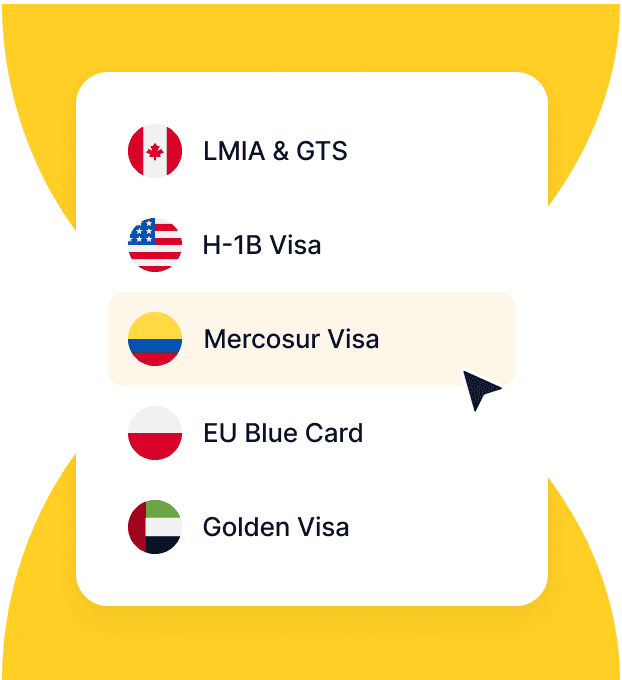
For workers being deployed internationally, Deel Mobility integrates with the Field Services employment structure. Visa applications, work permit processing, and status tracking are managed within the platform, reducing the coordination overhead for HR teams managing multi-country deployments.
Visa availability and processing time are subject to local law and cannot be compressed below regulatory minimums. What the Field Services model eliminates is the administrative overhead of managing that process across multiple jurisdictions, and the risk of gaps in legal authorization that arise when employment infrastructure and visa processing are handled by separate, uncoordinated providers.
Deel Mobility
Get worldwide visas without the legwork
Role-by-role compliance considerations for data center staffing
Data center projects are not staffed from a single talent pool. The roles involved span meaningfully different risk profiles, which affects what compliance documentation and employment terms each role requires.
| Role | Key compliance considerations |
|---|---|
| Electricians | Trade license verification, high-voltage safety certification, jurisdiction-specific H&S framework |
| Cooling engineers | Pressure system certification, HVAC licensing requirements where applicable |
| Network operations technicians | Background check requirements for critical infrastructure access, certification verification |
| Physical security personnel | Security industry licensing, background vetting requirements, critical infrastructure clearance |
| Commissioning engineers | Project-specific insurance review, site induction documentation |
| Facilities managers | Local employment law classification, payroll setup |
Under a Field Services EOR model, each of these compliance requirements is handled as part of onboarding rather than delegated to the client's legal or HR team to resolve before the worker can start.

Free template
Streamline your onboarding process today
Geographic coverage across key data center markets
The regions currently driving the largest share of new data center construction are also among the regions where setting up a local employment entity is most time-consuming. That is partly by design: many of these markets require significant local knowledge to navigate correctly.
Deel's field EOR coverage across the key data center build geographies includes:
Southeast Asia: Malaysia, Indonesia, Thailand, Singapore, and Vietnam, among others
Middle East: UAE and Saudi Arabia
Northern Europe: Sweden, the Netherlands, Norway, Finland, and Denmark
Latin America: Brazil, Mexico, Colombia, Chile, and Argentina
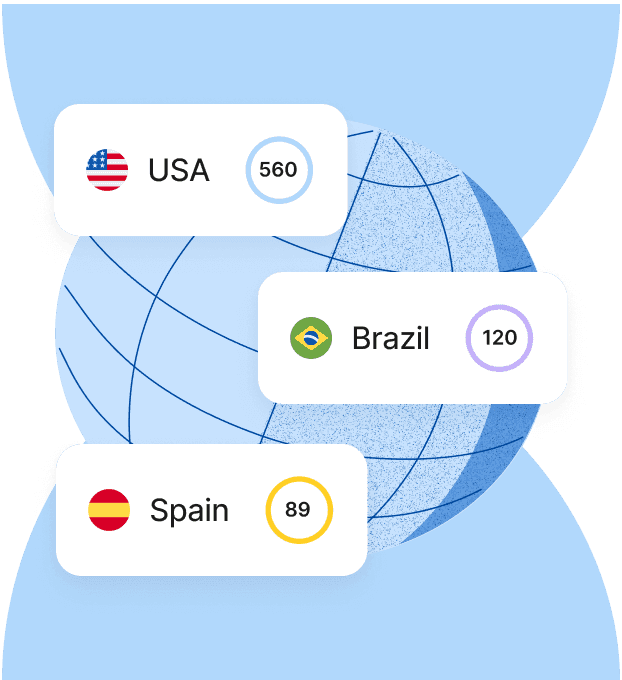
Standard EOR entity setup in markets like Brazil takes three to four months, and in the UAE two to three months. The Field Services model eliminates that wait by providing existing, compliant employment infrastructure in each of these markets from the start of the engagement.
Why a field EOR is structurally lower-risk than alternatives
The alternative approaches available to enterprise HR teams for rapid international staffing each carry significant risk exposure.
Independent contractor engagement is fast but creates misclassification exposure. Many of the roles involved in data center construction and operations (particularly those with defined working hours, site attendance requirements, and supervision structures) do not meet the legal criteria for contractor classification in most jurisdictions. Misclassification carries liability for back taxes, social insurance contributions, and potential penalties
Staffing agencies can source candidates efficiently, but their role typically ends at placement. The compliance management, payroll, and ongoing employment obligations remain with the client company once the candidate is placed
Waiting to establish an entity protects compliance but sacrifices speed. In a competitive market where hyperscaler construction timelines are determined by capital allocation cycles rather than HR readiness, speed has real operational cost
Under the field EOR model, the compliance risk is owned by the EOR provider rather than the client. Employment contracts, payroll accuracy, tax filings, and labor law compliance are the EOR's legal responsibility, which is a qualitatively different risk profile from handling them internally across multiple unfamiliar jurisdictions simultaneously. Teams exploring this approach can review the pros and cons of employer of record hiring to understand where the model makes sense
What to look for in an EOR provider for field-based data center roles
Not all EOR providers can serve field and on-site workforces. When evaluating providers for a data center staffing mandate, the following criteria are the most material:
Explicit support for on-site and field roles. Confirm that the provider does not exclude physical, site-based workers as a policy position. Many generalist EOR providers decline blue-collar and site-based workers due to the different liability profile involved
Direct entity coverage in the target countries. Third-party partner networks introduce coordination risk. For mission-critical deployments, providers with wholly-owned or directly managed entities in the target market are lower-risk
Site-specific compliance infrastructure. Confirm that the provider can handle H&S documentation, certification verification, and site induction requirements, in addition to payroll and tax
Immigration integration. If any workers will be deployed internationally, confirm that visa and work permit support is available within the platform natively
Experience with multi-country deployments. Data center projects frequently span multiple sites and jurisdictions. The provider's operational model should support that structure without requiring a separate engagement per country
Organizations evaluating field deployment models can also review how operational flexibility is maintained with employer of record services to understand how the structure scales as project scope changes.
Leading Global Hiring Platform
The world’s #1 platform for global employment

How quickly can deployment actually happen?
7 days on average with Deel. But speed does depend on several variables: the country, the role, the worker's nationality (if cross-border deployment is involved), and whether visa processing is required. Deel does it's very best to get teams onboarded and set up to hit the ground running in 7 days.
What a field EOR removes from that timeline is the entity setup phase, which ranges from two months to over six months depending on the jurisdiction. The EOR employment infrastructure exists before the engagement begins. Onboarding a new worker into an existing EOR structure, in a country where the EOR already holds a compliant entity, typically takes one to three business days.
Visa processing, where required, remains subject to government timelines that no EOR can compress. What the integrated model provides is a single point of coordination for the employment and immigration process rather than two separate providers operating in parallel.
For projects where workers are locally sourced in the country of deployment (which is often the case for electricians and trades roles, where local availability exists), visa processing is often not required.
Deploy data center specialists fast with Deel Field Services
The more important planning consideration for global data center projects is often not the speed of a single hire, but the overhead of managing concurrent deployments in multiple countries.
A Field Services EOR like Deel, with broad country coverage, centralizes that management into a single platform and a single point of accountability, rather than requiring HR teams to maintain vendor relationships in each jurisdiction separately.
For an enterprise managing three simultaneous data center sites across Southeast Asia, the Middle East, and Northern Europe, the difference between centralized EOR management and country-by-country vendor coordination is measured in both headcount requirements and legal exposure.
For enterprise teams considering whether Deel Field Services can support their specific deployment, book a demo below to find out.
Deel Hire
Find, hire, and manage anyone, anywhere

FAQs
What is the difference between standard EOR and Deel Field Services?
Standard EOR is designed for remote or office-based workers and typically declines on-site and field roles due to their different liability profile. Deel Field Services is built specifically for physical, site-based workforces, handling the additional compliance requirements including health and safety documentation, site induction, and certification verification that field roles require across key global markets.
Can an EOR replace a staffing agency for data center roles?
An EOR and a staffing agency solve different problems. A staffing agency sources and places candidates, while an EOR provides the legal employment structure that allows those workers to be compliantly employed in countries where the client has no entity. Many organizations use both: a specialist recruiter to source talent, and an EOR to provide the employment infrastructure.
How long does it take to onboard a field worker through Deel Field Services?
In countries where Deel holds a compliant entity, worker onboarding typically takes up to seven business days once the necessary documentation is in order. Entity setup by the client would take between two and twelve months depending on the jurisdiction — Deel's field EOR removes that phase from the timeline entirely.
Does Deel Field Services cover the specific roles involved in data center construction?
Yes. Electricians, cooling engineers, network operations technicians, physical security personnel, commissioning agents, and facilities managers are all supported under the Field Services model, with role-appropriate compliance documentation handled at onboarding.
What happens to field workers between project rotations or deployments?
Deel Field Services covers workers both when actively on-site and during standby periods between rotations, maintaining compliant employment through the gap period. Specific terms vary by jurisdiction, as some countries have statutory requirements around compensation during standby periods.
Related Deel resources
Jemima is a nomadic writer, journalist, and digital marketer with a decade of experience crafting compelling B2B content for a global audience. She is a strong advocate for equal opportunities and is dedicated to shaping the future of work. At Deel, she specializes in thought-leadership content covering global mobility, cross-border compliance, and workplace culture topics.