Article
6 min read
How Modern Compensation Management Wins the Global Talent Race
Global HR

Author
Ellen Simmonds
Last Update
June 05, 2026

Key takeaways
In competitive hiring markets, strong candidates often evaluate and accept offers within ten days of becoming active. Cross-border offer processes at most organizations take two to three times that long, and the gap between those timelines is where qualified candidates are lost to competitors who moved faster.
The bottleneck is rarely salary authority. It is the coordination tax built into legacy compensation infrastructure: manual benchmarking across markets, country-by-country compliance research, and approval workflows scattered across disconnected tools.
Deel HR's Compensation Management System consolidates global pay bands, built-in compliance guardrails, and unified approval workflows into a single platform, compressing offer cycles from weeks to hours.
When a strong candidate receives a competing offer, the internal clock starts immediately. In competitive hiring markets, strong candidates typically evaluate and accept offers within one to two weeks of entering the market. The gap between that timeline and a typical cross-border offer cycle is an infrastructure problem, not a talent brand or salary problem.
Most organizations built their compensation workflows when international hires were occasional, carefully considered decisions. Pay bands were maintained in spreadsheets, market benchmarks were sourced from annual surveys, and compliance requirements for each new country were researched manually every time. That approach was manageable at low volume. It becomes a structural liability when global hiring is a regular part of the job.
Legacy compensation infrastructure creates delay at three predictable points. Understanding each one shapes the diagnosis and clarifies what a modern compensation management system needs to do differently to keep offer cycles competitive.
Why global offer cycles fall behind
To understand where time is lost, it helps to trace the steps in a typical cross-border offer.
The hiring manager closes interviews and selects a candidate. Total rewards or an HR business partner is asked to benchmark the role for the relevant market. Someone checks local compliance requirements, covering statutory benefits, required allowances, notice periods, and contract type. A compensation figure is proposed and routed for approval. Legal or finance reviews the offer terms for the hire's location. The offer letter is prepared, reviewed, and sent.
Each of these steps involves a different team, tool, or data source. Benchmarking data might live in an external vendor portal. Compliance requirements might exist in a shared document last updated two quarters ago. Approvals route through email with no visibility into where the hold-up is.
When every step depends on a manual handoff, the cycle expands to fill the time available. Two weeks is optimistic. Three weeks is common. In markets where candidates receive multiple offers, that timeline produces a predictable outcome: the candidate signs elsewhere before your offer arrives.
How long is too long?
In competitive global hiring markets, two-week offer cycles are considered optimistic. Three weeks is common. Meanwhile, strong candidates often accept competing offers within ten days of becoming active, typically before most cross-border processes have cleared a single approval step.
Guide
Is your compensation strategy built to scale?
The coordination tax: where time actually goes
The mechanism behind delayed offer cycles has a name: the coordination tax. This is the time cost of moving information between disconnected tools and teams. Three sources of this tax are particularly expensive in global compensation workflows.
Manual benchmarking across markets. Global salary data is rarely consolidated in one place. HR teams may hold subscriptions to multiple survey providers, each with different methodologies, update frequencies, and coverage maps. Pulling a benchmark for a senior engineer in Warsaw or a finance manager in São Paulo requires knowing which survey applies, extracting the relevant percentile, and converting the output into the local currency while accounting for purchasing power and local market conditions. When that process is manual, it takes hours, sometimes days.
Country-by-country compliance research. Every jurisdiction where you hire has its own labor law requirements, including mandatory benefits, statutory allowances, minimum notice periods, restrictions on variable pay structures, and rules about what must appear in a contract. These requirements change. A legal amendment in Brazil or a regulatory update in Germany can alter what an employment offer must contain. Organizations that research compliance manually per offer carry a hidden ongoing cost, and that cost compounds each time they enter a new market.
Multi-team approval routing. Compensation decisions at most organizations require sign-off from HR, finance, and often a senior business leader. In the absence of a structured workflow tool, that routing happens through email, messaging apps, or verbal conversations. There is no audit trail and no visibility into which approval is outstanding. When someone is traveling or a thread gets buried, offers stall with no mechanism to surface the delay.
Individually, each of these adds hours. Together, they routinely add weeks to a process the talent market rarely allows to run that long.
The coordination tax in practice
Manual benchmarking can add one to two days per hire. Compliance research adds one to three days per new market. Approval routing through email adds three to seven days on average. The delay is not in making the decision. It is in moving information between the teams and tools needed to make it.
Global Hiring Toolkit
Global Salary Insights
What a modern compensation management system does differently
A modern compensation management system does not simply digitize the existing workflow. It restructures the workflow around data that is already in the system.
Real-time global pay data with location-aware benchmarks. Rather than pulling external survey data ad hoc, a modern CMS maintains continuously updated pay bands by role, level, and geography. When an HR partner needs to benchmark a role in a new market, the data is already present, already localized, and already formatted for use in an offer. The manual extraction and conversion steps disappear.
Built-in compliance guardrails. The compensation workflow embeds country-specific requirements directly. Rather than routing to legal after the fact, the system surfaces required allowances, flags benefit minimums, and alerts the team to statutory rules before an offer is assembled. Compliance becomes a checkpoint within a structured process rather than a late-stage interruption.
Unified approval workflows. The system routes approvals and surfaces real-time status across outstanding reviewers and escalation paths. When an approval is pending, the team can see exactly where it stands and take action. When it is complete, the next step progresses automatically, and the audit trail is maintained throughout.
The combined effect is a compression of the offer cycle, not because decisions are rushed, but because the coordination overhead that inflated the timeline is dramatically reduced.
Three capabilities a modern CMS delivers
Real-time global pay data: Continuously updated pay bands by role, level, and geography, with no manual extraction or survey subscriptions required
Built-in compliance guardrails: Country-specific requirements embedded in the offer workflow, surfaced before an offer is assembled
Unified approval workflows: Routing, status visibility, and audit trails in one system, with no email chains and no stalled handoffs

Guide
Global Payroll Compliance Checklist
How Deel HR closes the speed gap
Deel makes it straightforward to hire, manage, and pay workers across 150+ countries. Deel HR's Compensation Management System is built around the three capabilities described above, with specific design choices that matter for global hiring at scale.
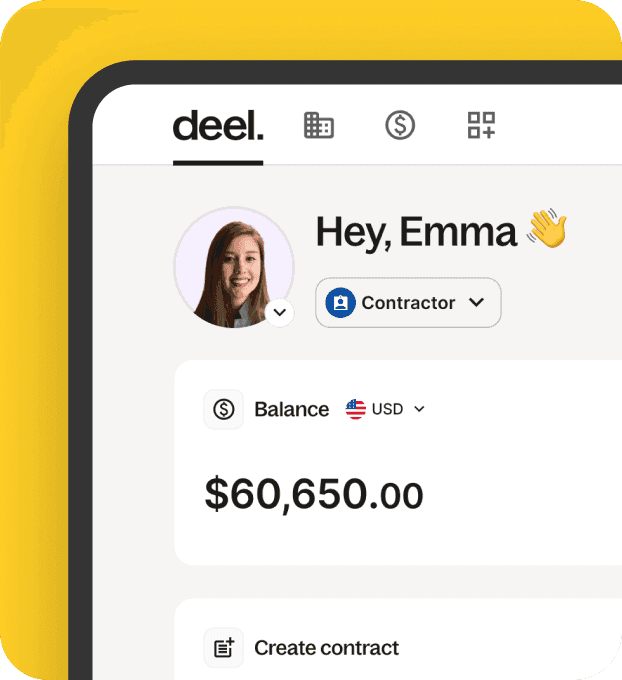
Global pay bands are pre-loaded and maintained within the platform, covering a broad range of roles and locations. HR teams can create, manage, and update bands without waiting on external survey subscriptions or managing manual imports from spreadsheets. Compensation planning and offer benchmarking pull from the same data source, so there is no version-control problem between what total rewards maintains and what hiring uses at the offer stage.
The offer creation workflow builds in compliance requirements for each hiring country. When assembling an offer for a hire in the Netherlands or Colombia, the system surfaces the relevant statutory requirements and ensures the offer structure meets local standards. Teams hiring in a new market for the first time do not need to research from scratch or rely on a legal team that may be fielding the same question from multiple business units simultaneously.
Teams configure approval workflows to match their authorization structure. Finance, HR leadership, and business unit approvers each receive assigned roles, and routing happens within the system. When all stakeholders can see the same status in real time, chasing approvals by email becomes unnecessary.
The result is an offer process that can close in hours rather than days. In markets where candidates receive competing offers within days, that compression is the concrete difference between closing the hire and losing it.
Live Demo
Get a live walkthrough of the Deel platform
Building a compensation strategy that works at scale
The operational argument for modernizing compensation management infrastructure centers on offer velocity. The strategic argument is broader.
Organizations that maintain consistent, structured global pay bands develop the data infrastructure to run meaningful compensation reviews, analyze pay across regions and levels, and make decisions about expansion markets with a clear view of what talent costs will look like. When compensation data is fragmented across spreadsheets and vendor exports, that kind of analysis is expensive to conduct and easy to defer. When it lives in a single system, it becomes a routine part of how compensation strategy is managed.
This matters for retention as much as for hiring. Employees who understand how their pay relates to market benchmarks, and who can see that the logic is consistent and transparent, are less likely to harbor concerns about inequity and more likely to stay. Organizations that build global pay transparency as an ongoing practice are building a durable retention advantage.
There is also a growing compliance dimension. As pay transparency laws expand across Europe, the United States, and other markets, organizations with structured, documented compensation practices are better positioned to respond to disclosure requirements. The EU Pay Transparency Directive, in particular, requires employers to demonstrate that pay structures are systematically maintained and consistent across comparable roles. That requirement is significantly easier to meet when the data infrastructure already supports it.
Pay transparency is becoming a legal requirement
The EU Pay Transparency Directive requires employers to demonstrate that pay structures are systematically maintained and consistent across comparable roles. Organizations that document compensation practices now will face fewer friction points when these requirements take full effect across member states.
Guide
Expand your global HR strategy
Getting from where you are to where you need to be
For HR teams currently managing global compensation in spreadsheets and disconnected tools, moving toward a modern CMS is less about changing how decisions are made and more about changing where information lives.
The practical starting point is consolidating pay bands into a single system that can be queried by role, level, and location. That single change removes the most time-consuming part of the manual benchmarking process: finding and extracting data from multiple sources with different formats. Once bands are in a shared system, the rest of the offer workflow can be restructured around them.
The second step is embedding compliance requirements into the offer workflow rather than treating them as a separate research task. This typically involves documenting the rules for each active hiring market, then building those rules into the system as guided prompts or automated checks. The goal is to eliminate the round-trip to legal or compliance that currently adds days to every international offer.
The third step is structuring the approval workflow so that routing happens in the system rather than email. This requires agreement from the relevant stakeholders on who approves what and at which level, but the configuration itself is straightforward once those decisions are made. The process visibility that comes from a structured workflow tends to reduce approval time as well, because delays are surfaced immediately rather than discovered days later.
None of these steps require a large-scale transformation project. The organizations that move fastest are typically the ones that start with a concrete process breakdown, choose one part of the workflow to restructure first, and build from there.
Compensation management infrastructure tends to be invisible until it creates a problem. For most organizations, the problem announces itself when a candidate declines an offer citing a faster-moving competitor, a compliance finding surfaces in a market where requirements were not properly checked, or a pay equity review reveals inconsistencies that have compounded quietly for years.
A modern CMS addresses all three failure modes before they become costly. Deel HR's Compensation Management System gives global HR teams the pay band data, compliance guardrails, and approval workflows they need to move at the pace the talent market requires, without sacrificing rigor or consistency. If global hiring is part of your growth strategy, the infrastructure supporting it should be built for that pace. Book a demo to see how Deel HR handles global compensation at scale.
Live Demo
Get a live walkthrough of the Deel platform
FAQs
What is a compensation management system?
A compensation management system (CMS) is a platform that centralizes pay band data, market benchmarking, compliance requirements, and approval workflows in a single tool, enabling HR teams to make faster and more consistent compensation decisions across multiple markets.
Why do global offer cycles take so long?
Delays typically come from three sources: manual benchmarking that requires pulling data from multiple external sources, country-by-country compliance research that must be repeated for each hire, and approval workflows that route through email with no visibility into outstanding steps.
How does a modern CMS reduce offer cycle time?
By maintaining real-time global pay data in the system, embedding compliance requirements as guardrails in the offer workflow, and routing approvals through a structured tool, a modern CMS eliminates most of the coordination overhead that causes delays.
Is Deel HR's Compensation Management System suitable for smaller organizations?
Yes. The platform scales from smaller teams building their global pay structure for the first time to large enterprises managing complex, multi-region compensation programs.
How does compensation management connect to pay equity?
When pay band data and compensation decisions are centralized in a single system, it becomes straightforward to analyze pay by role, level, geography, and demographic group, which is the data infrastructure required for meaningful pay equity analysis and, increasingly, for compliance with pay transparency legislation.
Explore more Deel HR resources
Deel HR Compensation Management: Centralize global pay bands and streamline offer approval workflows
Global Salary Insights Tool: Benchmark roles across countries in real time
Pay Transparency Laws: What HR Leaders Need to Know: Navigate evolving disclosure requirements across markets
How to Scale Global HR Operations: A practical guide for HR leaders managing distributed teams
Ellen Simmonds is a content marketing manager with a decade of experience in tech, leadership, startups, and the creative industries. A long-time remote worker, she's passionate about WFH productivity hacks and fostering company culture across globally distributed teams. She also writes and speaks on the ethical implementation of AI, advocating for transparency, fairness, and human oversight in emerging technologies to ensure innovation benefits both businesses and society.