Article
17 min read
How to Prepare Your Managers for Layoffs Before They Happen
Global HR

Author
Ellen Simmonds
Last Update
May 07, 2026

Table of Contents
How can managers support remaining employees and the organization during layoffs?
Phase 1 — Before: build readiness before the announcement
Phase 2 — During: equip managers for the conversations themselves
Phase 3 — After: the recovery window and what good looks like
Manager communication templates: what to say at every stage
The limits of preparation without data
How Deel helps HR leaders prepare for workforce change
Managers account for 70% of the variance in team engagement — yet only 44% have received any management training at all, according to Gallup. Most receive no specific preparation for leading teams through a layoff.
Every remaining employee experiences a redundancy through their direct manager. Equipping managers with a clear framework for before, during, and after a layoff is the single highest-leverage investment HR can make in the recovery.
Deel HR gives managers the tools to lead through disruption — from structured performance and feedback frameworks to pulse surveys that flag disengagement before it becomes attrition. For global teams, Deel HR ensures every manager is working from the same accurate workforce picture.
The hardest part of a layoff isn't letting people go. It's leading the ones who remain.
There's no shortage of advice on how to conduct a redundancy: the legal review, the severance packages, the offboarding logistics. That work matters. But the moment the notifications go out, a different and largely unplanned challenge begins: keeping the people who stayed engaged, trusting, and committed to a company that just got smaller.
This is something we explored in our guide: Why Your Best People Leave After a Layoff (And What HR Can Do About It). Now it’s time to dive deeper and examine how the challenge of handling the aftermath of layoffs lands squarely on your managers. Not on the CEO's all-hands, not on the carefully worded HR email — but on the direct manager, in a one-to-one, fielding questions they may feel unprepared to answer.
In this guide, we’ll look at how HR leaders can change that, and give you a practical framework for building manager capability specifically for the weeks and months after a reduction in force, when the real recovery work begins.
How can managers support remaining employees and the organization during layoffs?
How the remaining employees experience redundancy is influenced heavily by their direct manager — in one-to-ones, in hallway conversations, and in the way they run the first team meeting after the announcement. That makes manager capability the primary lever HR has for influencing how the organisation comes through a reduction in force.
Research shows that managers account for 70% of the variance in team engagement levels. When manager engagement drops, team engagement follows — and manager engagement has already fallen nine points since 2022, from 31% to 22%. That's before you add the pressure of a restructure. And yet, manager preparation is almost always the last thing addressed. HR spends weeks on legal review, communication drafts, and offboarding logistics. Most organizations will give managers a briefing (typically 45 minutes to an hour, and sometimes the morning of). Some organizations do even less.
The three-phase framework below is designed to change that. It won't make redundancy easy. But it gives managers the tools to lead through it, which is the only thing that will actually move the needle on how quickly your teams recover.
Deel HR
One place for simplified, smarter global HR
Phase 1 — Before: build readiness before the announcement
The window between when HR knows a redundancy is coming and when it's announced is the most underused preparation time in any restructure. Here's how to use it.
Should managers be briefed before a layoff announcement?
The worst thing a manager can do after an announcement is look surprised. Employees read managerial surprise as either dishonesty (they knew and hid it) or incompetence (they didn't know and couldn't protect us). Neither builds trust.
Where possible and legally permissible, brief managers before the announcement. Not with full detail — but enough that they understand the scope, the rationale, and the timeline. They don't need to know every name, but they need to know enough to look like they understand what's happening and why.
What should managers say (and not say) before a layoff is announced?
Communication inconsistencies are one of the biggest drivers of anxiety in a redundancy. Around one in five employees who witnessed layoffs received messages that were inconsistent across different sources, and 8% of laid-off employees said communications sometimes directly contradicted each other. When one manager says, "I genuinely don't know who's affected," and another says, "I think most of the team is safe," employees compare notes and panic.
Give managers a shared script for what they can and can't say, and make the limits explicit. "I can't share details on individual decisions" is a complete and honest sentence. "I don't know anything" — when they do — is not. The script should acknowledge uncertainty without amplifying it.
Can managers help identify alternatives to workforce reductions?
Before a decision to cut is finalised, the manager layer is often the best source of intelligence on whether redeployment is possible. Managers know which roles on their teams have expanded scope, which skills are transferable, and which employees have expressed interest in moving.
The earlier you pull managers into this conversation, the more options you have — and the stronger your case to leadership that cuts may not be the only lever available.
How do you prepare managers emotionally, not just operationally?
Only 44% of managers globally report having received any management training, and that figure covers normal operating conditions. Training specifically for high-pressure situations like redundancies is rarer still. Many managers will be delivering news to colleagues they've worked alongside for years, some losing members of their own team they fought to keep.
Giving managers a checklist without acknowledging this is poor preparation. Consider a structured pre-briefing session that addresses the emotional reality alongside the practical guidance. Managers who feel supported are significantly more likely to support their teams well.
How Deel supports Phase 1
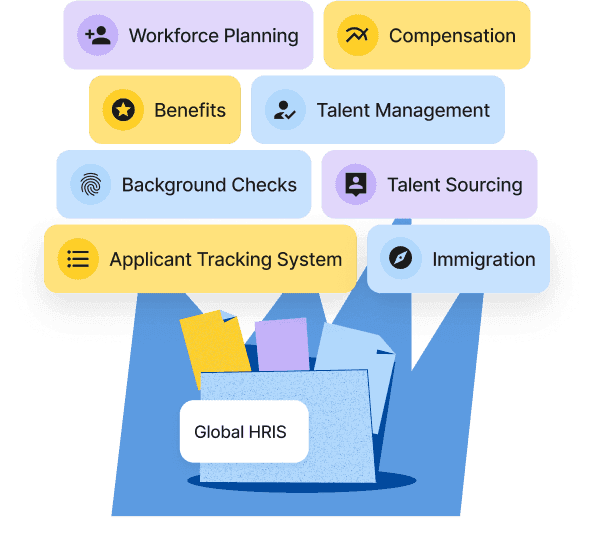
Before any redundancy decision is finalised, HR leaders need a clear, accurate picture of the entire workforce, including roles, performance history, tenure, compensation, and employment type across every country and entity. Deel HR gives you that view in one place, so redistribution decisions are informed by data rather than incomplete headcount lists.
Our Workforce Planning module lets HR and finance model multiple restructuring scenarios using live data, giving you the evidence to present leadership with the true cost of cuts, including rehire risk, severance liability, and productivity impact, before decisions are locked in.
Complementary reading
Deel HR
Smarter end-to-end workforce planning
Phase 2 — During: equip managers for the conversations themselves
Notification conversations are among the most high-stakes interactions a manager will ever have, and yet most receive almost no training for them.
Why does communication consistency matter so much during layoffs?
The single most important thing HR can do for managers during the notification phase is ensure consistency. Employees will compare their experiences within hours. According to one survey, only 28% of employees who were laid off felt leadership was very transparent about why decisions were made, while nearly half described communications as "somewhat transparent, sharing some information but leaving key details vague."
Build a clear notification framework that all managers follow. It should cover: how to open the conversation, what information to share, what to do if someone becomes distressed, and what happens next. It shouldn't be a script to read verbatim, as that reads as cold and comes across as disingenuous. It should be a structure that managers can make their own.
How do layoff notifications work differently across global teams?
For HR leaders managing distributed teams, notifications across time zones, languages, and cultural contexts add a layer of complexity that a one-size-fits-all briefing won't cover. In some cultures, job loss carries a significant social stigma that shapes how the conversation needs to be handled. In others, directness is valued, and circumspection reads as disrespect.
Managers leading global teams need localised guidance, not just a translated version of the same framework, but a genuine cultural context. Where possible, involve regional HR partners or local managers in the preparation. Local employment law also shapes what can and can't be said in a notification conversation; this varies significantly across jurisdictions and must be built into any guidance given to managers.
What should managers say to the team immediately after a layoff announcement?
The notification conversation is the beginning, not the end. Within hours of the announcement, team members who weren't affected will be processing what they've just learned. Managers need a plan for that moment.
What do you say to the team the same day? The next morning? What questions are you prepared to answer, and which ones do you need to escalate? Leaving managers to improvise this is where cultural damage starts.
How Deel supports Phase 2
For global teams, Deel's unified platform means HR leaders can manage notifications, documentation, and compliance requirements across multiple countries without coordinating across disconnected systems. Severance calculations, local notice period requirements, and final payment processing are handled in one place — so managers can focus on the human side of the conversation rather than chasing operational loose ends.
Engage's performance and feedback data also means that if questions arise about selection decisions during or after a notification, HR has a documented, data-backed record to draw from, reducing legal exposure and supporting manager confidence in the room.
Deel HR
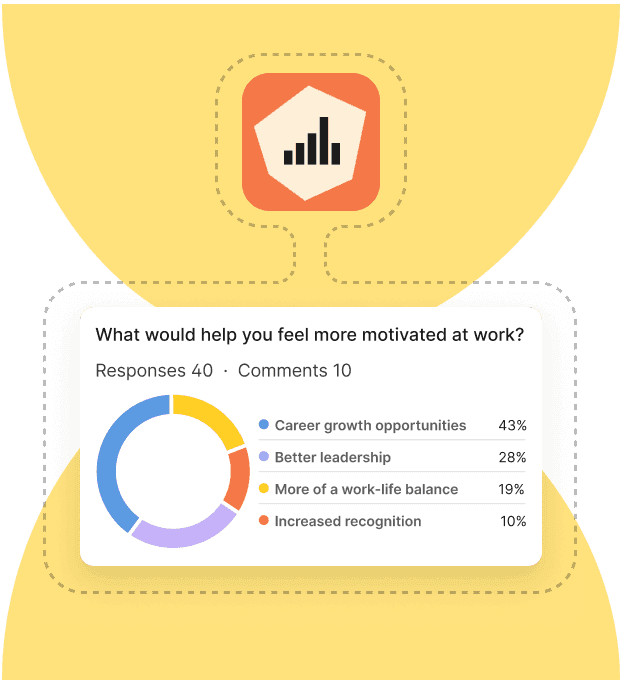
Collect insightful worker feedback
Phase 3 — After: the recovery window and what good looks like
The period immediately following a redundancy is the longest phase and the least structured. It's also where most organisations lose the ground they gained by handling the announcement well.
How do you reset team goals after a layoff without burning people out?
In the weeks following a reduction in force, workloads shift, priorities blur, and teams often quietly assume that performance standards have been suspended. They haven't been, but nobody said so clearly. Managers need to have explicit conversations about what the team's priorities are now — not the same targets with fewer people, but genuinely recalibrated goals that account for the new reality.
How do managers rebuild trust with their team after a redundancy?
Remaining employees will have feelings about what happened to their colleagues, to their company, to their own sense of security. Research shows that only 20% of employees strongly agree they trust their organisation's leadership in normal times. That figure falls further after a layoff, and it doesn't recover on its own.
Managers who project relentless normalcy after a redundancy don't reassure their teams. They isolate them. Build in structured space for managers to check in, not with surveys, and not with forced positivity, but with honest one-to-ones that signal it's safe to say how things are going.
Helpful resource
Running distributed global teams without losing the human touch is a challenge, especially at scale. At Deel, our global remote-first workplace ranks on Glassdoor’s Best Place to Work, with a 4.4-star rating. To get our playbook and grow a global team while keeping engagement high, check out A Guide on How to Scale Global HR.
Which employees are most likely to leave after a layoff?
The employees most worth watching after a layoff aren't the ones who are visibly upset. It's the ones who seem fine. High performers often process disruption internally — continuing to deliver, appearing engaged, while quietly updating their CV and taking calls. Managers who only look for distress signals will miss them entirely.
The signal to look for is a subtle shift in engagement quality, not a collapse in output. Are they still contributing ideas in meetings? Mentoring junior team members? Raising problems proactively? If those behaviours quietly disappear, that's worth a conversation.
What do you do when managers don't have all the answers?
One of the most damaging things a manager can do in the recovery phase is project false certainty. "The worst is behind us" is a promise that can't always be kept. When it isn't, trust breaks in a way that takes months to repair.
Equip managers with the language to hold uncertainty honestly: "I don't know what the next six months look like. Here's what I do know, and here's how we'll keep you informed." For most employees, that's far more reassuring than confident statements that later prove wrong.
How Deel supports Phase 3
The recovery phase is where engagement data matters most — and where most HR teams are flying blind. Engage's pulse survey tools let HR leaders monitor team sentiment in real time, so you can identify where morale is fragile, which managers need additional support, and where flight risk is building before it becomes an exit.
Engage's learning management system also lets HR build targeted retraining and development plans for employees whose roles have shifted as a result of the restructure, turning the disruption of a redundancy into a catalyst for internal mobility rather than attrition.
Manager communication templates: what to say at every stage
Communication guidelines for managers handling layoffs will vary depending on the circumstances, but should generally cover:
Before the announcement: What to say if a team member asks directly whether layoffs are coming, and what to say to acknowledge rumours without confirming or denying
During: What to say in the individual notification conversation, and what to say to the wider team immediately after notifications go out
After: What to say in the first team meeting post-layoff, what to say in a one-to-one with a team member who seems disengaged, and what to say when asked, "are more layoffs coming?"
Use these templates as a starting point for your own internal communication guide:
Before the announcement: if asked directly whether layoffs are coming
"I can't share details about decisions that haven't been announced yet. What I can tell you is that when there's something to communicate, you'll hear it from me directly — not through the grapevine."
Before the announcement: if rumours are circulating
"I know there's a lot of speculation going around right now. I understand that's unsettling. I'm not in a position to comment on things that haven't been confirmed, but I want you to know that I'll be as transparent as I'm able to be as soon as I'm able to be. If anything changes, you'll hear from me first."
During: opening a notification conversation
"I want to speak with you privately about something important. This is a difficult conversation and I want to be straightforward with you: your role has been impacted by the restructure we've been going through. I'm here to walk you through what this means for you and to answer any questions I can."
During: to the wider team immediately after notifications
"I want to speak to you all together before you hear anything second-hand. Today, some of our colleagues were told their roles are no longer continuing. That's hard news — for them, and I know for many of you too. I'm not going to pretend it isn't. Here's what I can tell you about where we are and what comes next. And here's what I genuinely don't know yet, and how I'll keep you updated when I do."
During: if someone becomes distressed in a notification conversation
"I want you to take whatever time you need right now — there's no rush here. What you're feeling makes complete sense, and I'm not going anywhere. When you're ready, I'm here to answer what I can. And if you'd rather take some time and come back to me later today or tomorrow, that's completely okay too. You don't have to process all of this right now."
After: opening the first team meeting post-layoff
"Before we get into anything else, I want to acknowledge what's happened this week. Some of our colleagues are no longer with us, and that matters. It's okay if you're finding this difficult — I am too. I want to use some of this time today to talk about how we're feeling, as well as what our priorities look like from here. There are no wrong answers and no performance expectations attached to this conversation."
After: checking in with a team member who seems withdrawn
"I've noticed you've seemed a bit quieter than usual lately, and I just wanted to check in — not about work, just about how you're doing. The last few weeks have been a lot for everyone. Is there anything on your mind you'd want to talk through?"
After: when asked whether more layoffs are coming
"That's a fair question. Honestly, I don't have certainty to offer you right now, and I'd rather tell you that than make a promise I might not be able to keep. What I can commit to is keeping you as informed as I'm able to be, and being honest with you when I know more. If anything changes, you'll hear it from me."
The limits of preparation without data
Everything in this framework depends on managers having the insight to act at the right moment — and that depends on HR having visibility into how teams are actually feeling, not just how they appear to be feeling.
The organisations that recover fastest from a redundancy aren't the ones that executed it most cleanly. They're the ones that could see, in real time, where disengagement was building, which managers needed support, and which employees were quietly heading for the door.
Without that visibility, even the best-prepared managers are working in the dark. The question worth asking before your next restructure is: what would you be able to do differently if you could see it coming?
Helpful resources
Dive deeper into employee analytics, and how to use Deel to get the insights you need:
How Deel helps HR leaders prepare for workforce change
Managing a reduction in force across a global team means coordinating across time zones, legal jurisdictions, languages, and employment types — often simultaneously. Deel gives HR leaders the infrastructure to do that without losing visibility or control.
-
Understand your workforce before you make decisions. Deel HR gives you a real-time, unified view of your global headcount — roles, tenure, performance history, and compensation — so decisions about who to retain, redeploy, or let go are grounded in data, not instinct.
-
Identify redistribution opportunities before cutting. With full workforce data in one place, HR and managers can identify internal transfer candidates and skill gaps before finalising any redundancy list.
-
Give managers the tools to lead through disruption. Engage's performance management and 360° feedback tools give managers structured frameworks for difficult conversations, goal-resetting, and team recovery — not just during a redundancy cycle, but in the months that follow.
-
Track sentiment before it becomes attrition. Engage's pulse surveys let HR leaders monitor how remaining employees are feeling in real time — so you can intervene while there's still time, not after someone's handed in their notice.
-
Retrain and redeploy rather than cut. Engage's learning management system lets HR leaders build targeted development plans that help employees grow into new roles, turning a potential redundancy into an internal transfer.
-
Manage offboarding compliantly across every jurisdiction. For global teams, Deel handles the complexity of local notice periods, severance requirements, and contractor offboarding across 150+ countries — so nothing falls through the cracks.
Want to see how HR leaders at global companies use Deel to manage workforce change with less risk and more confidence? Book your 30-minute Deel demo.
Live Demo
Get a live walkthrough of the Deel platform
FAQs
How long does it take for a team to recover after a layoff?
Longer than most leadership teams expect. Glassdoor's 2025 research found that post-layoff anxiety among remaining employees worsens in the second year, not the first — making recovery a process that requires active management, not a milestone to declare complete.
What should a manager say to their team the day after a layoff?
Acknowledge what happened, clarify what you know about the path forward, and create space for questions. Don't project false certainty and don't pretend nothing happened — a short, honest check-in signals psychological safety, which is the foundation everything else is built on.
How do you identify employees who are flight risks after a layoff?
Don't look for the loudest signals — look for the quietest ones. High performers rarely show obvious distress; instead watch for a drop in proactive behaviour: fewer ideas in meetings, reduced initiative, shorter responses. Regular one-to-ones and pulse survey data catch these shifts before they become resignations.
What's the biggest mistake companies make when handling layoffs?
Treating the redundancy as complete the moment notices go out. The notification is the beginning of the process for the people who stayed — companies that declare victory too early accelerate the very attrition they were trying to avoid.
How do layoff processes differ for global and remote teams?
Significantly. Notice periods, severance requirements, consultation obligations, and cultural norms around job loss vary enormously across jurisdictions — a manager briefed for one country may be inadvertently non-compliant in another. Global HR leaders need country-specific guidance and a unified system for tracking offboarding obligations across entities.
Ellen Simmonds is a content marketing manager with a decade of experience in tech, leadership, startups, and the creative industries. A long-time remote worker, she's passionate about WFH productivity hacks and fostering company culture across globally distributed teams. She also writes and speaks on the ethical implementation of AI, advocating for transparency, fairness, and human oversight in emerging technologies to ensure innovation benefits both businesses and society.