Article
6 min read
Your IPO Playbook: The People Infrastructure Investors Actually Look for
Global HR

Author
Ellen Simmonds
Last Update
June 15, 2026

Key takeaways
Investors conducting Series A and Series B due diligence now treat people infrastructure (compensation bands, equity documentation, and performance systems) as a direct proxy for operational maturity and organizational discipline
The window between 50 and 200 employees is the easiest time to install these five systems. They become significantly more expensive and politically complicated to retrofit once headcount doubles and informal norms calcify
Deel HR gives founders a single platform to manage compensation reviews, performance cycles, equity documentation, and compliance records without switching tools as the company grows
Three weeks before the close of a Series B, a founder opens their data room and realizes the equity grants live in three separate spreadsheets, the compensation "structure" is a collection of verbal agreements, and the only record of anyone's performance history is a Slack DM archive. The term sheet is waiting. The due diligence clock is ticking.
This scenario is more common than most investors will tell you, and it is more consequential than most founders expect. A competent VC firm does not just audit the financial model and the technical architecture. It audits how you manage your people, because the way a company treats its people systems at 100 employees is a reliable forecast of how it will handle organizational complexity at 500.
The five people-infrastructure pillars below are what that audit actually looks for. All five are straightforward to build at the 50-person mark. All five become progressively harder and more politically charged to retrofit as you scale. The case for building now is less about impressing investors and more about avoiding the organizational friction that arrives when you try to do it later.
The 50-person inflection point
Most founders think about people infrastructure once, when a problem forces them to. The first time they lose a senior engineer to a competitor who offered a clearly documented equity refresh, or the first time a new VP of Sales asks why two people in the same role are being paid differently and there is no documented rationale, or the first time an investor asks for a headcount reconciliation and the answer is "let me get back to you."
At 50 people, none of these systems requires significant investment or a dedicated HR operations team. Compensation bands at this stage are five to eight role families with three levels each. A performance cycle is a quarterly structured conversation between a manager and a direct report, documented in a consistent template. An equity documentation process is an accessible record of who received what, when, and under what vesting schedule. These are not complicated. They are just easy to defer.
The reason to act now is not urgency but compounding. A company that runs a clean Q4 performance cycle at 60 people has 12 months of structured performance data by the time it hires its 120th employee. A company that defers until 150 people has to run its first performance cycle while simultaneously onboarding a new HR director, managing a hypergrowth hiring sprint, and fielding investor diligence requests. The cost of deference is real, and it tends to be borne at the least convenient moment.
Deel's HRIS
Manage your global workforce compliantly

Pillar 1 — Compensation bands
When an investor looks at your compensation structure during due diligence, they are not primarily checking whether your salaries are competitive. They are checking whether you know why each person is paid what they are paid. Undocumented compensation reads as founder-level decision-making applied to a 100-person organization, and that is a governance concern as much as an HR one.
Compensation bands solve this problem by creating a documented rationale for pay. A band defines the minimum, midpoint, and maximum salary for a given role and level, anchored to market data and your geographic context. Every offer made within a defined band can be explained without a founder in the room. Every compensation review cycle produces a record that demonstrates the company is managing pay consistently and proactively, rather than reactively.
The startup-specific framing matters here. Bands designed for a 50-person company should be simple enough that a new people manager can understand and apply them without a compensation analyst. That typically means a straightforward job architecture (three to five levels per function), a clear methodology for how the midpoint is set (usually the 50th or 75th percentile of a relevant market), and a documented rationale for any exceptions. You are building a foundation for the next three funding rounds, not designing a Fortune 500 compensation architecture.
For a practical walkthrough on setting up your first compensation structure, see Deel's guide on how to create salary bands.
One operational reality
Compensation bands work only when they are current. A set of bands built in 2023 and left untouched is a liability by 2025, because market rates shift and equity-heavy tech roles can move significantly within 18 months. The expectation from investors is not that your bands are perfect, but that you have a documented process for reviewing and updating them.
Guide
Is your compensation strategy built to scale?
Pillar 2 — Equity framework
Equity is the single most emotionally loaded element of startup compensation, and it is also the most frequently underdocumented. The combination is predictable: promises made casually at the 10-person stage become expensive misunderstandings at the 100-person stage and legal exposure at the Series B stage.
The equity due diligence checklist is specific. Investors want to see a clean option pool with documented authorization, grant agreements that are signed (not merely promised), consistent vesting schedules that have been tracked correctly over time, and a clear record of who holds what, including the exercise window terms. They will also look at whether your equity program is being used strategically, whether refresh grants are being issued to retain top performers, and whether the program is accessible enough that employees actually understand what they hold.
Option pool hygiene at the 50-person stage means establishing three things. First, a documented grant policy covering who is eligible, at what level, and on what schedule. Second, a process for generating and countersigning grant agreements at the time of hire or promotion rather than retrospectively. Third, a system for tracking vesting events that is not a personal spreadsheet saved in a founder's Dropbox folder.
Equity and cash compensation are not separate decisions but two levers in the same total-rewards framework. Investors who see a well-designed equity program alongside documented compensation bands draw the same conclusion: this team makes deliberate, defensible decisions about how it pays people.
For deeper coverage of equity management tools relevant to growing startups, see Deel's guides on equity management platforms for startups and the practical considerations involved in granting equity to your team.
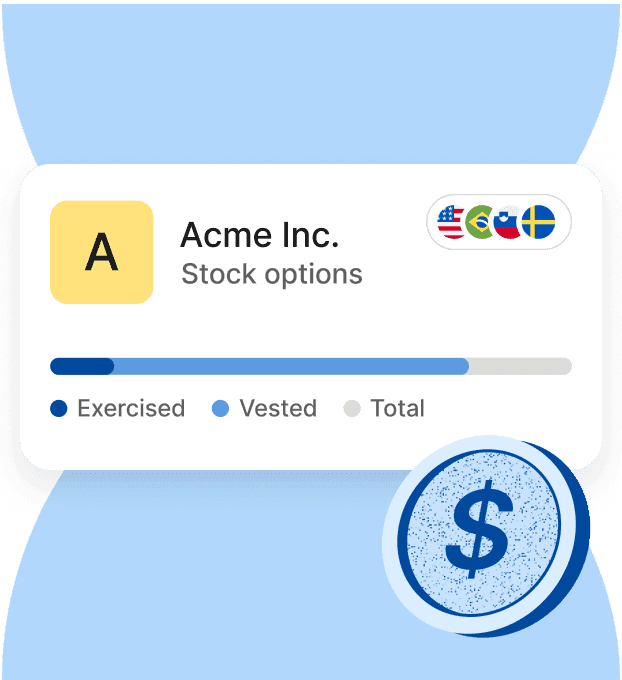
Equity & Token Services
Providing global teams with equity has never been simpler
Pillar 3 — Performance cycles
The absence of a structured performance process is one of the two most commonly missing systems at Series A diligence (alongside benefits consistency, which is covered in the next section). This is partly because founders tend to treat formal reviews as a large-company formality, and partly because running performance cycles well requires more operational discipline than most early teams have built.
What investors actually want to see is not a perfect performance management philosophy. They want evidence that you know who your best performers are, that those people know they are valued, and that you have a mechanism for identifying and addressing underperformance before it becomes a retention or legal issue.
A quarterly check-in cycle with a structured template is sufficient at 50 people. The critical design choices are: ensuring that every employee receives written feedback from their manager at least twice a year, that goals are set at the start of a cycle rather than assessed retrospectively, and that there is a calibration mechanism to prevent individual managers from rating their teams inconsistently. That last point matters most in a growing company, where a new manager might give every direct report a top rating while a more rigorous manager holds their team to a higher standard, creating pay equity problems that surface in the next compensation cycle.
A founder who can show an investor 12 months of structured performance conversations across the organization is demonstrating that the talent pipeline is visible: who the high performers are, who is developing toward a larger role, and where the succession risks sit. That kind of organizational transparency is not something a company can produce retrospectively. It requires having run the cycles.
Deel's guide on running quarterly performance reviews for startups covers how to structure this process from the ground up.
Deel HR
Build high-performing teams with half the work
Pillar 4 — Benefits consistency
Benefits consistency is the most frequently overlooked pillar and often the one that creates the most organizational tension when investors surface it during diligence. The problem is rarely that benefits are bad. It is that they are inconsistent in ways that are difficult to defend.
The most common pattern is accretion: the founding team gets health coverage negotiated informally, the first few engineers get a fitness stipend added to their offer, a senior hire from a larger company negotiates a more generous parental leave policy, and a contractor in a different country receives nothing because "they're not an employee." By the time the company has 80 people, there are four or five different informal benefits arrangements, none of them documented as policy, and all of them known informally to employees who compare notes.
Investor concern here is not primarily moral. It is legal and financial. Inconsistent benefits create exposure on equal pay grounds, create recruiting complications when a new VP of People tries to standardize the package, and create attrition risk when employees who discover the inconsistency feel they negotiated poorly. All three of those risks appear on a diligence checklist.
Fixing benefits consistency at 50 people is meaningful work but not structurally complex. It requires documenting the current state (what benefits each type of worker receives), deciding on a policy for each category (health, equity, flexible work, professional development, and parental leave) and communicating those policies consistently in offer letters and employee handbooks. The goal is not to maximize the benefits package but to make it auditable.
For globally distributed teams, the complexity increases: statutory benefits vary by country, and managing local compliance requirements alongside a consistent global benefits framework requires infrastructure that most early-stage companies do not have. This is where hiring through Deel's EOR solution can do significant work, handling local statutory compliance while giving founders a coherent view of their total benefits spend across jurisdictions.
Free guide
Scale your global benefits strategy
Pillar 5 — Compliance records and talent pipeline data
The final pillar sits at the intersection of legal hygiene and operational intelligence, and it is the one where founders are most likely to discover, during diligence, that the data they thought they had does not actually exist in a form that is useful to anyone.
Compliance records mean employment agreements that are fully signed (not sent but awaiting countersignature), contractor classification decisions that are documented and defensible, payroll records that reconcile across jurisdictions, and an audit trail for any changes to employment terms. For a company that has grown quickly and relied on informal processes, reconstructing these records retrospectively is expensive and sometimes impossible.
Talent pipeline data is the more forward-looking dimension. Investors want to understand not just who is at the company today, but the pattern of who has joined, who has left, and why. Attrition rates by function, tenure distribution, the ratio of internal promotions to external hires, and whether there is any documented succession planning for key roles. These are the data points that allow an investor to form a view on whether the organization is healthy or fragile.
Neither of these requires a sophisticated HRIS from day one. What they require is the operational discipline to capture structured data in a consistent format from the beginning. A company that has tracked headcount, role, start date, and compensation in a clean system since its 20th hire has a much easier Series A than a company that needs to reconstruct that history from email threads and outdated spreadsheets.
For founders managing multi-jurisdiction teams, getting HR automation infrastructure in place early reduces the compliance overhead considerably. Deel has covered the core options in a guide to how startups can use HR automation tools, as well as a deeper look at cap table compliance software for the equity side of the ledger.
Compliance
Unlock Continuous Compliance™ with Deel
How Deel HR connects the five pillars
The practical challenge with the five-pillar framework is fragmentation. A startup that builds each system independently ends up with infrastructure that is more expensive to maintain and harder to present coherently when a data room request arrives.
Deel HR is built for exactly this consolidation:
Deel Compensation handles salary band management, compensation review cycles, and market benchmarking across 150 countries, designed for distributed teams of 50 to 1,000
Engage covers performance infrastructure: self-reviews, 360-degree feedback, quarterly check-ins, OKR tracking, and configurable career development frameworks
Equity and payroll compliance runs through a connected system that integrates with Carta for cap table data and tracks vesting events across jurisdictions
Modular by design: start with the HRIS core and add compensation, performance, and workforce planning as each becomes relevant, without switching tools as you grow
The five systems described in this guide are not the most exciting things a founder can spend time on. That is precisely why most defer them, and why those that don't have a meaningful advantage when a funding event arrives. Building this infrastructure while the company is still small is one of the highest-leverage investments a pre-Series A founder can make. Book a demo to see how it maps to your current stage.
Live Demo
Get a live walkthrough of the Deel platform
FAQs
Do I need formal compensation bands before my Series A?
Not before the conversation begins, but you will want them documented before the data room opens. Investors who ask for a headcount and compensation summary expect to see a structured rationale, not a list of individually negotiated salaries with no documented framework behind them.
What counts as an equity framework for due diligence purposes?
At minimum: signed grant agreements, a consistent vesting schedule applied across the team, a clear record of the current option pool size and allocation, and a written policy on equity eligibility for new hires and refreshes. The bar is documentation and consistency, not complexity.
How do performance cycles affect funding conversations?
Directly. Investors who ask about key-person risk, attrition trends, and organizational health are relying on the data that performance cycles generate. Without a running cycle, those questions can only be answered anecdotally, which is a weaker signal than structured records.
What is the minimum viable benefits policy for a 50-person startup?
A written policy that applies consistently to each worker category (full-time employees, contractors, and remote international employees) and is reflected in offer letters and onboarding documentation. The generosity of the benefits matters less to investors than the consistency and auditability.
Does Deel HR work for companies with workers in multiple countries?
Yes. Deel's platform is designed for distributed teams and covers statutory compliance, employment records, and compensation management across jurisdictions, which is one of its primary value propositions for globally distributed startups at the growth stage.
Related Deel resources
Ellen Simmonds is a content marketing manager with a decade of experience in tech, leadership, startups, and the creative industries. A long-time remote worker, she's passionate about WFH productivity hacks and fostering company culture across globally distributed teams. She also writes and speaks on the ethical implementation of AI, advocating for transparency, fairness, and human oversight in emerging technologies to ensure innovation benefits both businesses and society.